
DTE Names Sites, Costs for 2 Gas Plants, ~300 MMcf/d of M-U Demand
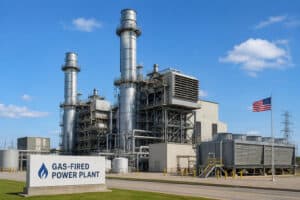
 Last month we told you DTE Energy was about to ask Michigan regulators for permission to build two new natural gas-fired power plants totaling 2,100 megawatts (MW) (see DTE Asks Michigan for 2 Gas Plants — 2,100 MW of New M-U Demand). On Thursday, Sept. 24, the formal ask landed. DTE Electric filed its 20-year Integrated Resource Plan (IRP) with the Michigan Public Service Commission (MPSC), and this time the plants come with addresses, price tags, and dates. A 1,400 MW combined-cycle plant in Handy Township (Livingston County) would cost $3.9 billion and come online by the end of 2031. A 700 MW plant in Milan Township (Monroe County) would cost $2.5 billion and come online by the end of 2032. Together, they replace the 3,066 MW coal-fired Monroe Power Plant, which will shut down in two stages in 2028 and 2032. Michigan produces very little gas of its own, and both sites sit close to pipelines that carry Marcellus/Utica gas into the state. Read More “DTE Names Sites, Costs for 2 Gas Plants, ~300 MMcf/d of M-U Demand”
 When we covered DTE Energy’s second quarter results in July, we grumbled that the company was throwing $10 billion at unreliable renewables and only $2.5 billion at a single new gas plant to replace a retiring coal fleet (see
  DTE Energy reported second quarter 2026 results yesterday, and before we dig in, one piece of housekeeping. DTE used to be an M-U player in a big way — it owned gathering systems in the Marcellus and Utica plus half of the NEXUS pipeline. That business walked out the door on July 1, 2021, when DTE spun it off as DT Midstream (see
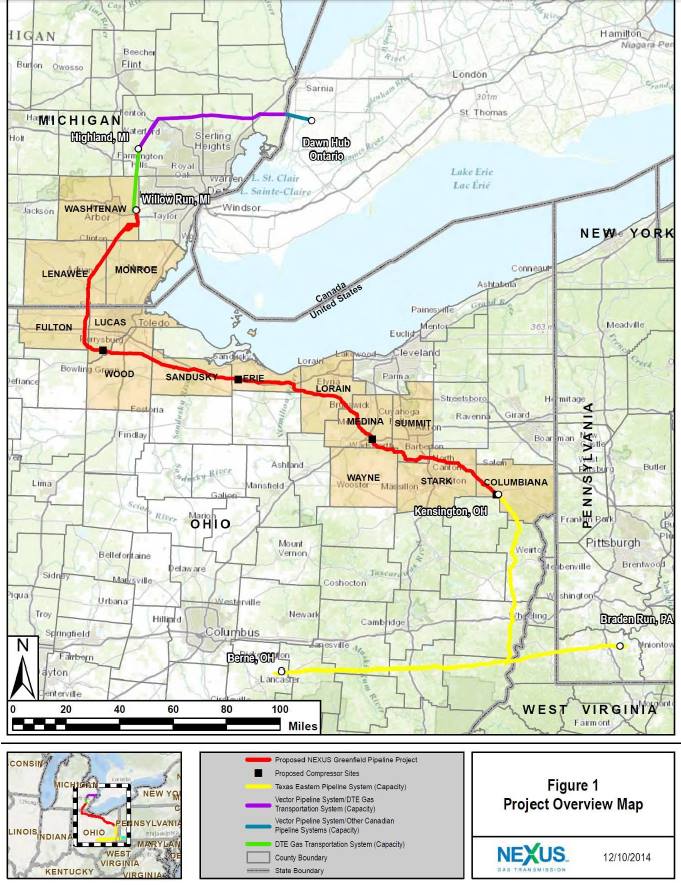
  Last year Big Green lobbyists using the City of Oberlin, Ohio contested the Federal Energy Regulatory Commission (FERC) decision to approve the Enbridge/DTE Energy NEXUS pipeline, a $2 billion, 255-mile pipeline from the Ohio Utica Shale into Michigan that’s been flowing for years connecting to a pipeline that exports some of the gas into Canada (see
  Last October MDN told you that DTE Energy, a long-time pipeline builder and operator in the Marcellus/Utica region, was considering either selling or spinning off its pipeline business (see
  DTE Energy has been a long-time pipeline builder and operator in the Marcellus/Utica region. DTE, based in Detroit, is both a utility company and a midstream/pipeline company. According to an in-depth Forbes article (quoting Bloomberg), DTE is “exploring options” to either sell or spin-off its natural gas pipeline assets, including those in the M-U.
 One of the selling points to make big interstate pipeline projects more palatable to the general public, at least in Ohio, has been the fact they pay annual property taxes. We can tell you from personal experience that a small pipeline in the Town of Windsor (NY, yes! NY) has meant lower property tax bills for MDN editor Jim Willis. Two very large pipeline projects in Ohio, Rover and NEXUS, are asking Stark County to reduce their assessments so they can pay less in taxes–up to 50% less.


 Last June DTE Energy filed paperwork in Michigan to build a new “state-of-the-art” natural gas-fired power plant in St. Clair County (see