
Energy Companies | Hydraulic Fracturing | Industrywide Issues | Marion County | Monongalia County | Northeast Natural Energy | West Virginia
Northeast Natural Energy Taps Evolution’s E-Fracking Solution for WV
 Evolution Well Services, headquartered in Houston with a regional office in Pittsburgh, specializes in “electric” fracking — using natural gas from the well pad (instead of diesel fuel) to power turbines to create electricity that drives fracking pumps. We’ve written about Evolution’s e-fracking work in the Marcellus/Utica for years (see our stories here). The company does work for many of the largest drillers in the M-U. Evolution can add another customer to the list: Northeast Natural Energy, which drills and fracks on 60,000 contiguous acres in north-central West Virginia, primarily in Monongalia and Marion counties. Read More “Northeast Natural Energy Taps Evolution’s E-Fracking Solution for WV”
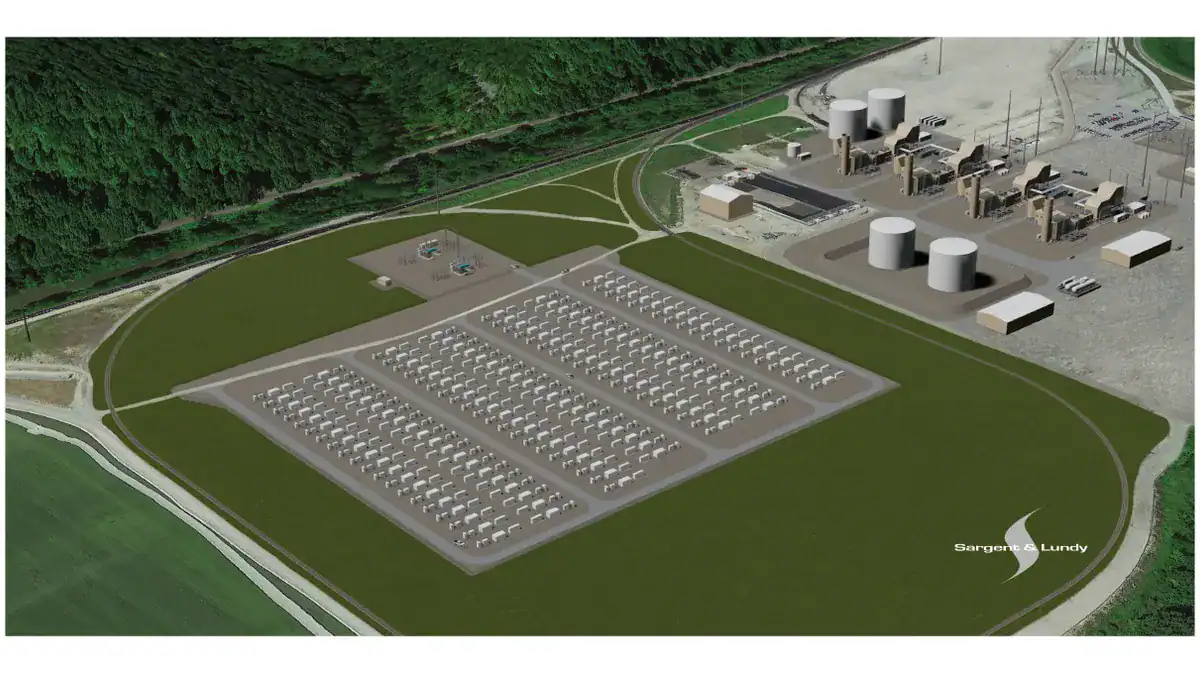
 Anti-fossil fuelers are raising concerns (and stoking fear with county residents) about a potential Duke Energy natural gas power plant in Davidson County, NC, after the project appeared in the company’s long-range planning documents. We first told you about this project three weeks ago (see
  Maryland State Senator Kevin Harris (D-Prince George’s) recently introduced legislation that would allow Big Utilities, such as Exelon, to build and operate power-generation infrastructure using ratepayer funds. The Alliance for Competitive Power (ACP) recently released a study that finds allowing Big Utilities to re-enter the powergen market in Maryland would shift financial risks and cost overruns to ratepayers, whereas competitive markets protect consumers by ensuring shareholders, not the public, bear investment risks. ACP argues that allowing Big Utilities to re-enter power generation would reduce competition and raise prices for ratepayers.
  Virginia Senate Bill 253, introduced by State Senator Louise Lucas (D-Portsmouth), aims to shift energy infrastructure costs from residents to data centers, potentially saving households a whopping $65 annually. The legislation requires data centers—which account for 20% of Dominion Energy’s sales—to fund their own electrical substations and cover specific “capacity costs.” If the bill becomes law and the proposals in it receive approval from the State Corporation Commission (SCC), the typical monthly energy bill for data centers would rise by about 16%, while the typical bill for residential and other customers would decrease by 3% to 3.5%. Looks like Virginia, with more data centers than any other state in the union, is now closed for data center business. Too bad.
  Despite record-breaking domestic production, U.S. manufacturers increasingly face gas shortages and price spikes during extreme weather. While the shale boom promised cheap energy, insufficient pipeline infrastructure prioritizes residential heating, power plants, and long-term export contracts over industrial users. This disparity forced companies like Evonik and International Paper to halt production or pay exorbitant spot prices during recent winter storms. Consequently, manufacturing trade groups are urging federal regulators to reform pipeline contracting and prioritize domestic supply over exports.
  OTHER U.S. REGIONS: February 2026 NY Climate Act issues; NATIONAL: U.S. natural gas futures edge up ahead of inventory data; The EPA’s plan to relax CO2 regs is not a nefarious plot; EIA forecasts lower oil prices in 2026 and 2027 due to persistent stock builds; House Ways & Means Committee spotlights foreign funding in U.S. litigation; USA labor market report underpins energy demand; INTERNATIONAL: Oil gains as Middle East tensions rise; U.S. shale majors take fracking global; Dumbing energy down – interruptible power as social policy; Dear President Trump, take their oil.