
Ascent Resources | Beaver County | Belmont County | Butler County | Energy Companies | EQT Corp | Marion County | Ohio | PennEnergy Resources | Pennsylvania | Range Resources Corp | Weekly Permits | West Virginia
10 New Shale Well Permits Reported for PA-OH-WV Oct 5 – 11
 The Marcellus/Utica region received 10 new drilling permits last week, October 5-11, down a big 19 from 29 permits issued two weeks earlier. Pennsylvania issued 7 of the new permits. Ohio issued 2 new permits. And West Virginia issued a single new permit. The drillers who received new permits last week were: Ascent Resources, EQT, PennEnergy Resources, and Range Resources. Read More “10 New Shale Well Permits Reported for PA-OH-WV Oct 5 – 11”
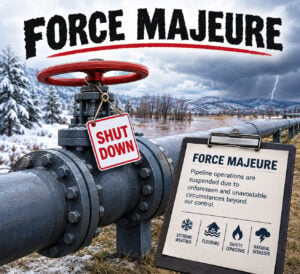 On Thursday, physical (spot) natural gas sold at Louisiana’s Henry Hub (the national benchmark) went for $3.30 per MMBtu. On the same day, gas sold at Texas Eastern M-2, which is the main price point for gas produced in southwestern Pennsylvania, West Virginia, and Ohio, went for $1.055. That’s the same molecule of methane, and our version fetched about 32 cents on the dollar. Why? Because a pipeline carrying Appalachian gas out of the region sprang a leak again. Here’s what happened, why it matters to your royalty check, and why there’s some good news on the horizon.
  Last month we told you Ohio had asked PJM to dust off the “State Agreement Approach,” a grid-planning tool invented for New Jersey’s offshore wind, and use it instead for the $4.2 billion in power lines feeding the 10-gigawatt SoftBank data center and gas plant complex at Piketon (see
  The Homer City Energy Campus in Indiana County, PA, will be one of the country’s largest natural gas-fired power plants under construction. It burns Marcellus gas, and it needs a lot of water to keep cool. On Wednesday, the Pennsylvania Department of Environmental Protection (DEP) held a public hearing on a permit change that would let the plant send up to 6.8 million gallons a day of used cooling water into Blacklick Creek. All of the roughly a dozen speakers opposed it. DEP says it will decide before the current permit expires at the end of this year. Here’s what the opponents said, and what DEP’s own paperwork says, which is a different story.
  Former Sen. Joe Manchin says he’s “tickled to death” about the bipartisan permitting reform bill now waiting for a Senate vote. He puts the odds it becomes law at “well past 50%.” We’d love to believe him. We don’t. On Oct. 5 we called passage “a coin flip, maybe a little better” (see
  The Federal Energy Regulatory Commission (FERC) on Thursday took a chainsaw to one of the slowest, most litigated parts of its pipeline review process. In a 4-1 vote, FERC issued a draft policy statement saying it will no longer require pipeline and LNG companies to submit “air dispersion modeling” for new or expanded compressor stations and LNG terminals. Why should Marcellus/Utica folks care? Because nearly every project that moves more of our gas to market, such as Iroquois ExC and MVP Boost, involves building or beefing up compressor stations. Faster approvals mean more pipe, more takeaway capacity, and (eventually) better prices for drillers and royalty owners.
  Researchers at the University of Southern California (USC) built a $250 gadget that sits over an old, abandoned oil or gas well and sniffs for methane leaks around the clock, reporting its findings online. The research paper behind it leans on a well-known 2014 Princeton study of abandoned wells in Pennsylvania. That study is worth a second look, because its “average” leaking well isn’t so average. Read the fine print, and you’ll find most old wells leak a tiny amount, or nothing at all, while a handful of bad actors drive the headline numbers. That’s why a cheap tool that can tell the difference could save taxpayers a lot of money.
  OTHER U.S. REGIONS: USA to use Cold War-era law to expand Texas refinery; NATIONAL: U.S. natural gas futures mixed after below-estimate storage build; Venture Global inks deals with GE Vernova, Baker Hughes for power expansion; INTERNATIONAL: Oil prices diverge as supply risks mount; Europe may miss its 2026 deadline to phase out Russian LNG.