
Continental’s Harold Hamm Plans to Fight Saudi/Russia “Dumping”
 Back in the day, your humble editor, Jim Willis, worked first an intern and later as a paid staffer in the Ronald Reagan White House. Very cool experience for a hick kid from Upstate New York. After a stint at the White House, Jim stayed in D.C. and went to work on Capitol Hill, working for Congresswoman Helen Bentley (Republican from Maryland). One of Bentley’s favorite issues was to fight against the dumping of machine tools by foreign companies on the American market. Companies in other counties would sell machine tools here more cheaply than it cost them to make, using backdoor funding from their governments to make up the difference. Eventually, our machine tool companies couldn’t compete and would go out of business, leaving the market wide open to foreign competitors, at which time they would jack their prices up.
Read More “Continental’s Harold Hamm Plans to Fight Saudi/Russia “Dumping””

 According to super-secret sources, The White House is “strongly considering” a federal aid package for oil and gas companies affected by the Saudi-Russia oil price war and lingering effects from COVID-19 coronavirus panic. The proposed federal aid is called by some a “bailout.” But the Trumpsters and the O&G industry reject that label. Reportedly under consideration is a program of low-interest government loans. Regardless of what you call it (bailout or help), the U.S. has a vested interest in ensuring our domestic O&G industry does not get wiped out, plunging us back into dependence on despotic foreigners for our energy.
 We continue our coverage of the historic (in a bad way) oil price war started by Russia against American shale drillers, now complicated by Saudi Arabia as they have turned the spigot wide open to pump as much oil as they can, resulting in a price crash for oil. From time to time we’ve featured comments and reports issued by IHS Markit, a global analytics company that tracks data in the oil and gas industry. Yesterday we received IHS Markit’s “key conclusions” from the latest assessment of oil markets. It’s called, “Oil Markets and Industry Brace for Crash as Supply Floodgates Open.” We think it’s about the best summation of what has happened (so far), and what’s likely to happen in the near- and medium-term.
 Something truly historic happened yesterday. And there is a tie-in to the Marcellus/Utica (which we’ll get to, stick with us). At its core, what happened yesterday is pretty simple to grasp, although most media stories you read either miss it or bury it. Last Friday Russia told OPEC it would no longer participate in coordinating production cuts with Saudi Arabia and the other OPEC countries in an effort to boost the price of oil (see
  Something pretty dramatic happened last Friday in Vienna, Austria. For the past three years, Russia and a few other non-OPEC countries have coordinated and cooperated with Saudi Arabia (which runs OPEC) in order to control the price of oil worldwide. Russia (mainly) plus OPEC has been called OPEC+. Creative, no? Given the COVID-19 coronavirus worldwide scare (much more a scare than an actual pandemic), and given the pullback in many countries, like China, of reducing manufacturing with the consequence of reducing their need for oil, and given there is now a surplus of oil sloshing around the world, the Saudis are spooked and want to cut production, NOW, in order to avoid having the price of oil drop into the sub-basement. Last Friday Russia walked into OPEC HQ in Vienna and said nyet to any production cuts. Translation: OPEC+ is dead.
 IHS Markit employs more than 5,000 analysts, data scientists, financial experts and industry specialists. Their global information expertise spans numerous industries, including finance, energy, and transportation. Yesterday IHS Markit issued a bulletin to say its analysts expect when the tabulating is all done that world oil demand, due to fear over the COVID-19 coronavirus, fell by some 3.8 million barrels per day over the same quarter from 2019. That would be a new all-time, world record quarterly drop in oil demand. The previous record happened during the worldwide recession of 2009 when demand dropped 3.6 million bpd. Should we be worried that we are about to experience another worldwide recession?
 The fix is in. A bankruptcy judge in Delaware yesterday announced he is awarding the sale of the closed Philadelphia Energy Solutions (PES) refinery to a Chicago developer that has plans to demolish the East Coast’s largest and oldest refinery–and replace it with big, smelly, noisy warehouses with trucks coming and going day and night. The judge’s remarks are telling, citing as one of his main reasons for dumping the refinery is the facility’s “numerous and repeated problems.”
 The sale of the bankrupt former Philadelphia Energy Solutions (PES) refinery has officially become a soap opera. Last June a series of explosions and a massive fire at the facility, the East Coast’s oldest and largest oil refinery, closed it down (see
  Just a few days ago MDN brought you the sad news that the former Philadelphia Energy Solutions (PES) refinery, now closed, will stay closed permanently following a deal to sell the site to a warehouse developer from Chicago (see
  We are sad to report that over 1,000 dedicated workers who used to work at the Philadelphia Energy Solutions (PES) oil refinery in Philly will permanently remain out of the jobs they once held at the facility. The owner of PES has decided to sell the now-closed refinery to a real estate developer from Chicago who intends to convert the property from a refinery (the nation’s oldest and largest refinery along the East Coast) into…warehouses. Yeah, warehouses. Complete with an increase in truck traffic, diesel fumes, and all sorts of headaches that come from a massive warehouse complex located in an urban area. It’s sad.
 Our favorite government agency, the U.S. Energy Information Administration, brings us news that (so far) the lamestream press refuses to share. In September the United States exported 89,000 barrels per day (b/d) more petroleum (crude oil and petroleum products) than it imported. That’s the first month this has happened since monthly records began in 1973! The first time in recorded history! But not a peep from the press or their Big Green overlords. This is ALL due to the miracle of shale drilling.
 The smart folks at IHS Markit, a global analytics company that tracks data in the oil and gas industry, are predicting a major slowdown in shale oil production in 2020, and essentially no growth in production for 2021. Although this prediction, based on evidence and the intuition of people who study this stuff is about shale oil, the prediction *does* relate to the Marcellus/Utica as well.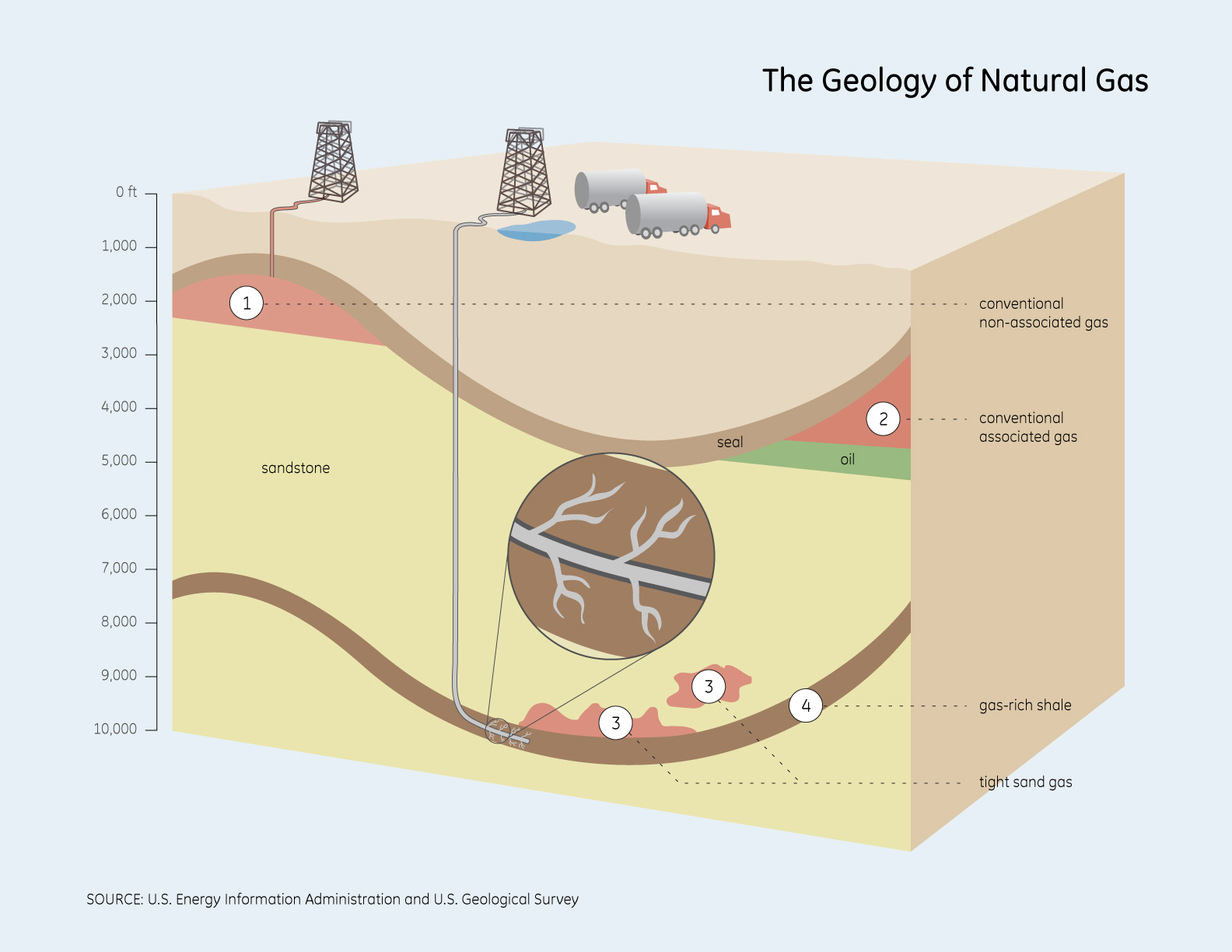
 Everyone knows that shale drilling is a house of cards, right? Just look at shale gas drillers in the northeast. Company stock prices down 90% over the past 5-10 years. Yuck. And don’t even get us started talking about shale oil companies (filthy monsters). Their balance sheets and share prices are even *worse* than shale gas drilling companies! They NEVER make any money. EVER! Shale oil companies just keep getting new investors to invest so they can pay off old investors, like a Bernie Madoff Ponzi scheme. Except–what if the media narrative pounded into your head day in and day out isn’t true? What if shale companies are actually (gasp) making money?
 Are oil (and gas) drillers on a precipice, about ready to go over the edge into oblivion? Become extinct? According to the article below, yes they are. The author is not necessarily rooting for that outcome, but simply recognizing that with market capitalizations in the toilet (down 90% or more), and the price of oil remaining low, many companies will not be in business in the next few years. That’s his thesis. Is he right?