
Average Workers at Top Marcellus Drillers Make $100K+ Salary
 The average worker who works for producers (i.e. drillers) in the Pennsylvania Marcellus makes among the highest average salaries of any industry in the state. Looking at six of the state’s top Marcellus drillers, the average worker made $113,610 last year! That’s an average taken from workers at CNX Resources, Range Resources, Chesapeake Energy, Southwestern Energy, EQT and Cabot Oil & Gas. We hasten to add not “all workers” but “average” or “median” workers–meaning there are people who make below that number and people who make well above that number. It also means the majority of Marcellus workers in those companies made at least $100,000 per year. Those working for oilfield services (OFS) companies like Halliburton, Baker Hughes and others didn’t fare quite as well, making an average of $52,000-$80,000 per year. Still, hey, it ain’t bad money! Here’s a look at the average wage for top Marcellus drillers and the OFS companies that serve them…
Read More “Average Workers at Top Marcellus Drillers Make $100K+ Salary”
 Although the average employee at Range Resources made $123,500 last year (see today’s lead story, Average Worker at Top Marcellus Drillers Makes $100K+ Salary), those in upper management at Range made considerably more. We don’t have the 2017 number, but in 2016, Range CEO Jeff Ventura made $9.8 million (see
  If you’ve read MDN for any length of time, you know about a $6 billion ethane cracker plant being built by Shell in Monaca (Beaver County), PA–near Pittsburgh. The plant will chemically “crack” ethane, an abundant natural gas liquid (NGL) that comes out of the ground along with methane, creating polyethylene from the ethane. Polyethylene is, in essence, raw plastic. Manufacturers in the region and beyond will use the plastic pellets Shell will produce at the plant to create an unlimited variety products. Shell is a smart company. They’re as much a marketing company as they are an oil and gas producer and petrochemical manufacturer. They know the value of positioning and mind share. We hadn’t thought about it previously, but we always just thought of and called the project the “Shell cracker plant.” The plant now has a name: Shell Polymers. The name Shell Polymers has been around for a long time but had fallen out of use when Shell largely exited the plastics business. With the new cracker coming online in the next few years, it’s time to revive the Shell Polymers name/brand and apply it to the cracker plant, which is how the project was being pitched at the last week’s NPE2018 (formerly called the National Plastics Exposition) in Orlando, Florida…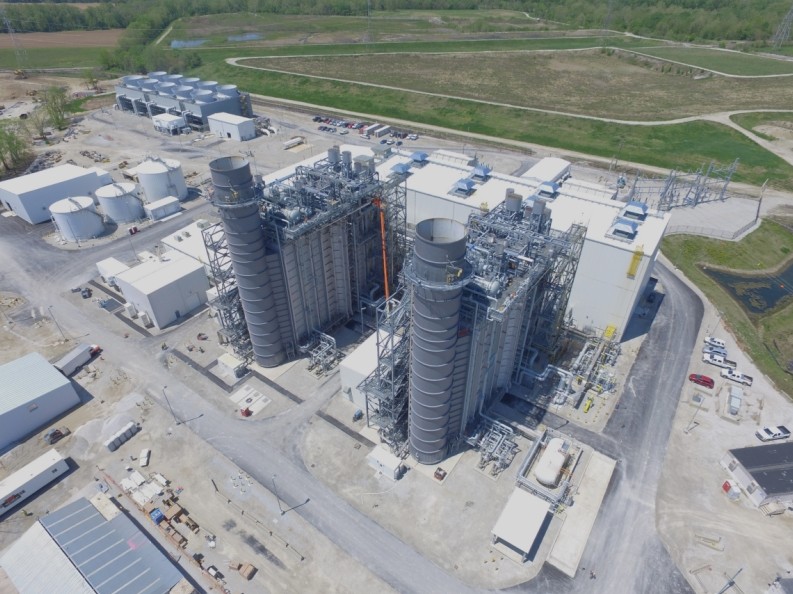
 In August 2015, MDN told you about a lawsuit brought by a group of left coast radicalized children who want to force the federal government to become communist and “force action” on mythical climate change (see
  Can you imagine an oil company being ashamed of the word “oil”? Sounds like a European thing–and indeed it is. Statoil, Norway’s largest oil company (in fact, the single largest company in Norway period) with operations in 36 countries around the world and over 20,000 employees–is ashamed of its own name. And so, as of today, Statoil is changing its name to Equinor. “Equi” stands for equal, equality, or equilibrium (take your pick), and “nor” stands for Norway. Whatever. We mention this bit of tomfoolery because Statoil (now Equinor) still has meaningful leases and assets in the Ohio Utica. According to MDN’s forthcoming
  A shocking and at times farcical tale of how an environmental lawsuit turned into the world’s biggest fraud is revealed in a new play. The world premiere of “The $18-Billion Prize,” based on the true story of rainforest natives and their New York lawyer “fighting for justice” against one of the world’s biggest oil companies, opens May 19 at San Francisco’s Phoenix Theatre. Performances continue through June 3. Written, or perhaps a better word is assembled, by Phelim McAleer and Jonathan Leaf, the play uses exact words from transcripts of court documents. In 1993, Steven Donziger, a Harvard-educated American lawyer, represented indigenous groups from Ecuador’s rainforest in a class action lawsuit against Chevron–a shakedown. The case received an enormous amount of media attention, including major coverage by Vanity Fair, Rolling Stone and 60 Minutes to name a few, and it drew the support of international celebrities. Chevron, to their credit, fought back. An American court found evidence of fraud and ordered Donziger to hand over his files and diaries, which exposed a massive bribery and corruption scheme. The play will make you laugh, and cry, and make you angry that such a long-running fraud could be perpetrated here in the United States…
 The “best of the rest”–stories that caught MDN’s eye that you may be interested in reading: Decision looms regarding proposed natgas facility in Keene, NH; Hilcorp awarded Utica permit in Lawrence County, PA; Louisiana gets tough on pipeline protesters with new law; FERC tax decision prompts fight between gas operators/shippers; western Canada sees chance to one-up US Gulf Coast in LNG export fight; and more!