
Antero Returns to Dry Gas Drilling; Confirms Ohio Utica for Sale
 Antero Resources, the largest Marcellus/Utica (M-U) driller in West Virginia, released its Q3 2025 update with two significant announcements. One is that newly appointed CEO Michael Kennedy is “excited” for the company to return to dry gas drilling after “more than a decade,” with the first new dry gas well specifically intended to service the data center market. Second, we can confirm our prior speculation to say that Antero is officially marketing its Ohio Utica assets for sale. We previously brought you that rumor in early September (see Rumor: Antero Preparing to Sell Ohio Utica Upstream, Midstream). Read More “Antero Returns to Dry Gas Drilling; Confirms Ohio Utica for Sale”
 Last week, CNX Resources issued its third quarter 2025 update. Notably, the company did not drill, frack, or complete any new wells in 3Q25. The company reported a profit of $202.1 million for the quarter, compared to a profit of $65.5 million in 3Q24. The company generated $226 million in free cash flow, marking the 23rd consecutive quarter of FCF generation. Production was 161.3 Bcfe (billion cubic feet equivalent) in 3Q25 — which works out to 1.75 Bcfe/d — up from 134.5 Bcfe last year (a 20% increase). The reason for the sizeable increase was that CNX closed on the purchase of Apex Energy during the first quarter, and Apex’s production numbers were fully added to CNX’s numbers beginning in 2Q25.
 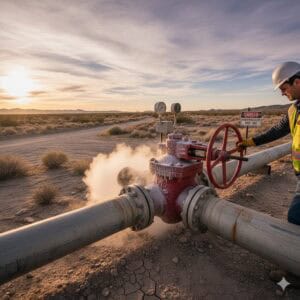 Marcellus/Utica natural gas production is rebounding in November, increasing by about 700 MMcf/d to an average of 35.5 Bcf/d recently, as drillers react to rising in-basin pricing and tightening regional fundamentals due to higher seasonal demand. This increase signifies an easing of the production shut-ins carried out during the third quarter when loose supply-demand dynamics pushed prices, which averaged $1.40-$2.97/MMBtu, to an average of below $2/MMBtu on more than a third of days.
  AltaGas is a Canada-based corporation that owns and operates both midstream (pipeline) and utilities businesses. AltaGas is a minority owner of the 303-mile Mountain Valley Pipeline (MVP), which stretches from Wetzel County, West Virginia, to Pittsylvania County, Virginia. AltaGas issued a press release yesterday stating that it has decided to continue owning its minority stake in MVP (a 10% ownership stake) and, instead of selling its stake to raise capital, will issue new common stock to raise $400 million. The company will not only retain its ownership stake in the original MVP, but also its stake in expanding MVP by another 600 MMcf/d (called MVP Boost) and in extending MVP into North Carolina (called MVP Southgate).
  Deep River Data, a company with connections to the cryptocurrency industry, wants to drill for natural gas in Lee County, North Carolina. However, production from the well would not be used to power crypto mining, but instead to fuel an AI data center. If approved, the project would be the first commercial well drilled into the Triassic Basin, a natural gas repository underlying North Carolina and other Eastern Seaboard states. The well that is planned is conventional, not shale, so it involves no (or very little) fracking.
 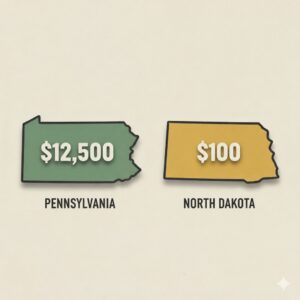 North Dakota’s regulatory framework is a model of simplicity. Companies pay a modest $100 fee for drilling permits, compared to $12,500 in Pennsylvania, and typically receive approval in 20 to 30 days. That efficiency has proven pivotal since 2010, when horizontal drilling and hydraulic fracturing significantly expanded the Bakken Formation’s potential for commercial-scale production. Of course, there’s a big difference between PA and ND—companies drill for oil in ND and natural gas in PA. So it’s not like a driller would say, “Screw it, we’ll leave PA and go drill in ND where it’s easier, faster, and cheaper.” However, drillers can/are leaving PA for Ohio and West Virginia, where it’s easier, faster, and cheaper. We bring you this masterclass on how ND makes drilling better, so perhaps, just perhaps, someone at the PA DEP (and the politicians involved in approving permit fees) will wake up and improve the experience in the Keystone State.
  In an announcement issued yesterday, the PJM Interconnection electrical grid forecasts adequate power supplies to meet this winter’s expected conditions, with 180,800 megawatts (MW) of operational capacity available to serve a record-high forecasted peak demand of approximately 145,700 MW. Despite this positive outlook, the grid operator warns that reserve margins are tightening, dropping to 7,500 MW, because electricity demand is growing faster than the addition of new generation.
  NATIONAL: U.S. natural gas extends gains on weather outlook; US becomes first country to export 10 million tonnes of LNG in single month; Climate alarmists question climate exaggeration; Products, fuel, and electricity are the real climate challenges for the future; INTERNATIONAL: Oil holds steady on OPEC+ pause; Adnoc CEO says AI raises energy investment needs to $4T; QatarEnergy, Exxon executives warn of Europe exit over climate law; Study shows oil and gas companies continue to expand.