
PA House Swaps Gas-Linked Tax Credits for Solar in Rewritten Bill
 On Monday, the Pennsylvania Democrat-controlled House took a tax bill the Senate sent over in June, gutted it, and sent back something very different. The new version has a 2-cent-per-kilowatt-hour fee on big electricity users (read: data centers), a grab bag of “clean energy” tax credits from Gov. Shapiro’s wish list, and a gas-fired power plant credit so wrapped in strings it may never pay out a dime. The House vote was 193-10. The Republican-controlled Senate had two voting days on the calendar before the Nov. 3 election: yesterday and today. The Republican-controlled Senate left the bill in its Rules Committee on Tuesday and instead passed 17 other measures. Today is its last scheduled day of voting before the Nov. 3 election. We don’t see any signs they will take up this bill today, but one never knows. Read More “PA House Swaps Gas-Linked Tax Credits for Solar in Rewritten Bill”
 Here’s a head-scratcher for you. On Tuesday, the price of natural gas futures on the New York Mercantile Exchange (NYMEX) took a tumble, slipping below $3 for the first time in more than two weeks. Yet on that very same day, the “spot” (cash) price for gas right here in Appalachia went UP—and one trading point jumped more than 20% in a single day. How does that happen? And should drillers and royalty owners break out the champagne? Let’s unpack it.
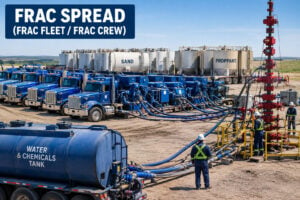 The folks who count frac crews for a living say U.S. fracking should bounce back by next spring. The biggest frac company in the country is more cautious: Halliburton says it’s planning for a flat 2027 in North America, and any frac recovery is “purely upside.” So who’s right? Maybe both. And tucked inside the numbers is some very good news for the Marcellus/Utica.
 Halliburton, one of the two or three biggest frac providers working in the Marcellus/Utica, reported its third-quarter 2026 results yesterday. Most of the financial press focused on Saudi Arabia, Venezuela, and a rosy 2027 forecast. The part M-U drillers (and the folks who supply them) should care about came out during the earnings call. Frac crews are getting scarce, customers are lining up for next year, and Halliburton is raising its prices. If you drill wells in Appalachia, your 2027 completion budget may need a bigger number in it.
 JKLM Energy, the private drilling company run by Buffalo Bills and Sabres owner Terry Pegula, has applied to drill a shale well in Salem Township, Westmoreland County, PA, next to the Totteridge Golf Course. The Pittsburgh Tribune-Review’s story on the permit says the well would tap a “1,000-acre pool of methane.” Um, no. There is no underground lake of gas sitting beneath Salem and Hempfield townships, waiting for someone to stick a straw in it. What JKLM has put together is a pooled drilling unit. That’s a legal arrangement, not a geological feature. The difference matters a great deal to the 64 landowners who will someday be cashing royalty checks from this well.
 Ohio’s state-land leasing program has a new target. A driller (whose name is kept secret by state law, for now) has asked the Ohio Oil and Gas Land Management Commission (OGLMC) to open about 618 acres under the Monroe Lake Wildlife Area in Monroe County to shale drilling. Public comments are open through Nov. 30. The twist this time? Because of the calendar, the final call may land on the desk of whoever wins next month’s race for governor.
 Back on Sept. 1, we told you Dominion Energy’s monster 3,000-megawatt (3 gigawatt) gas-fired power plant in Cumberland County, Virginia, had cleared its first hurdle when the county planning commission voted 5-1 to recommend approval (see
 MARCELLUS/UTICA REGION: High schoolers hold fundraisers to plug oil and gas wells; Ike Morris, well-known West Virginia businessman and philanthropist, dies; NATIONAL: U.S. natural gas futures extend decline on weather outlook; The AI policy debate suffers from a dangerous plague of vagueness; Greenhushing – climate loses its message; The permitting reform deal’s quiet endorsement; INTERNATIONAL: Oil slips as Iran talks fuel volatility; HSBC sees Hormuz becoming redundant in five years; UK government approves a natural gas project off Scotland despite environmental concerns.