Antero 2Q18: 2.5 Bcfe/d; $136M Loss; No More Utica Drilling This Yr
 Antero Resources released its second quarter 2018 update yesterday. Antero is one of the largest drillers in the Marcellus/Utica with massive amounts of acreage in West Virginia (and elsewhere). Revenue was up in 2Q18 to $989 million, compared to $790 million in 2Q17. However, profits were down. In 2Q17 Antero lost $5.1 million, while in 2Q18 they lost $136 million. Antero produced a record 2.52 billion cubic feet equivalent per day (Bcfe/d) of natural gas–27% of that was liquids, including oil. In 2Q the company drilled 22 new Marcellus wells and brought 25 Marcellus wells online. They drilled 6 Utica wells and brought 5 Utica wells online. The company is pausing any new OH Utica drilling for the rest of this year in order to concentrate on the liquids-rich Marcellus region. Antero would have drilled and produced more except there is a trucking shortage in WV. Antero uses trucks to get its crude to market, and lack of trucks meant 100,000 barrels of crude are stored and can’t be moved, and that means the company has curtailed production in a number of WV wells. Antero expects the situation to improve by September. During 2Q Antero drilled what is (so far) the longest lateral for a WV shale well–15,100 feet!…
Read More “Antero 2Q18: 2.5 Bcfe/d; $136M Loss; No More Utica Drilling This Yr”

 Antero Resources is seriously in love with West Virginia. Antero is headquartered in Denver, CO but is totally focused on drilling for natural gas, NGLs and oil in the Marcellus/Utica. Antero owns over 484,000 net acres in the southwestern portion of the Marcellus Shale, and over 137,000 net acres in the core of the Utica Shale. Most of their acreage is in WV. Of the $1.3 billion the company spent last year, and plans to spend again this year, around $1 billion (per year) is spent on drilling in WV–close to 80%. Over the next five years, Antero says it will invest $6 billion in the Mountain State. That’s some serious love! As the technology gets better, it takes less time to drill. Antero said it used to take 30 days to drill an 8,000-foot well. Today? They can do it in one day. One of the secrets to Antero’s success in WV is their new Clearwater facility that recycles 98% of the frack wastewater (flowback and produced water) coming from Antero’s wells. Below is an article in which Antero gushes about their love (and future plans) for WV…
 Lots of news coming out of Antero Resources, one of the Marcellus/Utica’s biggest (and best) drillers. Antero issued its fourth quarter and full year 2017 update, along with a statement about the company’s proved reserves, earlier this week. Perhaps the biggest news is that after losing $849 million in 2016, net income for Antero in 2017 was $615 million–a $1.4 billion swing (to the good) over the course of a single year! Average daily production in 2017 was 2.25 billion cubic feet equivalent per day (Bcfe/d)–a 22% increase over 2016. Zooming in on just the fourth quarter, Antero completed and placed on line 28 Marcellus and 10 Utica wells. Antero said they are getting into long laterals. Of the Marcellus wells drilled in 4Q17, nine had laterals over 12,000 feet, with two of those exceeding 14,000 feet in length (over 2.5 miles horizontally underground). Even with long laterals, Antero decreased the average number of days it takes to drill a well–from 15 to 12 (20% less). They also upped the amount of sand they use in fracking by 23%–to over 2,000 pounds of sand per foot. At the end of 2017, Antero estimates it had 17.3 trillion cubic feet equivalent of natural gas sitting in the ground that can be extracted using today’s technology at today’s prices (“proved reserves”). That 17.3 Tcfe is 12% higher than at the end of 2016. Below is the whole enchilada–two updates from Antero, excerpts from the analyst phone call, and the latest and greatest PowerPoint presentation…
 Our lead story today is about Gulfport Energy which highlights some exciting news: This year (in 2018) Gulfport will fund their entire drilling budget out of the cash flow the company generates from selling gas/oil/NGLs (see Gulfport Energy Continues Focus on Utica for 2018, No Borrowing). Thing is, Gulfport isn’t the only Marcellus/Utica driller to advertise the fact that this year they are “living within their means” and not borrowing. Others include Range Resources, EQT and Antero Resources. Wow! We’re finally profitable!! Or are we? MDN spotted some analysis by a hedge fund manager. Writing on the Seeking Alpha investor’s website, Josh Young says (in our words) “hold on a minute” with respect to M-U drillers appearing to be able to grow production without borrowing. Why is Josh not convinced with this good news? Because when you dig deeper into the numbers, you find that “organic growth within cash flow is further from reach” because drillers are using DUCs to spend less on drilling, and grow production, than they otherwise would be. A DUC is a Drilled but UnCompleted well. Many times drillers will drill the initial hole in the ground, but then not “complete” (or frack) the well. Why do that? For a variety of reasons. The biggest reason is usually because the commodity price of gas (or oil, depending on the well) is not favorable. Rather than lose the lease (an expensive proposition), drillers will begin the process by drilling, and then leaving, the well, returning later to complete it when prices go up again. Josh’s thesis is that by using DUC inventory drillers aren’t really funding the entire budget from current year cash flow, because some of the money was spent in a previous year to drill the well. They are, in essence, still borrowing–from a different year. Josh estimates an average of 20% of the “new” wells coming online are DUCs and not truly new wells funded by current year dollars–meaning these companies aren’t as “profitable” as they may seem. Does he have a point? Is it all just financial mumbo jumbo? You decide…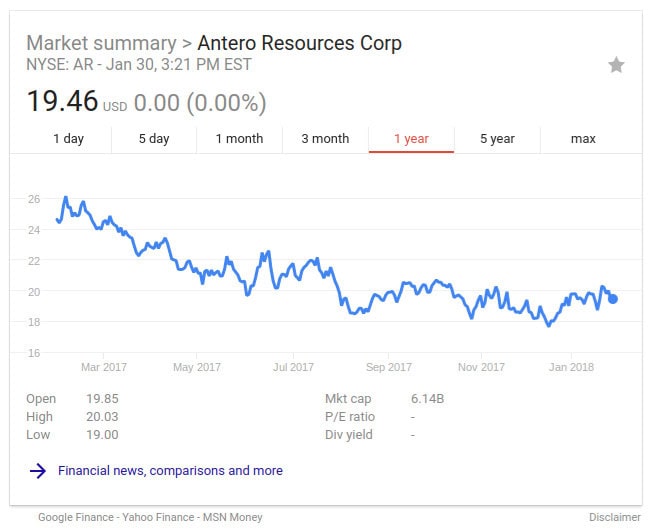
 The Marcellus/Utica Shale industry is changing underneath our feet–literally! Last time we checked, most well pads in the Marcellus/Utica sported an average of maybe 3-4 wells–with a dozen wells on a pad being “big.” Something has changed, dramatically, in the gas fields of PA, OH and WV. The “new normal” are supersized well pads–holding as many as (gasp) 40 wells! We hasten to add no such pad yet exists–a pad with 40 wells drilled from it. However, there is an EQT well pad in Allegheny County (near Pittsburgh) with 38 wells permitted (9 of which have been drilled so far). EQT says it now averages drilling 17-18 wells per pad. Antero Resources is drilling an average of 10 wells per pad–up from 3-4 “just a few years ago.” The trend now is more wells per pad, and longer laterals–meaning fewer well pads overall. That’s good for the environment, and good for the bottom line (less money spent pushing dirt around developing pads). Here’s an update on the trend to supersize well pads in the Marcellus/Utica…
 By our reckoning, Antero Resources’ $275 million wastewater recycling facility in Doddridge County, WV is now operational (see
  Yesterday MDN updated you on Eclipse Resources’ program of drilling looooong laterals–the horizontal part of shale wells (see
  By our reckoning, Antero Resources’ $275 million wastewater recycling facility in Doddridge County, WV is either already operational, or will be within the next few days (sometime this week). In 2015 Antero hired Veolia Water Technologies Inc. to build a new shale wastewater recycling facility in Doddridge County (see
  Antero Resources turned in their third quarter 2017 update earlier this week. On the ubiquitous analyst phone call, Antero CEO Paul Rady spoke at length about the company’s long laterals. Antero has been a leader in drilling long laterals with nearly 900 wells drilled at an average lateral length of 8,250 feet–with some 230 of those drilled with a lateral length longer than 10,000 feet. Of all the shale wells drilled in the Marcellus/Utica that are over 10,000 feet, Antero has drilled more than 30% of those wells. According to Rady: “Longer laterals at 9,000 plus feet generate materially higher well economics.” But long laterals aren’t the whole story. Antero is also bumping up the amount of sand they use in fracking. In 2016 they used 1,500 pounds per square foot. From there they moved to 1,875. Today? They use 2,500 pounds per foot. The company continues to be one of the best in the business with hedging, or pre-selling their gas on long-term contracts for prices higher than they would get on the day-to-day spot market. After hedging, Antero got $3.39 per thousand cubic feet (Mcf) for gas and equivalents (oil, NGLS) last quarter. Antero drilled and brought online 31 Marcellus wells and 6 Utica wells in 3Q17. Below is the full update, extracts from the analyst phone call, and the the latest slide deck…