
EQT Makes it Official, Files with FERC to Extend MVP into NC
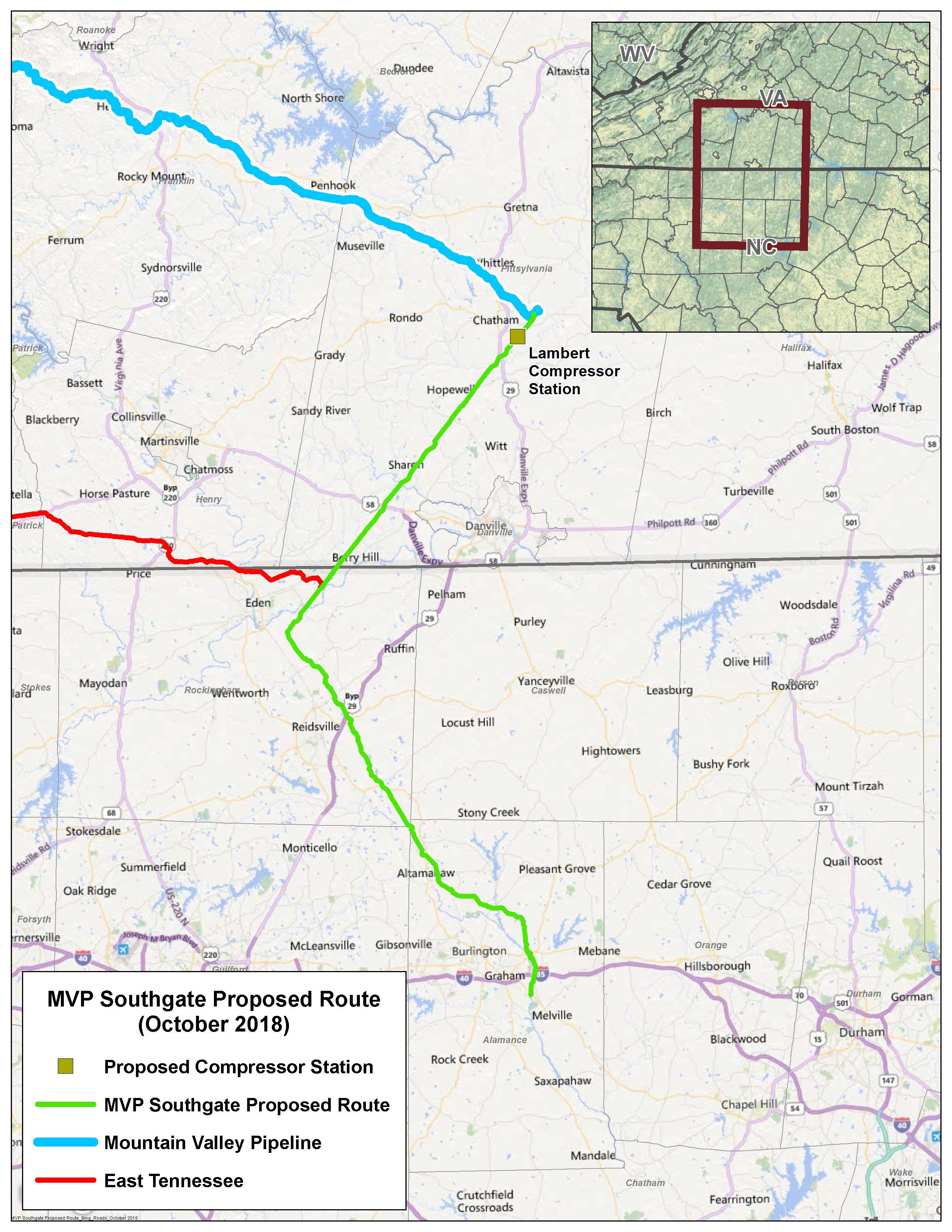
In April MDN told you that even though Mountain Valley Pipeline (MVP) had only just begun to build along it’s 300+ mile route from West Virginia to southern Virginia, and even though the project faces enormous opposition from extremists who sit in the tops of trees and on top of poles, MVP went on offense by announcing a binding open season (time when customers can sign on the dotted line) to expand the not-yet-built pipeline even further (see Mountain Valley Pipeline Launches Plan to Expand 70 Miles into NC). The MVP Southgate project, as it’s called, will flow gas from the MVP mainline where it terminates in Pittsylvania County another 70 miles south to new delivery points in Rockingham and Alamance counties in North Carolina. Yesterday MVP (i.e. EQT Midstream) filed the official request with FERC.
Read More “EQT Makes it Official, Files with FERC to Extend MVP into NC”
 EQT Midstream, which is about to be renamed to Equitrans Midstream Corp. in a few weeks, recently issued its third quarter 2018 update (same day that EQT the driller issued its update). As you know, the two are about to split and become two independent companies. As part of the EQT Midstream update, the new midstream company leaders spoke about Mountain Valley Pipeline (MVP), a 303-mile pipeline from West Virginia into southern Virginia. MVP has experienced a lot of setbacks, most of them from a campaign of lawsuits filed by Big Green organizations (like the odious Sierra Club). A new pipeline project related to MVP was mentioned prominently in this week’s quarterly update. The pipeline is called Hammerhead.
 A group of 13 landowners in Virginia whose property was force taken by Mountain Valley Pipeline (MVP) using eminent domain is appealing a case they already lost in federal court to the U.S. Supreme Court. The landowners claim MVP has taken private land–their land–to use for private/corporate gain and not (as the law requires) taken for a “public” benefit. Eminent domain allows the taking of private land for public benefit, but not taking private land for private benefit. The issue really revolves around the question of, What is a public benefit? Can a private company use government powers because what they provide benefits the public? The big question is, will the Supreme Court, which gets some 8,000 such appeals each year, make this appeal one of the 80 or so they consider?
 Although EQT Midstream’s 303-mile Mountain Valley Pipeline (MVP) project has experienced a number of legal and regulatory setbacks and is currently blocked from constructing pipeline across/under/near any river, stream, or wetland in all of West Virginia and all of Virginia (some 1,100 different locations), believe it or not there are still many places where MVP can and is still installing pipeline (see
  We now have a date for when EQT (the driller) and EQT Midstream (the pipeline company) will split and become two separate, independent companies that will no doubt continue to work together, but will in fact be two companies. That date is November 12. In a pair of press releases issued yesterday, EQT outlined how the transition to two publicly traded companies, EQT Corporation (stock ticker EQT) and Equitrans Midstream Corporation (ticker ETRN) will happen. One of the releases names four new members for the EQT board once the split occurs, and reaffirms that current EQT CFO Robert McNally will stop “Acting” and become the full, official President & CEO of EQT.
 Although EQT Midstream’s 303-mile Mountain Valley Pipeline project has experienced a number of legal and regulatory setbacks and is currently blocked from constructing pipeline across/under/near any river, stream, or wetland in all of West Virginia and all of Virginia, there are still places where MVP can build (see
  We thought that all of Mountain Valley Pipeline’s (MVP) permits issued by the U.S. Army Corps of Engineers for stream and wetland crossings had been pulled in both West Virginia and Virginia, but alas, no. One of the regions where permits issued by the Army Corps (called NWP 12 permits), in the northern panhandle of WV, is issued by a different Army Corps district office (in Pittsburgh). That office has now revoked MVP’s permits in Wetzel and Harrison counties–another 59 stream and 62 wetland crossings. Which now makes it complete: MVP cannot engage in any construction across/under/near any river, stream, or wetland in *all* of WV and *all* of VA. That is, until they get the NWP 12 permit reworked and reissued.
 Mountain Valley Pipeline, a project of EQT Midstream, continues to work on constructing its 303-mile long project from West Virginia into Virginia–despite a recent court order overturning some of the permits for the project (see
  It’s one thing for mud and sediment to wash away from a pipeline drilling site due to heavy and relentless rains–as we have experienced in the northeast these past few months. But it’s another thing entirely when actual sections pipeline sitting at the construction site float away! That happened in Franklin County, Virginia last Thursday. The landowner, who was (and is) opposed to the 303-mile Mountain Valley Pipeline from slicing through his property, has complained repeatedly about erosion and sediment from the construction path spilling over onto his farmland. Friday morning he woke up to MVP pipes washed onto his cornfield following torrential rains and wind, the leftovers of Hurricane Michael.
 More bad news for EQT Midstream’s Mountain Valley Pipeline (MVP). Last week the U.S. Court of Appeals for the Fourth Circuit overturned a permit issued by the U.S. Army Corps of Engineers for MVP in West Virginia (see
  We’ve seen this movie before. The U.S. Court of Appeals for the Fourth Circuit (quickly becoming the Fourth Circus) has once again listened to the arguments of anti-fossil fuel groups including the Sierra Club and Chesapeake Climate Action Network and has overturned a recently re-issued permit that allows Mountain Valley Pipeline (MVP) to use certain methods to build the pipeline across streams and rivers in West Virginia. The court action pretty much shuts down all work on MVP in WV.
 We’ve lost track of how many lawsuits have been filed by anti-fossil fuel groups against EQT Midstream’s Mountain Valley Pipeline (MVP), and Dominion Energy’s Atlantic Coast Pipeline (ACP). Among the flood of never-ending lawsuits was a lawsuit against both pipelines from a group of 50 or so landowners who tried to overturn the constitutional use of eminent domain to force hold-out landowners to accept the pipeline. The landowners tried to court-shop and find a court to aide them in their cause. Last Friday the U.S. District Court for the District of Columbia rejected that effort.
 Line ’em up and knock ’em down. Last Friday a panel of judges from the U.S. Court of Appeals for the Fourth Circuit (in Richmond, VA) heard four cases against Mountain Valley Pipeline (MVP) and Atlantic Coast Pipeline (ACP), one after another, bing bing bing bing. Both pipeline projects, very important to the Marcellus/Utica region, are in various states of litigation, brought on by the odious Sierra Club and co-conspirators like the Southern Environmental Law Center.
 The price tag to build the 303-mile Mountain Valley Pipeline is going up. When first announced, the project, which will run from Wetzel County, WV to the Transco Pipeline in Pittsylvania County, VA, was originally estimated to cost $3.5 billion. That number was tweaked this summer to $3.7 billion. Now MVP (i.e. EQT Midstream) says it will cost a whopping $4.6 billion–more than a billion dollars higher than the original estimate. Why the big hike? Two things, says MVP: (1) A work stoppage imposed by the courts and by FERC (thank you Sierra Club), and (2) heavy rain. The rise in cost is due more the former rather than the later. It was only yesterday we ran a story about how much it costs, per mile, to build a major pipeline in the northeast (see
 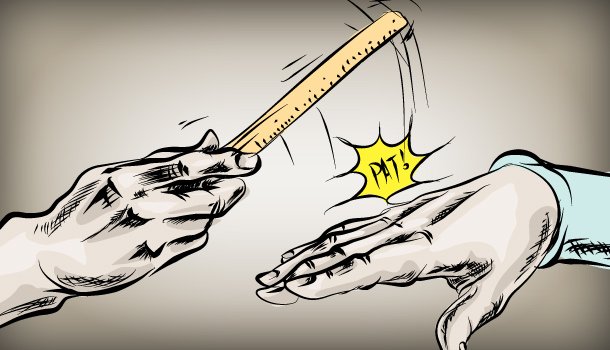 It doesn’t help the cause of justice to let a repeat offender who breaks the law in order to protest pipeline projects, off easy. That’s what happened last week in Virginia when a U.S. Magistrate Judge essentially slapped the wrist of Virginia Tech radical professor Emily Satterwhite following yet another violation in her protest of Mountain Valley Pipeline (MVP). Police had taped a “no trespass” area and Satterwhite brazenly violated it, using the excuse she was taking pictures of other nutjob protesters who intentionally ran into the construction zone. OK, so she crossed a taped line. That’s no big deal is it? Thing is, she previously chained herself to a bulldozer, delaying construction of MVP for a whole day. The tape is up for a reason–to protect bystanders and workers. She violated it. She got off easy. The charge will be dropped if she doesn’t repeat offend yet again (fat chance of that happening)…