
Anti-Drilling/Fossil Fuel | Energy Services | Industrywide Issues | Kinder Morgan | Pipelines | Regulation | Tennessee Gas Pipeline
Vernon, NJ Votes to Block More NatGas Supplies to NYC
 Antis and leftwing environmentalists in New Jersey continue their mission to block more natural gas from flowing to New York City, threatening the residents of the city, by attacking two compressor stations in the NJ suburbs. The latest conscripts to the holy mission of defeating “fossil fuels” can be found among the weaklings who sit on the Vernon Township (NJ) Council, who voted 4-1 to oppose a proposed expansion of Tennessee Gas Pipeline Company’s compressor station in Wantage (Sussex County).
Read More “Vernon, NJ Votes to Block More NatGas Supplies to NYC”
 We find it kind of amusing that anti-fossil fuelers dead set against a plan by Kinder Morgan to build a new compressor station in Passaic County, NJ, and dead set against upgrading an existing compressor station in neighboring Sussex County, NJ, were all worked up to attend a Sussex County Board of Commissioners meeting where a Tennessee Gas Pipeline representative was supposed to make a presentation, but the rep didn’t show. He had (ahem) “car trouble” and couldn’t make the meeting in person. Antis were all dressed up with nowhere to go.
 Tennessee Gas Pipeline’s (TGP) plan to flow more natural gas to Westchester and New York City is called the East 300 Upgrade Project. The project involves upgrades at two existing compressor stations (in Pennsylvania), along with building a brand new compressor station in West Milford (Passaic County), just across the border and not far from Westchester County, NY. Two weeks ago we told you area residents and leftwing environmentalists had convinced the county to officially oppose the project (see
  The Federal Energy Regulatory Commission (FERC), now firmly under the jackboots of Chairman Richard “Dick” Glick, has just struck a major blow to five natural gas pipeline projects, four of them either located in the Marcellus/Utica or located elsewhere but will flow significant amounts of our gas. Just coming to light now is the fact that last Thursday functionaries inside the bowels of FERC issued notices to five pipeline projects that FERC has hit the pause button on finishing up final approvals so the agency can take the next six months to complete full environmental impact statements (EIS’s), gauging whether or not these projects will cause too much mythical, man-made global warming. We’d be really angry about this except our anger quotient is already exhausted with this bunch of leftist nuts.
 Crestwood Equity Partners and Consolidated Edison, Inc. (Con Edison) yesterday announced they are selling their 50/50 joint venture in Stagecoach Gas Services to pipeline giant Kinder Morgan for $1.225 billion in cash. Stagecoach consists of four natural gas storage facilities and 185 miles of natural gas pipelines located in the Marcellus/Utica with multiple interconnects to major interstate natural gas pipelines, including Tennessee Gas Pipeline, a Kinder Morgan subsidiary.
 In an effort to flow more Marcellus natural gas to a starving New York City, Kinder Morgan cut a deal with utility company Consolidated Edison in 2019 to provide more gas by beefing up capacity along its Tennessee Gas Pipeline (TGP) that feeds NYC, allowing Con Ed to avoid cutting customers off from natgas hookups (see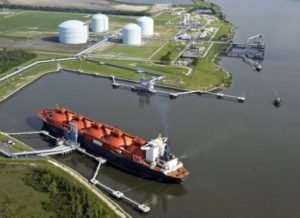
 Food & Water Watch, the virulent, leftist anti-fossil fuel group, will get its day in court today in the organization’s bid to block a tiny 2.1-mile pipeline looping project in western Massachusetts. But lest you think the lawsuit being argued today before the liberal D.C. Circuit Court of Appeals is just about a small pipe project in liberal Massachusetts, think again. FWW is attempting to use this case to shut down all future pipeline projects too. Is the fix in with this case?
 U.S. pipeline companies are under no illusion of just how bad the next four years will be for their business, at least for building new pipelines. We told you last week that Williams CEO Alan Armstrong predicted there will be no new greenfield pipelines built during the Biden administration (see
  Members of the Interstate Natural Gas Association of America (INGAA) announced yesterday a set of climate change commitments that outline in detail its mission to help address climate change, including working together as an industry towards reaching net-zero greenhouse gas (GHG) emissions from natural gas transmission and storage by 2050. INGAA members pledging to hit that target include the biggest pipeline companies in the M-U, including Williams, Kinder Morgan, and Enbridge.
 In an effort to flow more natural gas to a starving New York City, Kinder Morgan cut a deal with utility company Consolidated Edison in 2019 to provide more gas by beefing up capacity along its Tennessee Gas Pipeline (TGP) that feeds NYC, allowing Con Ed to avoid cutting customers off from natgas hookups (see
  In March 2019 MDN told you about Kinder Morgan’s Natural Gas Pipeline Company of America LLC (NGPL) project that carries Marcellus/Utica gas from the Midwest all the way to the Gulf Coast to feed just about any of the existing or under construction LNG export plants in the region (see
  The first of 10 LNG (liquefied natural gas) mini-trains at Kinder Morgan’s Elba Island, Georgia export facility went online in December of last year (see
  We were wrong. In August MDN told you that the tenth and final mini-train had gone online at Kinder Morgan’s Elba Island, Georgia LNG export facility (see