
Energy Services | Industrywide Issues | New York | Pipelines | Regulation | Statewide NY | Transco | Williams
It’s Time to Support Williams’ NESE Project in NY – Here’s How
 It’s no secret that getting a gas pipeline project of any kind approved in New York State is an uphill battle because our governor, Andrew Cuomo, blocks all new pipelines in a bid to keep his left wing supporters happy. An important project from Williams, the Northeast Supply Enhancement (NESE) which would beef up capacity along the Transco pipeline system going into New York City, is about to get two hearings with the state Dept. of Environmental Conservation.
Read More “It’s Time to Support Williams’ NESE Project in NY – Here’s How”


 Utility giant National Grid, which services Long Island (part of New York City) with natural gas service, is threatening New York State that if the state does not approve Williams’ Northeast Supply Enhancement (NESE) pipeline project by May 15th, they will, as Consolidated Edison has just done in Westchester County, impose a no-new-natural gas customers moratorium for the New York City area. Which would block development of the new $1 billion Belmont Park Arena.
 A huge crack of sunshine has just shown through the court system with respect to pipeline projects. A case decided on Jan. 25 in the DC Circuit Court of Appeals which technically has nothing to do with either the Williams Constitution Pipeline project nor the National Fuel Gas Company Northern Access Pipeline project (both being blocked by New York State), may be the one court decision to break open the logjam and allow both projects to begin construction.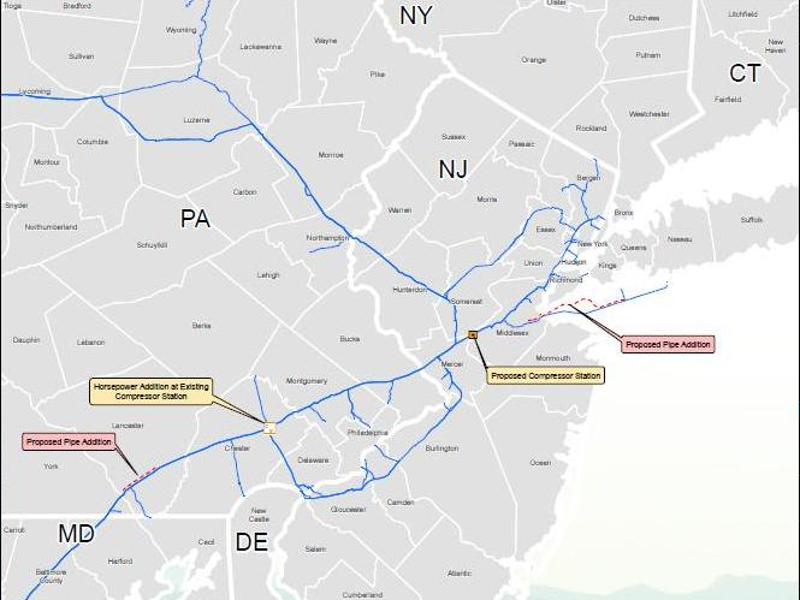
 Ole Andrew Cuomo (pronounced Coo-moh by many people we know) is facing a classic Catch-22 situation. He has long promoted and earnestly wants a new arena as the home for the New York Islanders hockey team, but unless he allows a new natural gas pipeline under New York bay, he’s not going to get it.
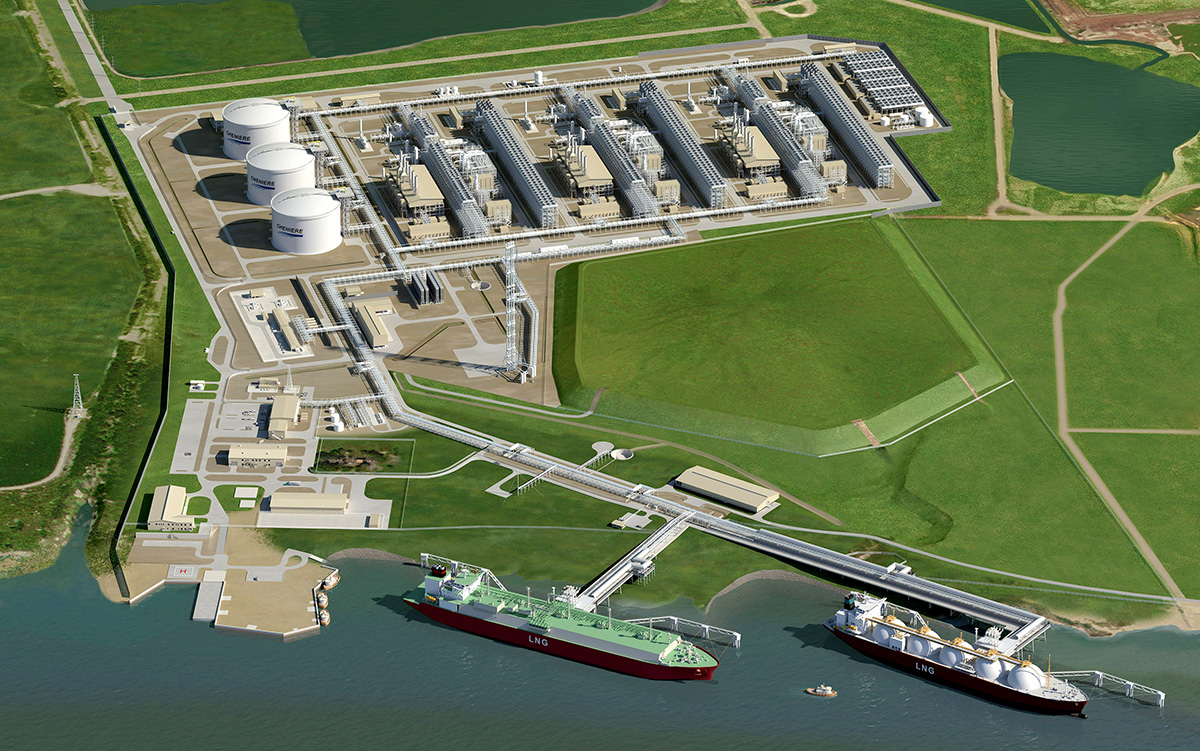
 By a vote of 2-1, the Federal Energy Regulatory Commission (FERC) yesterday issued a final approval for Williams’ $85 million project called the Transco “Gateway Expansion Project,” which will flow an extra 65,000 dekatherms per day (65 million cubic feet) of natural gas to a couple of utility companies in New Jersey that have already signed on the dotted line as customers. The upgrades include a new compressor unit at Transco’s existing Compressor Station 303 in Essex County, NJ, a new valve and electric transformer also in Essex County, and equipment upgrades at a metering station in Passaic County, NJ. PSEG Power and UGI Energy Services have signed up to receive the extra gas–to be distributed to their customers in the region. Once again the two Democrat FERC commissioners, Cheryl LaFleur and Dick Glick, expressed overpowering, debilitating concern over how the project will “contribute” to mythical man-made global warming.
 Ambulance-chasing lawyers for a Minnesota-based subcontractor (United Piping Inc.) have filed a lien against some of the landowners where Mariner East 2 (ME2) crosses, claiming the landowners may have to pay them because the contractor, Welded Construction, can’t. The lawyers are using a little-known law in Pennsylvania that dates to 1901 to make their claim. This is seriously screwed up. You may recall we previously told you that Williams, disputing work Welded Construction had done for them in building the Atlantic Sunrise Pipeline, refused to pay $23.5 million, causing Welded to declare bankruptcy (see
  It’s the birth of a brand new pipeline expansion project. Several weeks ago Williams pre-filed with the Federal Energy Regulatory Commission (FERC) to make certain upgrades (all of them in Pennsylvania) to its mighty Transco Pipeline. The upgrades include replacing smaller pipeline with larger pipeline in some areas, adding “looping” in other areas, and upgrading four compressor stations. The changes will flow an extra 582 million cubic feet per day (MMcf/d) of Marcellus gas from northeast and southwest PA to “growing demand centers along the Atlantic Seaboard.” Williams is holding two (of four) open houses next week to discuss the project. Below are details about the project and a copy of Williams’ FERC pre-filing application.
 The evidence continues to pour in that the addition of Williams’ Atlantic Sunrise Pipeline, a 200-mile greenfield pipeline from northeastern to southeastern PA where it joins the Transco Pipeline, is having a dramatic and ongoing effect on natural gas prices in northeastern PA. As in, the price drillers get for their gas has doubled. Atlantic Sunrise went online in early October (see
 Miracle of miracles, two (!) Democrat FERC commissioners (Cheryl LaFleur and Dick Glick), along with one Republican commissioner (Chairman Neil Chatterjee), voted unanimously to extend the time frame by another two years for Williams to build the Constitution Pipeline. As you may recall, the Constitution was stopped cold by corrupt NY Gov. Andrew Cuomo and his lackeys at the state Dept. of Environmental Conservation (DEC). Constitution is planned to run from Susquehanna County, PA up into, and mostly situated in, New York State. Cuomo won’t be happy with this decision because it’s a very loud and clear signal that FERC believes the project *will* some day get built.
 Transcontinental Gas Pipe Line Co. (Transco) is the crown jewel of Williams. Transco is a 10,200-mile pipeline system with 53 compressor stations extending from South Texas to New York City. The recent Atlantic Sunrise Pipeline project in northeast PA that went online Oct. 6 is part of Transco, feeding more Marcellus gas into the Transco system to flow that gas south. During yesterday’s Williams third quarter update, CEO Alan Armstrong hinted that yet another new Transco project, “Project #1,” is in the works and will be announced during 4Q18. Project #1 will expand Transco’s capacity in Zones 3-6, allowing more Marcellus/Utica gas to flow south–perhaps all the way to the Gulf Coast.