
Unplanned Pipe Outage Near Boston Blocks M-U Gas, Spikes Prices
 When you only have one main pipeline flowing natural gas from the prolific Marcellus Shale to your region, as does Boston, if that pipe has an outage for any reason, as the Algonquin Gas Transmission (AGT) has had, you’re in trouble. AGT declared a force majeure (an unforeseen act of God) on the 26-inch line of its J System in Massachusetts. The outage in one particular section of the pipeline means “slashing nominations downstream of Trapelo to zero for the foreseeable future.” Ouch. Guess what’s happening to the price of natural gas at the Algonquin Citygates natgas trading hub? Through the roof.
Read More “Unplanned Pipe Outage Near Boston Blocks M-U Gas, Spikes Prices”
 National Grid is desperately trying not to run out of natural gas for its customers in Brooklyn and Queens (on Long Island). For several years the company has fought a battle to run a tiny pipeline to its Greenpoint, Brooklyn facility, to provide extra natural gas. That project is being investigated by the Biden administration on charges of racism (see
  Pennsylvania State Rep. Marina White (Republican from Philadelphia, a true rarity) sponsored a bill that’s getting traction in Harrisburg. House Bill (HB) 2458, which passed with a vote by the full House on April 13, creates a task force to study how to establish Philadelphia LNG exports to international markets, particularly those in Europe. The bill creates a task force to study the economic feasibility, financial impact, and the security needed to turn the Port of Philly into an LNG export terminal, exporting PA’s abundant and clean Marcellus Shale gas.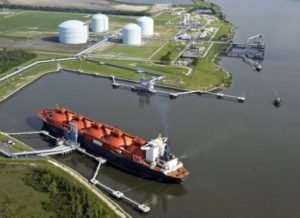
 When we say “natural gas exports,” what do you think about? Likely big LNG cargo ships and big LNG liquefaction plants that sit along our coastlines, right? Did you know that until roughly 2020, more natural gas was exported from the United States via pipelines than by LNG cargo ships? LNG exports are a relatively new phenomenon for the U.S. Yet in a short span of time LNG exports have eclipsed pipeline exports and will continue to do so, according to the U.S. Energy Information Administration (EIA), for the foreseeable future.
 In early March MDN brought you information from the Toronto Financial Post that said the Ukrainian crisis has put East Coast Canada LNG export facilities “back on the map” (see
  Pipeline giant Williams announced yesterday that it will collaborate with Cheniere Energy, the largest LNG exporter in the U.S., as well as other natural gas midstream companies, methane detection technology providers, and several academic institutions to implement measuring and tracking of so-called greenhouse gas (GHG) emissions at natural gas gathering, processing, transmission, and storage systems. Williams will include the mighty Transco pipeline system in this project, a 10,000-mile pipeline system that flows Marcellus/Utica gas to the Gulf Coast (to Cheniere’s LNG export facilities).
 Last Wednesday four federal government agencies, including the Department of Energy (DOE), the Cybersecurity and Infrastructure Security Agency (CISA), the National Security Agency (NSA), and the Federal Bureau of Investigation (FBI), issued a joint Cybersecurity Advisory (CSA) bulletin to warn about the discovery of a highly sophisticated and effective system to attack industrial facilities. The computer malware, called Pipedream, includes the ability to cause explosions at plants, specifically including (targeted at) LNG facilities. While the four agencies don’t finger a likely suspect for creating and propagating the malware, private security experts say it likely came from Russia.
 A story out of Port St. Joe, Florida, involving LNG, caught our attention for a couple of reasons. Nopetro LNG plans to construct and operate as many as three liquefaction trains that will liquefy up to 3.86 billion cubic feet per year of natural gas for export and delivery to markets in the Caribbean, Central America, and South America. That’s 3.86 Bcf for an entire year, not per day. Modern facilities that export LNG from the Gulf Coast, like Sabine Pass, export close to 4 Bcf per day. The facility proposed by Nopetro is minuscule in comparison. It will receive natural gas from St. Joe Natural Gas Company Inc. Nopetro recently asked the Federal Energy Regulatory Commission (FERC) to declare that it (FERC) does not have jurisdiction and regulation over such a tiny facility. FERC agreed!
 Europe wants to buy more American natural gas in response to the Russian invasion of Ukraine. What does it mean for Pennsylvania? The Philadelphia Inquirer tackled that question in an article on Saturday. The answer to the question of what Europe’s desire for more U.S. natgas means for PA (and by extension West Virginia and Ohio) is, “not much.” Why? Because we don’t have enough pipelines built to carry our molecules to the Gulf Coast which is where most of the LNG export plants are either already pumping out LNG, or in the process of getting built to do so. Lack of pipelines constrains our gas and holds our region back. Lack of pipelines is a big problem for both the M-U and (now) for Europe.
 Every now and again we find it helpful to raise our heads, take a step back, and look at the big energy picture. We in the Marcellus/Utica don’t live in a bubble, although sometimes it seems that way. What happens in other countries does, to some extent, have the ability to influence what happens in energy markets here in the northeast. The question is how much of an influence do world energy markets have on us? We spotted an article appearing in Abu Dhabi that got us thinking. We found the ideas in the article interesting. The thesis is that the world is currently in the beginning of a worldwide global natural gas crisis–and that the crisis is going to get “much worse” before it gets better. If that’s true, it has implications for us here in the M-U.
 Two weeks ago MDN brought you the news that New Fortress Energy (NFE) has withdrawn a request to extend a previously-issued permit required to build an onshore LNG liquefaction plant in Wyalusing, PA (see
  According to Reuters, at least a dozen U.S. shale gas executives met yesterday in Houston, TX, with European energy officials to discuss expanding U.S. fuel supplies to Europe. Among those in the meeting were “top executives” from Chesapeake Energy, Coterra Energy (formerly Cabot Oil & Gas), and EQT Corp., the largest natural gas producer in the U.S. Individual meetings are planned between the execs and representatives from Latvia, Estonia, and Slovakia. It seems that Europe has finally opened its eyes (and its mind) to the benefits of American natural gas.