
Democrat Senators Investigate $370M IRS Payout to Cheniere Energy

Seven Democrat U.S. senators (some of the worst of the worst) have launched an investigation into a $370 million “alternative fuel” payout by the IRS to Cheniere Energy, the U.S.’s largest LNG exporter. Critics argue that Cheniere should not have received the tax credit, as LNG is already standard fuel for its tankers, not an alternative, and the credit was intended for motor vehicles or motorboats up to 65 feet, not 1,000-foot tankers. The senators question whether the IRS determined LNG tankers qualify as motorboats and whether LNG use in these vessels should be considered an alternative fuel. Read More “Democrat Senators Investigate $370M IRS Payout to Cheniere Energy”
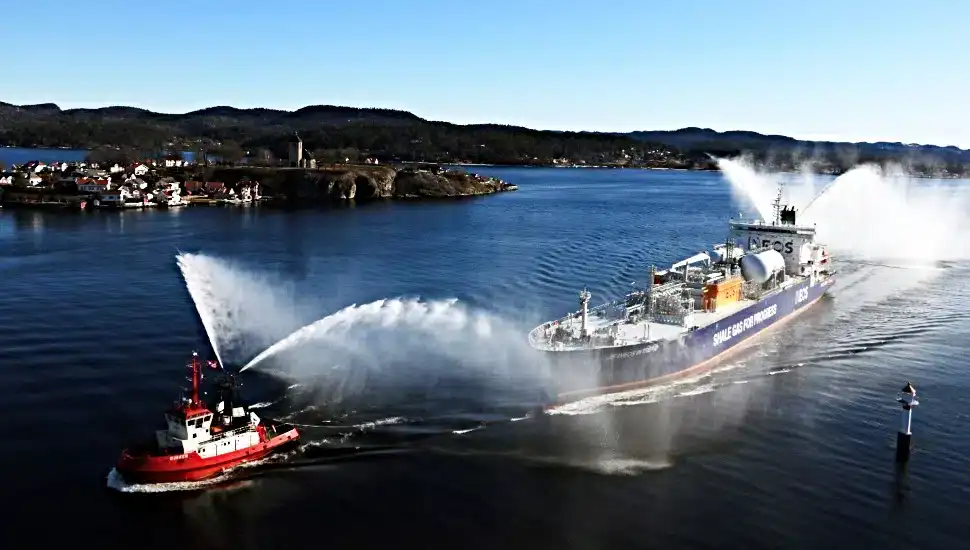
 Two bits of LNG news to share with you, both of which affect the Marcellus/Utica because both use our molecules. Last Friday, Cheniere Energy announced that Train 5 at its Corpus Christi LNG expansion project is now operating at full capacity. Yesterday, Golden Pass LNG, a joint venture between QatarEnergy and ExxonMobil, produced its first LNG at its new facility. Golden Pass expects to begin exports early in the second quarter.
  U.S. natural gas liquids (NGL) exports climbed 7% to 3.1 million barrels per day in 2025, fueled by high domestic production and rising global demand for petrochemical feedstocks. Ethane exports grew 19% due to new international cracker projects, while propane reached a record 1.8 million b/d, supported by significant growth in India. Butane also hit record highs, serving as a vital cooking and industrial fuel in emerging markets like Indonesia and India. While China and Canada remain top destinations, the United States continues to dominate the global market by leveraging low domestic prices to meet diverse international energy needs. NGL exports from the M-U region also hit a new record-high last year.
  Venture Global (VG) and Edison S.p.A., an Italian electric utility company headquartered in Milan, have signed a commercial agreement to fully resolve their pending arbitration regarding the Calcasieu Pass LNG project. Expected to conclude by the end of Q2 2026, the settlement terminates all legal disputes between the companies. As part of the deal, VG will deliver additional LNG cargoes to Europe, specifically targeting the Italian market through the Adriatic LNG Terminal starting in May 2026. This agreement strengthens their long-term partnership and enhances Italy’s energy security amidst global geopolitical disruptions.
  Morningstar DBRS has published an interesting commentary that will be of interest to MDN readers and those with an interest in LNG: “From Risk to Relevance: Middle East Disruption Elevates North American LNG.” The escalating conflict in the Middle East has disrupted global LNG supply, damaged infrastructure in Qatar, and constrained shipping. These developments have heightened buyer concerns around supply security and transit risk, prompting a reassessment of LNG sourcing strategies. As a result, North American LNG has gained strategic relevance (preference), supported by jurisdictional stability and expanding export capacity.
  This one makes us white-hot with anger. Our “cousins” to the north, who have bashed fossil energy repeatedly and have disrespected the Trump administration on numerous occasions, now want to export more of their natural gas to the U.S. so we can use it in our LNG exports to other countries. NO THANKS. You can keep your gas and stick it where the sun doesn’t shine. We have PLENTY of our own gas, and we could extract even more (from the Marcellus/Utica, other plays, too) if we had available pipelines to flow it. We don’t need or want Canadian gas that would displace existing molecules in our limited pipelines.
 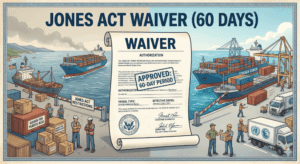 We lead with this story about a government regulatory action because of just how important we see this development. For *years* we have railed against the 106-year-old Jones Act and its requirement that any goods (like LNG) that are transported from one U.S. port to another be on a ship manufactured in the U.S., owned by a U.S. company, and crewed by a U.S. crew. The effect of this law in the modern age is to ban LNG (and other shipments, like gasoline, propane, coal, and other products manufactured in the U.S.) from being shipped cheaply from port to port. The U.S. foolishly allowed its ship manufacturing to slip away years ago to South Korea and other countries. We no longer make cargo carriers for LNG and other energy products. We haven’t made them in decades. Yesterday, President Trump signed a 60-day waiver of the Jones Act, allowing certain goods (such as LNG, fertilizer, and coal) to be transported from U.S. port to U.S. port on foreign-owned, foreign-flagged and crewed ships.
  Last summer, Venture Global announced a final investment decision (FID) for “Phase 1” of its Calcasieu Pass 2 (CP2) LNG project (see
  As the conflict with Iran and the halt in LNG production in Qatar triggered a 100% spike in European natural gas prices, U.S. liquefied natural gas (LNG) has solidified its role as a critical global energy stabilizer. Following the 2022 invasion of Ukraine, the U.S. became Europe’s primary supplier, a shift highlighted at a recent Pittsburgh energy conference. EQT CEO Toby Rice and other Pennsylvania producers argue that expanding Marcellus Shale exports is essential for allied security. Despite infrastructure bottlenecks, U.S. LNG exports are projected to grow significantly by 2030, offering a reliable alternative to volatile Middle Eastern and Russian energy supplies.
  Last week, RBN Energy held its GasCon 2026 conference in Houston, Texas. Among the heavy hitters who attended and spoke at the event were Sital Mody, President of Natural Gas Pipelines at Kinder Morgan, and Dan Brouillette, the 15th Secretary of the U.S. Department of Energy. Mody had this to say during his talk: “When I take a step back and reflect on the natural gas industry, the one thing that comes to mind for me is all gas, no brakes.”
  Although the Iran war has caused shipping, including oil shipping, to temporarily stop through the Strait of Hormuz, the bigger story is how the war currently is, and will continue to, affect the price of natural gas around the globe. Yesterday, QatarEnergy announced it is suspending production at the world’s largest LNG export facility following attacks by Iran. Qatar accounts for 20% of global LNG capacity, so its decision removes 20% of the market’s LNG supply for now. It represents the most significant market shock since Russia’s invasion of Ukraine in 2022. Dutch TTF Natural Gas Futures (the European benchmark, like our own Henry Hub) for April 2026 have surged 85% since Friday, trading near €59.62 following a 33.97% jump earlier today.
  U.S. LNG exporters are scrambling to capitalize on a 50+ percent price surge in European and Asian markets following an Iranian drone attack that halted production at Qatar’s massive Ras Laffan plant. Leading U.S. exporters like Venture Global and Cheniere Energy are maximizing output (squeezing every extra molecule out they can from existing plants) and rerouting cargoes to meet global shortages. While the U.S.’s flexible export contracts provide critical market stability, experts warn that American capacity cannot fully replace Qatar’s lost volumes, which account for 20% of global supply. Unless production resumes shortly, the world faces a more severe energy crisis than the 2022 Russian gas shock.