
Eureka Building Marcellus Wastewater Recycling Plant in Dimock, PA
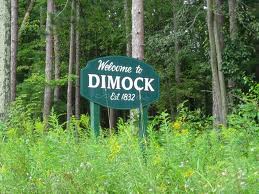 Eureka Resources currently operates three frack wastewater treatment facilities in the Marcellus Shale, two in Williamsport (Lycoming County), PA (where the company is headquartered), and one in Wysox (Bradford County), PA. In October 2019 the company began extracting lithium from Marcellus wastewater at its Wysox facility (see Marcellus Wastewater Plant in PA Extracts 1st Batch of Lithium). Eureka can currently provide up to 25% of the entire country’s demand for lithium, just from Marcellus wastewater (see Eureka Can Supply 25% of US Lithium Demand from Marc. Wastewater). Eureka has just announced it is expanding current operations in Wysox and will soon begin construction of a new facility in Dimock (Susquehanna County), PA.
Read More “Eureka Building Marcellus Wastewater Recycling Plant in Dimock, PA”
 In February we told you about a group of radicalized anti-fossil fuelers who raised a stink with the Pennsylvania Dept. of Environmental Protection (DEP) over the DEP’s routine, nothing-to-see-here renewal of permits for already-running (with no operational problems) shale wastewater recycling facilities scattered around the state (see
  A third Pennsylvania township, Clara Township in Potter County, is about to be lured onto the same litigation rocks by the siren song of the uber-radical Community Environmental Legal Defense Fund (CELDF) as two other towns, by adopting an illegal “home rule” law in an attempt to block a new wastewater injection well. CELDF lured two other towns onto the same litigation rocks, where they’ve crashed–Grant Township in Indiana County and Highland Township in Elk County. Both towns were sued by the state Dept. of Environmental Protection (DEP) when they tried to block injection wells using the same home rule tactic (see
  We hate it when the bad guys win even a small victory, as has just happened. We told you last week about a group of radicalized anti-fossil fuelers who raised a stink with the Pennsylvania Dept. of Environmental Proteciton (DEP) over the DEP’s routine, nothing-to-see-here renewal of permits for already-running (with no operational problems) shale wastewater recycling facilities scattered around the state (see
  A new attack against the Marcellus Shale industry in Pennsylvania comes from fossil fuel haters attempting to dispute permits reissued for existing (NOT new) shale wastewater storage and recycling facilities scattered across the state. Antis seek to shut down pipelines, rail shipments, recycling facilities, injection wells–anything they can to stop to prevent drillers from extracting natural gas from shale in the Keystone State. Sick people.
 Zenith Energy, based in Houston, TX and Metuchen, NJ, announced yesterday it has purchased the bulk terminal storage operations of Guttman Energy in three locations: Aurora, Ohio, Belle Vernon, Pennsylvania, and Star City, West Virginia. Zenith says the reason for buying the terminals is to support customers in the Marcellus/Utica. What, exactly, is Zenith selling to M-U customers?
 Every now and again we happen across information we think is kind of cool–things that others miss. This is one of those times. In many areas of shale drilling in Pennsylvania the drillers recycle 100% (or near 100%) of shale wastewater, both flowback (from fracking) and brine (naturally-occurring water from the depths comes out long after fracking is done). The recycled wastewater is then used to drill and frack more wells. We discovered a handy list of at least 27 such wastewater recycling facilities (and their locations in 11 different counties) spread across the Keystone State.
 Like 99% of Hail Mary passes, the effort by environmental radicals in southwestern PA to block a forthcoming shale wastewater injection well has failed. As we told you last week, a group of antis, in a desperate final attempt to block an injection well in Plum (Allegheny County), PA, threw a Hail Mary pass by asking Pennsylvania Gov. Tom Wolf to assume dictatorial powers and block the project (see
  We have some super-exciting news to share–what we believe is an MDN exclusive. DeepRock Disposal Solutions has secured all of the necessary permits and authorizations it needs (over 30!), including authorization from the U.S. Coast Guard, to begin transporting shale (produced) wastewater via barge on the Ohio River. DeepRock will begin its barge service in first quarter 2021.
 Nuverra Environmental Solutions (formerly Heckmann) is one of the largest companies in the United States that handles transportation and disposal of shale drilling wastewater and leftover rock and dirt from drilling (drill cuttings). The company has major operations in the Marcellus/Utica region. Yesterday Nuverra announced its board of directors has approved the adoption of a “limited duration stockholder rights plan” (i.e. poison pill provision) to “protect stockholder interests.”
 The Pennsylvania Dept. of Environmental Protection (DEP) over the weekend published a final (revised) version of its Waste General Permit which governs how wastewater from shale fracking and produced water can be processed and reused for more drilling and fracking.
 A long-stalled request for permits to build two wastewater injection wells in Belmont County, Ohio has just gotten a boost from the Ohio Supreme Court. Last year MDN told you about New Jersey-based Omni Energy Group and their application to build two new injection wells near St. Clairsville (see
  Eureka Resources, which operates three frack wastewater treatment facilities in the Marcellus Shale, is doing really cool stuff. In October 2019 the company began extracting lithium from Marcellus wastewater at one of its plants in Bradford County, PA (see