
Allegheny County | Anti-Drilling/Fossil Fuel | Industrywide Issues | Pennsylvania | Regulation | Wastewater
Hearing for 2nd Plum Injection Well Draws Solid Opposition
 We experienced déjà vu as we read about a hearing held Tuesday evening in Plum Boro (Allegheny County, PA) about a proposed shale wastewater injection well. Some 20 people made their way to the microphones to voice their objections to plans by Penneco Environmental Solutions to site a second injection well in the boro–right next to an existing injection well. We’ve heard it all before, almost four years ago, when some of the same people objected to Penneco’s plans to install the first injection well (see Plum Injection Well Hearing Draws Solid Opposition). The histrionics didn’t work four years ago. Will they work today?
Read More “Hearing for 2nd Plum Injection Well Draws Solid Opposition”
 Since 2015 we’ve reported on the case of Grant Township, a town that passed an ordinance cooked up by the radical Community Environmental Legal Defense Fund (CELDF) to try and block a state-approved injection well proposed by Pennsylvania General Energy (
 Plum Boro (Allegheny County, PA) officials and environmental leftist groups (backed by Big Green foreign money) are gearing up to oppose Plum’s second wastewater injection well with smears and lies. A long-fought-over wastewater injection well in Plum finally opened for business in mid-2021, having overcome all sorts of smears and slanders and lawsuits by the enviro-left (see
  The Pennsylvania Environmental Hearing Board (EHB) partially dismissed a challenge brought by Philly-area State Senator Katie Muth. She seeks to block Eureka Resources from moving forward with the construction of a new shale wastewater recycling facility in Dimock, PA–a location hours away from her own district. The EHB ruled that Muth has no standing under the PA Environmental Rights Amendment (ERA) to bring a challenge. The proposed facility is not in her district and there’s nothing that ties her to that location.
 Engineers at the University of Pittsburgh’s Swanson School of Engineering are developing a new way to reduce the environmental impact of drilling and fracking by cleaning produced water for reuse. Produced water is the water that comes out of the hole long after drilling and fracking is done. It is “water from the depths”–far below the water table–and it’s full of minerals, which is why it’s often called brine (or salt). Pitt engineers have researched membrane distillation (MD) to treat this salty wastewater. Pitt has discovered how to use MD to economically recycle and reuse produced water from shale.
 Not content to prosecute years-old accidents as “crimes” for the shale industry in his zeal to attack fossil energy, Pennsylvania Attorney General Josh Shapiro, a vicious radical running for governor this November, is now targeting mom and pop conventional drillers too. Specifically, he is investigating conventional drillers for spreading non-toxic brine on PA’s dirt roads in the summertime, a legal practice in the Keystone State (at least it was legal until last December), looking to prosecute someone, anyone, to grab another headline and stoke his radicalized base of supporters.
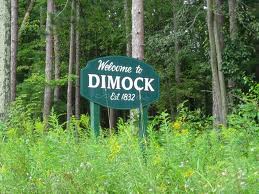 One year ago, in March 2021, Eureka Resources announced plans to build a Marcellus Shale wastewater treatment facility in Dimock (Susquehanna County), Pennsylvania (see
  Plum Boro (Allegheny County, PA) officials and environmental leftist groups (backed by Big Green foreign money) are gearing up to oppose Plum’s second wastewater injection well with smears and lies. A long-fought-over wastewater injection well in Plum finally opened for business in mid-2021, having overcome all sorts of smears and slanders and lawsuits by the enviro-left (see
  A long-fought-over wastewater injection well in Plum Boro (Allegheny County, Pittsburgh suburb) finally opened for business earlier this year, having overcome all sorts of smears and slanders and lawsuits by the enviro-left (see
  Nuverra Environmental Solutions (formerly Heckmann) is one of the largest companies in the United States that handles the transportation and disposal of shale drilling wastewater and leftover rock and dirt from drilling. The company has major operations in the Marcellus/Utica region. Because of the company’s major operations in the M-U, we keep track of its performance. Quarter after quarter after quarter, for well over a year, the company has lost money (
 Anti-fossil fuelers at Fair Shake Environmental Legal Services and the FracTracker Alliance are asking Pennsylvania residents to report the road spreading of oil and gas wastewater. Bear in mind such spreading is legal (if it’s conventional oil and gas wastewater). Also bear in mind other sources of water are sometimes spread on dirt roads in PA, so there’s no practical way to tell if the water you see being spread came from a conventional well or a nearby creek. In essence, these anti groups want to turn PA residents into rats and snitches in hopes of…what? Proving that a legal activity is taking place?
 We have some exciting, and exclusive, news to share with the MDN audience. We previously told you that the Ohio Dept. of Natural Resources (ODNR) was behaving like a child, dragging its collective heels to prevent two side-by-side injection wells in Belmont County developed by Omni Energy from beginning operation (see
  A long-fought-over wastewater injection well in Plum Boro (Allegheny County, Pittsburgh suburb) finally opened for business earlier this year, having overcome all sorts of smears and slanders and lawsuits by the enviro-left (see