
Anadarko | Chesapeake Energy | Energy Companies | Industrywide Issues | Lease & Royalty Payments | Litigation | Pennsylvania | Statewide PA
PA Supremes to Consider Long-Running Chesapeake Royalty Lawsuit
 In December 2015, Pennsylvania’s felony-indicted Attorney General, Kathleen Kane (who later was convicted and did jail time) brought a lawsuit against Chesapeake Energy and Anadarko accusing them of royalty fraud (see PA Atty General Sues Chesapeake Energy, Williams for Royalty Fraud). Her successor, Josh Shapiro, has continued the fight.
Read More “PA Supremes to Consider Long-Running Chesapeake Royalty Lawsuit”
 A common refrain for both landowners and drillers who want to buy/sell/swap mineral rights for drilling is the same: How do you find buyers (or sellers)? Some have resorted to auctions. Others, plain old word-of-mouth. They both have a new way to find buyers or sellers: Something called
  It’s not often (these days) we come across a new instance of publicly-known leasing terms in the Marcellus/Utica. We like to highlight such cases when we see them. In Saturday’s Pennsylvania Bulletin, the state Dept. of Conservation and Natural Resources (DCNR), the agency in charge of state-owned land, published details of a newly signed lease for 40.6 acres of creekbed in Greene County, PA. The DCNR got its standard $4,000 per acre signing bonus plus will get a 20% royalty from any gas produced. Who did they lease to? And why do we object to this practice so strenuously? To learn those details, you need an
  The National Association of Royalty Owners’ national convention has been under way this week in Pittsburgh, wrapping up today. One of the big topics at the event has been a push to get a “royalty check stub” bill passed in Pennsylvania. What’s that? It’s a bill that forces drillers to do a better, more detailed job of breaking down royalty statements so landowners/rights owners can see what expenses have been deducted from their royalty checks. Such a bill passed and went into law in West Virginia last year (see
  A group of Ohio landowners sued Chesapeake Energy in 2015 in a class action, alleging that Chesapeake had shorted them on royalty payments (see
  There is no way to track exactly how much royalty revenue is received by Pennsylvania landowners, because royalty income is not reported separately on the Pennsylvania income tax return. Royalty income is combined with rental, patent and copyright income on line 6 of the PA-40 state income tax return. However, the crack researchers at the Pennsylvania Independent Fiscal Office, a state government agency created in 2010, has a way of estimating how much revenue has been generated by oil and gas royalties. The IFO just released a report (full copy below) that shows they estimate royalties in 2018 hit their highest level since they began tracking oil & gas royalty revenue in 2010.
 The federal Bureau of Land Management (BLM) recently announced the winners of Utica Shale mineral rights for 14 parcels of land, adding up to ~655 acres, located in Wayne National Forest (WNF). The 14 properties netted the government $1.326 million and all 14 were purchased by two (possibly more) Utica Shale drillers. Average price per acre paid across the entire lot: $2,024. Who did the leasing? You have to be a subscriber to find out. 🙂
 Like it or not, landowners are joined at the hip with the shale drillers who produce the natural gas from their land. When “the price” (which is actually a lot of different prices, depending on geography) of natural gas is high, everyone is in tall cotton. But when the price tanks, as it has over the past few months, every suffers. PA landowners are noticing very thin royalty checks. The big bone of contention is when drillers look to share more of their pain with landowners by claiming post-production deductions.
 Last October MDN brought to your attention a lawsuit filed by a Washington County, PA couple, Robin and Thomas Pflasterer, against Range Resources (see
  The new leadership at the top of EQT continues to have a major impact on the company and its relationship with landowners and (in this case) entire states. Last year EQT launched an effort to overturn WV’s Senate Bill (SB) 360 (see
  In 2017 a group of Ohio landowners did what others had previously done in Pennsylvania, Texas and elsewhere–they filed a proposed class action lawsuit against Chesapeake Energy claiming Chessy had screwed them and about 1,000 other Ohio landowners out of a collective $30 million in royalty payments (see
  In February MDN brought you the news that EQT had settled a class action lawsuit in West Virginia with landowners and rights owners ending EQT’s practice of post-production deductions from royalty checks (see
  The Pennsylvania Dept. of Conservation and Natural Resources (DCNR) is grabbing more money that we think belongs to private landowners. This time from leasing land underneath the Youghiogheny River and Little Pine Creek. DCNR has leased 124.2 acres for a signing bonus of $496,800 (or $4,000 per acre). Plus the state’s customary royalty rate of 20% on anything produced. And no, the state does not allow post-production deductions–they get their full 20% royalty.
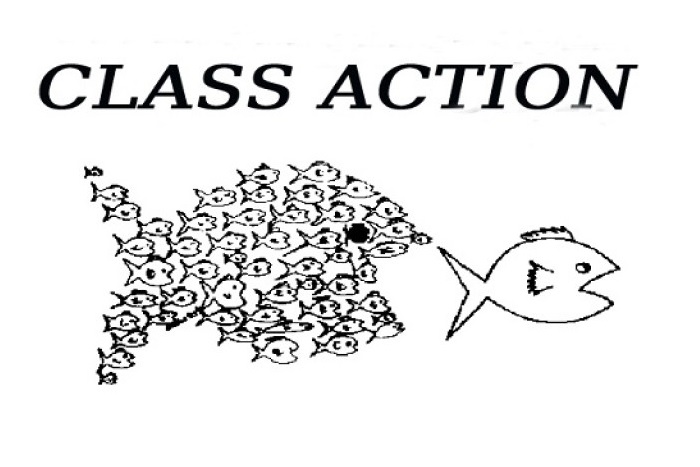 A notable development in a lawsuit that before now, we were unaware of. Several landowners in Venango County (northwest PA) filed a lawsuit against Shell’s SWEPI drilling subsidiary in 2013 claiming SWEPI had stiffed them out of lease bonus payments due under duly signed lease contracts. The landowners attempted to turn the lawsuit into a class action, claiming the same thing had happened for about 300 leases in the area. A federal judge has just ruled against converting the lawsuit into a class action.
 Investment firm BlackGold Capital Management announced late last week it has purchased Overriding Royalty Interests (ORRI) in the Utica shale of Ohio from an unnamed seller. We have a guess as to who did the selling.