
Enbridge Proposes Major Expansion of Algonquin Pipe: Project Beacon
 Last week, the news broke that Enbridge is exploring a major expansion of its Algonquin Gas Transmission pipeline into New England, and had briefed the Trump administration’s National Energy Dominance Council about its plans (see Enbridge Briefed Trump Admin on Plan to Expand Pipe into New England). Enbridge launched an open season on Monday for that expansion project. It’s called Project Beacon. Sound familiar? Sounds a lot like Project Maple. Read More “Enbridge Proposes Major Expansion of Algonquin Pipe: Project Beacon”
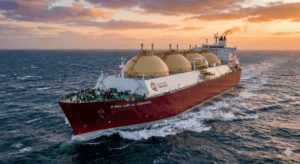 A study commissioned by Constellation Energy concludes that the Everett Marine Terminal (EMT) in Massachusetts (LNG import terminal) remains critical to New England’s gas and electric reliability, particularly during peak winter demand. Constellation owns EMT. The report (full copy below) highlights EMT’s role during Winter Storm Fern in early 2025, when it prevented supply shortages and price spikes. Existing contracts with Massachusetts utilities run through 2030, costing ratepayers an estimated $946 million. The report says replacing EMT via pipeline expansion could cost $4.6–$6.1 billion. While consumer and environmental advocates favor demand-side alternatives such as electrification and efficiency, the report is skeptical, calling these strategies high-risk and unverified.
  On March 18, President Trump issued a 60-day waiver pausing the enforcement of the Jones Act (see
  On May 14, the Pennsylvania Department of Environmental Protection (DEP) issued a notice of violation to Sandstone Development LLC for operating the McKay 7A conventional well as an oil and gas wastewater injection disposal site in McKean County without a state permit. Which may sound like a major, flagrant (intentional) violation. But it’s not. Sandstone holds a federal EPA permit allowing daily injections of up to 10,500 gallons. Sandstone said it was unaware that, in addition to the federal EPA permit, it is also required to seek and obtain a state DEP permit for the same thing. In other words, Sandstone didn’t ask DEP, “Mother, May I?”
  Duke Energy, headquartered in Charlotte, N.C., is one of the largest U.S. energy holding companies, serving 8.7 million electric customers and 1.8 million gas customers across six states. While the company dabbles in unreliable renewables like solar and wind, its bread-and-butter, go-to source for new electric power generation is natural gas, which it gets from the Marcellus/Utica. We’ve reported on many of Duke’s announced new gas-fired power plant projects (
 In 2025, the U.S. set dual production records, with crude oil output reaching 13.6 million barrels per day and natural gas hitting 118.5 Bcf/d, making America the world’s top producer of both commodities. These milestones represent explosive growth since the early 2000s, driven entirely by the shale fracking revolution. Despite persistent predictions of failure from environmental groups, major publications like The New York Times and Wall Street Journal, and various analysts, the industry continuously defied skeptics through relentless technological innovation — including longer lateral wells, simultaneous multi-well fracking, and electrified equipment. With no production peak in sight, new records are anticipated for 2026.
  MARCELLUS/UTICA REGION: Lessons for Pennsylvania from the blue-state affordability crisis; NATIONAL: U.S. natural gas extends gains as weather heats up; Goldman Sachs says US natural gas output shows signs of price sensitivity; Data center server energy use grows across the commercial building stock; Solar to dominate energy by 2035 (LOL!); INTERNATIONAL: Brent, WTI slip in volatile trade; Can Middle East oil producers meaningfully bypass the Strait?; UN climate experts admit climate change won’t destroy Earth tomorrow; UK to allow import of fuels refined from Russian oil; Four US LNG vessels sailing to China after Trump-Xi summit; ASEAN nations return to fossil fuels, back away from net zero plans.