
Energy Companies | Energy Services | EQT Corp | Halliburton | Patterson-UTI | West Virginia | Wetzel County
EQT Sets New U.S. Onshore Record for Deepest & Longest Shale Well
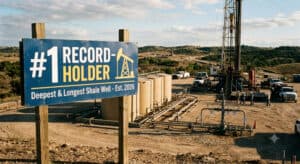 EQT Corporation, the largest driller in the Marcellus/Utica (based on M-U production), recently achieved two records with the same Marcellus well. EQT drilled not only the “deepest” shale well in the continental U.S. (by “measured depth”), but also the longest horizontal shale well (by lateral length). EQT’s Longwell 9H well, located in Wetzel County, West Virginia (near the Pennsylvania border), eclipses a record set by Expand Energy in 2025 in Marshall County, WV. Read More “EQT Sets New U.S. Onshore Record for Deepest & Longest Shale Well”
 Williams’ Transco Southeast Supply Enhancement Project (SESE) is a 55-mile, 42-inch-wide pipeline that will run through Pittsylvania County, Virginia, and Rockingham, Guilford, Forsyth, and Davidson counties in North Carolina. Construction for SESE started March 2, 2026, according to FERC filings. Transco (Williams) received its final federal authorization and a Notice to Proceed, and crews mobilized in early spring. Initial activities have included tree felling, installation of acoustic barriers, and test drilling in preparation for blasting. Antis finally gave up trying to block construction of SESE in June (see
 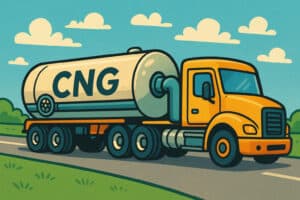 We spotted a press release from Hexagon Agility that the company has secured its largest-ever single order for “Mobile Pipeline” modules from Certarus, valued at about $100 million, with an option for up to $25 million more by 2028. It triggered a “connect the dots” moment for us. Mobile pipelines are another term for virtual pipelines, which is a euphemism for trucking natural gas via CNG (mostly) and sometimes LNG. The Hexagon press release indicates strong new demand for such technology in the AI data center market. No pipeline? No problem! Just truck it in via a virtual pipe instead.
  Global research firm Wood Mackenzie warns that a decade of cheap U.S. natural gas is ending, with Henry Hub prices—historically stuck between $2 and $4 per MMBtu—expected to approach $5 by 2035. The shift is driven by surging demand from LNG exports and AI data centers. U.S. LNG exports jumped from 0.5 Bcf/d in 2016 to 15.0 Bcf/d in 2025, with capacity expected to nearly double by 2031. Meanwhile, power-sector demand could require an additional 17 Bcf/d by the mid-2030s. Supply-side tailwinds—prime drilling acreage, cheap associated gas, and annual productivity gains—have largely run their course. WoodMac says $5 gas remains globally competitive.
  Over the past two weeks, just prior to heading out on summer vacation, the U.S. Supreme Court issued a number of extremely important decisions. One of them was Slaughter v. Trump, a 6-3 decision in which the Supremes overturned the 91-year-old Humphrey’s Executor precedent, granting the president broad authority to remove members of independent federal agencies for any reason. Chief Justice John Roberts wrote that the president must have trusted subordinates to ensure accountability, though the Court exempted the Federal Reserve to preserve its independence. This ruling permanently solidifies President Trump’s earlier removals of Democratic appointees, significantly expanding executive control over critical regulatory bodies, including the National Labor Relations Board, the Federal Trade Commission, and most importantly for MDN readers, the Federal Energy Regulatory Commission (FERC).
  Last week was (once again) noteworthy for the Baker Hughes rig count. Although the Marcellus/Utica count didn’t budge, the national count increased by another 7 rigs. The national count has risen over the last three weeks — by 18 rigs! The new national count, 580, is also the highest the combined count has been since May 2025. The combined M-U rig count remained at 36 active rigs for the eighth consecutive week. The M-U’s chief competitor, the Haynesville, maintained its count of 55 active rigs, operating 19 more than the M-U.
  NATIONAL: U.S. natural gas futures slip ahead of holiday; INTERNATIONAL: Oil fluctuates as crude flows surge through Persian Gulf; Qatar LNG ship traffic through Hormuz resumes after brief pause; Oil, gas tankers cross Hormuz via Oman-side route after U-turns; China urges ‘unimpeded passage’ of Hormuz as fee chatter mounts; Oil glut calls may be getting ahead of reality.