
EIA Sept. STEO: Appalachia Flat While Permian, Haynesville Boom
 The U.S. Energy Information Administration (EIA) dropped its September Short-Term Energy Outlook (STEO) yesterday, and for once the natural gas headline numbers barely budged. Henry Hub is forecast at $3.43/MMBtu for 2026 and $3.28/MMBtu for 2027 — a penny and three cents below last month. After August’s 23-cent haircut, that’s practically a rounding error. The interesting stuff this month isn’t in the price line. It’s in the regional production tables, where EIA lays out exactly who is growing and who isn’t. Spoiler: it’s the same story as last month, only now EIA has put hard numbers on it. Read More “EIA Sept. STEO: Appalachia Flat While Permian, Haynesville Boom”
 Accounting giant Ernst & Young dropped its annual reserves benchmarking study yesterday, and while the press release leads with oil, the real story for our part of the country is buried in the tables: EQT is now the largest holder of proved natural gas reserves in the United States, and Appalachian-focused producers control roughly a third of all the gas reserves booked by America’s 30 biggest publicly traded drillers.
  EOG Resources, the biggest acreage holder in the Ohio Utica, sent Chief Operating Officer Jeff Leitzell to the Barclays 40th Annual Energy-Power Conference yesterday (Sept. 9), and he spent a good chunk of his stage time explaining exactly how EOG thinks about our play. We’ve heard some of it before. But Leitzell went deeper on Utica geology than the company usually does on an earnings call — including a north-versus-south distinction that shapes how tightly EOG spaces its wells — and he dropped a fresh well-results number: three inherited Encino wells with 3.5-mile laterals that each came online at more than 35 million cubic feet per day (MMcf/d). He also confirmed that Ohio’s first in-basin frack sand mine is still on track for a year-end startup, and that the savings from it are not yet baked into EOG’s cost numbers.
  Last week we told you Dominion Energy cleared its first hurdle for the monster 3,000-megawatt (3 gigawatt) Cumberland Energy Center in Cumberland County, Virginia (see
  Virginia Democrats have spent the summer hammering the proposed $67 billion NextEra-Dominion merger — letters to regulators, a 64-question interrogation, a statewide listening tour, a demand for a special session. Last week the pile-on reached the very top when House Speaker Don Scott (D-Portsmouth) filed his own letter with the State Corporation Commission (SCC). Here’s the twist: the same Democrat leaders doing the loudest complaining just refused to do the one thing that would actually slow this deal down.
 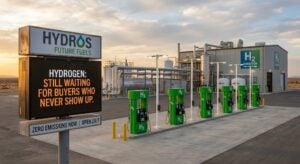 We’ve said it here more times than we can count: hydrogen has no customers. A new investigation from RealClearInvestigations, published Sept. 1, backs that up with numbers — and the picture it paints of the federal hydrogen push should worry anyone who thought ARCH2 was going to become a big new buyer of Marcellus/Utica gas. Reporter James Varney’s piece walks through what’s become of the Biden administration’s National Clean Hydrogen Strategy and Roadmap, released in June 2023. That plan promised $9.5 billion in spending would produce 100,000 jobs by 2030 and cut economy-wide emissions 10% by 2050. Three years on, the biggest single piece of it — $3 billion split between two West Coast hydrogen hubs — is frozen and tied up in court. California’s ARCHES hub says on its own website that the state has paused activities. Thirteen Democratic attorneys general sued in February to force the money out the door.
  MARCELLUS/UTICA REGION: New England natural gas prices have been trading near record discounts to Henry Hub; OTHER U.S. REGIONS: Korea picks $22B gas project as first in USA trade deal; NATIONAL: U.S. natural gas futures fall as weather set to turn; New Fortress Energy announces reverse stock split; USA oil, gas workforce figures buck trend; INTERNATIONAL: Oil surges as attacks escalate.