
Duke Energy Plans 1 Bcf LNG Plant in NC Fed by Marc/Utica Gas

Some exciting news from Piedmont Natural Gas, a wholly-owned subsidiary of Duke Energy. The company recently announced it plans to spend $250 million to build a 1 billion cubic feet LNG storage facility in southern North Carolina, in Robeson County. Gas is liquefied and stored as backup for residential customers to use during periods of high demand–mainly wintertime. And guess which pipeline (now under construction) will terminate right there, in Robeson County? That’s right, the Atlantic Coast Pipeline–a joint venture between Dominion Energy and Duke Energy. The new LNG facility will also be able to use gas from a second pipeline in the county–Williams’ Transco. The Transco pipeline flows Marcellus gas all the way from northeastern PA. Translation: Marcellus/Utica gas will feed the 1 Bcf LNG plant, an important new (big) customer for our our natural gas…
Read More “Duke Energy Plans 1 Bcf LNG Plant in NC Fed by Marc/Utica Gas”
 Protesting something like a pipeline is one thing. March around, show your signs, talk to the press, make a horse’s rear-end of yourself. Whatever. But showing up at someone’s home and blocking their driveway and erecting a 20-foot tall tower and refusing to move until arrested? That’s something else. That kind of “protest” is threatening, menacing behavior. Bullying. And it’s all too easy for people who have crossed that line to tip over into outright violence. A group of criminal protesters did just what we described–blocked the driveway and erected a wall in the driveway–of Duke Energy CEO Lynn Good at her home in Charlotte, NC on Wednesday. Duke is partners with Dominion Energy in the $6.5 billion Atlantic Coast Pipeline (ACP) project, a natural gas pipeline from West Virginia through Virginia and into North Carolina. The criminal protesters showed up at Good’s home to oppose the project. The signs they carried revealed their irrational hatred of fossil fuels, which is what motivated them to protest in the first place. Wackos. Here’s how it went down at Good’s home earlier this week…
 Duke Energy needs to replace an aging pipeline, built in the 1950s, near Cincinnati, OH–or some people in Cincy will have to go without natural gas. Duke has proposed a 13-mile, 20-inch pipeline along two potential routes. The project is called the Duke Central Corridor Extension Gas Pipeline. Both of the proposed routes are opposed by antis, including a group calling themselves NOPE–Neighbors Opposing Pipeline Extension. We call them DOPEs–Dummies Opposing Pipeline Extensions. Will the DOPEs volunteer to shut off the natural gas to their homes and businesses if the pipeline doesn’t get built? Not on your life! With just weeks before a final approval by the Ohio Power Siting Board (OPSB), Duke asked the state to push the pause button last August (see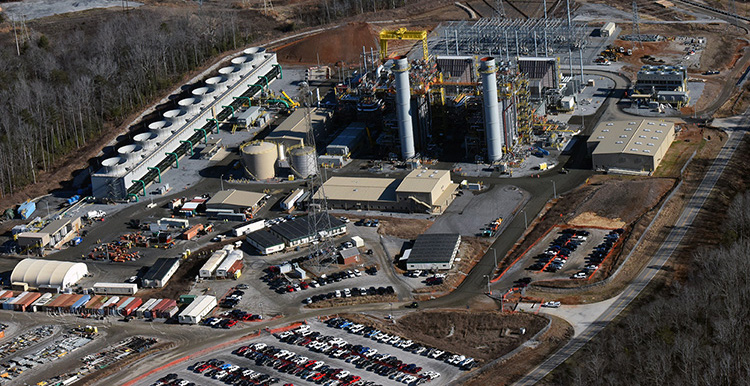
 Atlantic Coast Pipeline, the $6.5 billion Dominion Energy/Duke Energy pipeline from West Virginia through Virginia and into North Carolina has had a few setbacks, but that isn’t stopping construction on the pipeline–in all three states where it runs. On Monday we reported on the latest setback–news that the Federal Energy Regulatory Commission is refusing to extend tree cutting season for the pipeline (see
  We’re not quite sure what to make of this story. North Carolina has been, as we’ve long pointed out, nitpicking in an attempt to slow down (or stop) the Atlantic Coast Pipeline (ACP) from traversing the state (see
  In December members of Virginia’s Water Control Board voted 4-3 to approve issuing a water permit/certification for the Atlantic Coast Pipeline (ACP) project (see
  We have a couple of important signs that Dominion and Duke Energy, the main sponsors of the Atlantic Coast Pipeline, are getting ready to begin building the pipeline. Atlantic Coast Pipeline is a $5 billion, 594-mile natural gas pipeline that will stretch from West Virginia through Virginia and into North Carolina. Years after the project filed with the Federal Energy Regulatory Commission (FERC), it was finally approved by FERC in October (see
  Atlantic Coast Pipeline is a $5 billion, 594-mile natural gas pipeline that will stretch from West Virginia through Virginia and into North Carolina. The project will be built by Dominion Energy (lead) and Duke Energy (important partner). Years after the project filed with the Federal Energy Regulatory Commission (FERC), it was finally approved by FERC in October (see
  No doubt being advised and funded by national Big Green groups, a group of backbencher local green groups (Little Green) have taken the first step in what will no doubt turn into a lawsuit to try and stop the Atlantic Coast Pipeline project from getting built. The Federal Energy Regulatory Commission (FERC) approved Atlantic Coast, a $5 billion, 594-mile natural gas pipeline that will stretch from West Virginia through Virginia and into North Carolina, in October (see
  North Carolina has become the first state to complete an environmental evaluation for Dominion’s proposed $5 billion, 594-mile Atlantic Coast Pipeline (ACP)–a natural gas pipeline that will stretch from West Virginia through Virginia and into North Carolina. ACP is slated to run through eight NC counties. After completing it’s evaluation, the NC Dept. of Environmental Quality (DEQ) issued a rejection letter (copy below) for the project. The reason? The DEQ says the erosion and sediment control plan for the project is not up to scratch. Dominion can now do two things: Revise the erosion and sediment control plan and resubmit it, or contest the DEQ’s rejection of the existing plan. Although antis are rejoicing at the news, there really isn’t much here in the way of news. This is not uncommon in pipeline reviews. A government agency (federal or state) will push back on some aspect of the plan, the project builder will modify the plan, and the modified plan will pass muster and life goes on. That’s the way it works. The DEQ is (presumably) doing it’s job and not simply looking for an excuse to reject the project. We’ll give them the benefit of the doubt–this time. Although we’ve not read that Dominion has responded to the rejection, another partner in the project, Duke Energy, has responded–saying they will provide the necessary information the DEQ says is missing in the original plan…
 Dominion Energy and Duke Energy hopes lightening will strike twice. In August, DTE Energy and Spectra Energy (now part of Enbridge), sent a letter to the new FERC quorum urging fast action to approve NEXUS Pipeline, a $2 billion, 255-mile interstate pipeline that will run from Ohio through Michigan and eventually to the Dawn Hub in Ontario, Canada (see
  Duke Energy needs to replace an aging pipeline, built in the 1950s, near Cincinnati, OH–or some people in Cincy will have to go without natural gas. Duke has proposed a 13-mile, 20-inch pipeline along two potential routes. Both routes are opposed by antis, including a group calling themselves NOPE–Neighbors Opposing Pipeline Extension. We call them DOPEs–Dummies Opposing Pipeline Extensions. Will the DOPEs volunteer to shut off the natural gas to their homes and businesses if the pipeline doesn’t get built? Not on your life! The Ohio Power Siting Board (OPSB) held two public hearings in April, to grant anti-pipeliners the opportunity to vent (see
  The radicals at the Sierra Club are taking another run at stopping Dominion’s Atlantic Coast Pipeline (ACP) project in its tracks–before the first inch of pipe is laid. ACP is a $5 billion, 594-mile natural gas pipeline that will stretch from West Virginia through Virginia and into North Carolina. This time Sierra Club nutters are using a novel approach to try and stop ACP. They’ve asked North Carolina regulators to revoke approval of affiliate agreements by Duke Energy to use the gas that will flow through the pipeline. The Sierra Club’s argument is that the agreements, signed in 2014, are no longer valid. Duke doesn’t need as much natural gas (for electric generation) as they thought they would. And therefore to stay locked into the agreement would be an unfair burden to Duke’s rate payers. If Duke were to pull out of the deals, the ACP project would collapse, which is what Sierra Club happens. Duke has responded that the gas will be used for more than electric generation. Given that NC now has a Dem governor who doesn’t like fracking (see