
Kinder Morgan 4Q25 Update: Projects Impacting the M-U Advance
 Based on the fourth quarter 2025 earnings call transcript and the accompanying press release, Kinder Morgan (KMI) reported record financial results driven largely by its natural gas business. While much of the growth came from the Gulf Coast and Southeast, several updates were specifically relevant to the Marcellus and Utica shale regions and the pipeline projects that transport Marcellus/Utica molecules. We’ve sifted through the release and earnings call to bring you the latest updates that impact the M-U region. Read More “Kinder Morgan 4Q25 Update: Projects Impacting the M-U Advance”
 In what we consider a misguided move, a Republican State Senator in South Carolina, Shane Massey (the SC Senate Majority Leader), has introduced a bill that would eliminate the use of eminent domain by pipeline companies. The move comes in response to concerns over a 71-mile Kinder Morgan pipeline that will flow Marcellus/Utica molecules to a planned 1,020-megawatt (MW) gas-fired power plant in the state’s Lowcountry, in Colleton County.
  In September, MDN told you that two major Kinder Morgan pipeline projects that will flow Marcellus/Utica molecules in the southeastern U.S. took a big step forward at the Federal Energy Regulatory Commission (FERC) with FERC actively working on an environmental impact statement (EIS) for both projects (see
 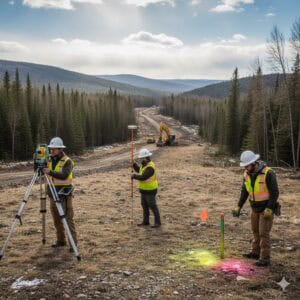 In April, MDN told you about a new greenfield expansion of Kinder Morgan’s Elba Express pipeline into South Carolina to serve growing demand for natural gas in the state (see
  In April, MDN told you about a new greenfield expansion of Kinder Morgan’s Elba Express pipeline into South Carolina to serve growing demand for natural gas in the state (see
  In April, MDN told you about a new greenfield expansion of Kinder Morgan’s Elba Express pipeline into South Carolina to serve growing demand for natural gas in the state (see
  In April, MDN told you about a new greenfield expansion of the Elba Express pipeline into South Carolina to serve growing demand for natural gas in the state (see
  Here’s an important update for a project we haven’t discussed since last October. The Tennessee Valley Authority (TVA) is building a $2.1 billion state-of-the-art natural gas plant in Cumberland City, Tennessee (see
 The lawfare battle brought by radical green groups in New Jersey, including Food and Water Watch, the NJ Highlands Coalition, and the Sierra Club, aimed at overturning the decision to permit and build an electric compressor station and a pipeline that connects to it, is over. Done. Finished. Can we please stick a fork in it? We’re talking about the battle to block a compressor project in West Milford, NJ, part of Kinder Morgan’s Tennessee Gas Pipeline (TGP) East 300 expansion project, an upgrade of TGP to deliver an extra 115 MMcf/d of natural gas to Consolidated Edison and its customers in New York City and surrounding suburbs. The radicals just flamed out in a NJ appeals court and have no options left to challenge it.
  We hate to see internal fighting and bickering within the oil and gas industry. We (as an industry) have a hard enough time battling the crazies of the environmental left. Yet infighting has erupted over a plan to run a pipeline to a proposed gas-fired power plant in South Carolina. In February 2024, the South Carolina Public Service Commission approved a proposed project to build a 1,020-megawatt (MW) gas-fired power plant in the state’s Lowcountry, in Colleton County (see
  Ever so gradually, pipeline capacity to transport Marcellus/Utica molecules to other markets, particularly the Deep South, has been increasing. And it continues to grow, gradually. Two projects from Kinder Morgan aim to help that effort. The 2.1-Bcf/d Mississippi Crossing (MSX) and 1.3-Bcf/d South System Expansion 4 (SSE4) projects will move more Marcellus/Utica gas into Mississippi, Alabama, Georgia, and South Carolina. RBN Energy connects the dots.
  We have some exciting news to share from Kinder Morgan. As part of the company’s quarterly update, KM provided details about eight pipeline projects that are currently being planned or built. Four of the eight will flow Marcellus/Utica molecules. One of the four is brand new: A new greenfield expansion of the Elba Express pipeline into South Carolina to serve growing demand for natural gas in the state. The $431 million Elba Express Bridge project is designed to provide 325 million cubic feet per day (MMcf/d) of firm transportation capacity. KM CEO Kim Dang said on a conference call that the project is “easily expandable to over a Bcf a day.”
