 The world of LNG (liquefied natural gas) is a strange world for us. We’re still learning about it. LNG is important for the Marcellus/Utica region as our molecules increasingly get shipped to other countries. Our molecules get shipped directly from the Dominion Cove Point LNG export facility in Lusby, Maryland, and by Cheniere’s Sabine Pass LNG export facility in Louisiana. Yes, some of our gas makes it to Louisiana and is liquefied and shipped out. However, the Cove Point facility is the focus of this post. Since early 2013, all of the LNG export capacity from Cove Point has been spoken for, by India and Japan, signing 20-year contracts (see Dominion’s Cove Point LNG Facility Achieves Important Milestones). You would think if they contracted for the LNG, they’d ship it to their respective countries and use it. But you would be wrong (see Half of India’s Contracted US LNG Won’t End Up in India). Once a company or a country owns a shipload of LNG and the ship sets sail and is on the open seas, the owner can sell it, trade it, swap it–do anything they want with it. Both Japan and India are and have been doing just that. The U.S. Department of Energy (DOE) recently released data on U.S. LNG exports covering year to date through June 2018. In looking over the shipment data for Cove Point, the shipments not only went to India and Japan, they also went to Jordan, Kuwait, Argentina, Dominican Republic, Mexico, Pakistan, Panama, and the United Kingdom! Marcellus/Utica molecules are literally being used around the world. The best part? Our drillers get higher prices for the gas than they can get here at home. Prices for the gas coming from Cove Point fetched anywhere from $5.27 per thousand cubic feet (Mcf) to $8.16/Mcf…
Read More “Cove Point LNG’s Exports End Up in Far-Flung Countries”


 In September, MDN told you that Philadelphia Gas Works (PGW), the country’s largest municipal-owned utility company, floated a plan to partner with a private company to build a new LNG export facility at its Passyunk Plant located in south Philly (see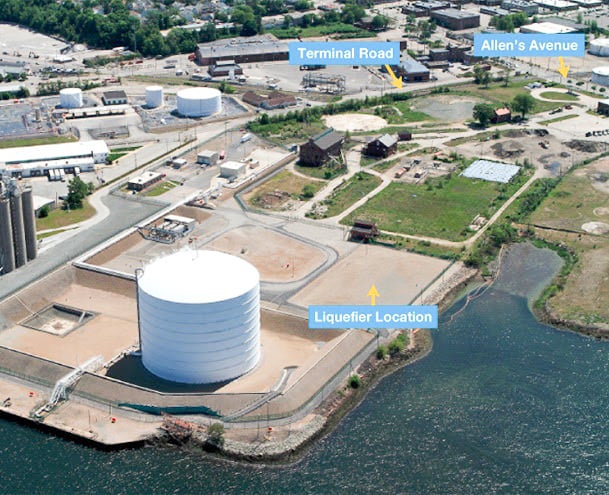
 The East Coast’s second LNG export plant to come online, after Cove Point in Maryland, will be Elba Island in Georgia. In July, Kinder Morgan, the builder and primary sponsor of the project, pushed back startup for the plant from the third until fourth quarter of this year (see
  On September 21, Dominion Energy stopped pulling gas from pipelines into the Cove Point LNG export facility (on the shoreline of Maryland) in order to conduct scheduled maintenance (see
 NG Advantage, a pioneer in “virtual pipeline” trucked CNG service, tried to build a compressor station/trucking hub in a Binghamton, NY suburb, but that effort failed earlier this year due to local opposition (see
  Philadelphia Gas Works (PGW), the largest municipal-owned utility in the country, and perhaps the oldest at 181 years old, floated a new proposal yesterday to partner with a private company to build a new LNG export facility at its Passyunk Plant, located in south Philly. This is not the first proposal to build an LNG export plant proffered by PGW. In 2015, City Councilman David Oh organized a meeting to discuss the feasibility of locating an LNG export facility inside city limits. PGW already has a small LNG facility in the city, but currently that facility is set up to import LNG, not export it. Councilman Oh wanted to explore the possibility of converting the site to export LNG. The very corrupt Philly City Council nixed a potential deal to sell PGW to UIL Holdings in 2014 (see
  In early June MDN told you that Dominion Energy’s Cove Point LNG export plant is due to shut down–after being online for just a few months–for scheduled maintenance (see
  This is all kind of speculative, but we find it intriguing and exciting. If you’ve read MDN for any length of time, you’re read about Dominion Energy’s 600-mile Atlantic Coast Pipeline, which will run from West Virginia through Virginia and into North Carolina–near the border with South Carolina. Unfortunately construction is currently on hold following revocation of some permits by a federal court, and an order from the Federal Energy Regulatory Commission in August to stop work on the entire project, for now (see
  This another one of those high finance thangs we don’t fully understand. Dominion Energy spent $4 billion to build their Cove Point LNG export facility in Lusby, Maryland. Somehow and somewhere they got money to build it–investors perhaps, or maybe Dominion had some cash tucked away under the corporate mattress. Dominion wants to get some of that debt off its books, so it has just structured a three-year loan with 20 lenders for $3 billion, reducing the company’s “parent level debt”–as opposed to child or subsidiary level debt. What it all means, if we’re understanding it correctly, is that Dominion is moving debt from the parent company’s balance sheet to the Cove Point subsidiary company’s balance sheet. Prior to this, Cove Point “owed” the money to Dominion itself (all in the family), and now, instead, the Cove Point subsidiary will owe that money to lenders directly. That’s our take. Hopefully it won’t take long for Cove Point to pay off the debt…
 For years we’ve had a Canadian LNG export project on our radar, bringing you news about the project, hoping that prodigious amounts of Marcellus/Utica gas would be used at the plant. The project is called the Goldboro LNG project, planned by Pieridae Energy for the coast of Nova Scotia. Two weeks ago we told you that $3 billion of German money will be used to propel the $10 billion project to begin (see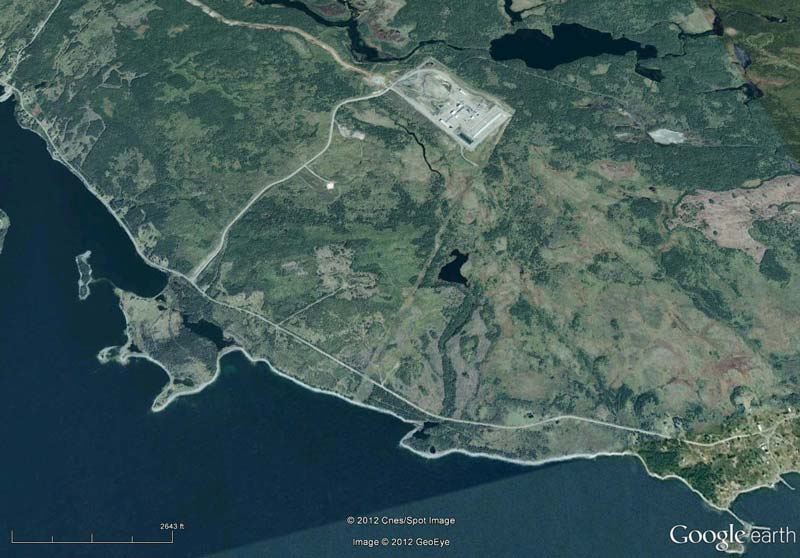
 A boatload of anti fossil fuel zealots from Cooperstown put down their wine glasses long enough to pack an auditorium in nearby Oneonta to bloviate against a sensible plan to build a CNG “decompressor” facility to accept trucks loaded with CNG during wintertime and summertime when area supplies of natgas get dangerously low. We wrote about the proposed facility, described as “a decompression station for compressed natural gas deliveries by truck to supplement resources” two weeks ago (see
  There is a LOT going on at Dominion Energy that impacts the Marcellus/Utica region. Yesterday Dominion posted its second quarter 2018 update and held a conference call with investors to discuss what happened during 2Q18, and what to expect in coming quarters. Discussed on the call: (1) The Cove Point LNG export plant went online in 2Q18 and so far has shipped 19 cargoes of LNG–60 billion cubic feet of gas! (2) The $1.3 billion Greensville County, VA gas-fired electric plant is 95% built and will go online later this year. (3) The Atlantic Coast Pipeline and Supply Header Project is under construction and on track to be online by fourth quarter of 2019. (4) The SCANA Corporation merger is moving along, and a big decision from a judge is coming by Aug. 7 about whether or not SC can unilaterally force SCANA to lower electric rates by 15%. If the judge tosses that law and the 15% price reduction is out, the merger is in. If the price reduction stays, the merger is (our conclusion) questionable. Yeah, there’s a lot going on. Below are excerpts from the quarterly conference call, the full 2Q18 update, and the latest slide deck…