
Dominion Energy 1Q18: Important Updates on Key Projects
 Late last week Dominion Energy issued its first quarter 2018 financial and operational update. Dominion is not only a large utility company (electric and gas), but also a huge pipeline company. Dominion has it’s fingers in a lot of Marcellus/Utica pies, so we like to keep track of the company and what it says about various critical projects for our region. Dominion CEO Tom Farrell had a lot of interesting updates, including updates for: Atlantic Coast Pipeline, a $6.5 billion Dominion pipeline from West Virginia through Virginia and into North Carolina; Cove Point, the $4 billion LNG export facility that began commercial operations in April; Greensville County (VA) Power Station, a $1.3 billion natural gas-fired combined cycle power plant; and the proposed merger with SCANA Corporation, the main electric and gas company for much of South Carolina. Buckle up, there’s lots of news here…
Read More “Dominion Energy 1Q18: Important Updates on Key Projects”

 MDN brought you the great news earlier this week that late Sunday night the very first shipment of Marcellus LNG had left the dock at Cove Point, Maryland (see
  Finally. Finally! Finally!!! The very first cargo of Marcellus Shale gas has been liquefied, loaded and as of Sunday night, set sail from Dominion’s Cove Point LNG plant–heading for we’re not sure where yet. We’ve waited YEARS for this day! Let’s pop the cork on a bottle of the bubbly and celebrate. Last week MDN told you that a ship called the Patris was due to dock at Cove Point and load the first shipment of Marcellus molecules (see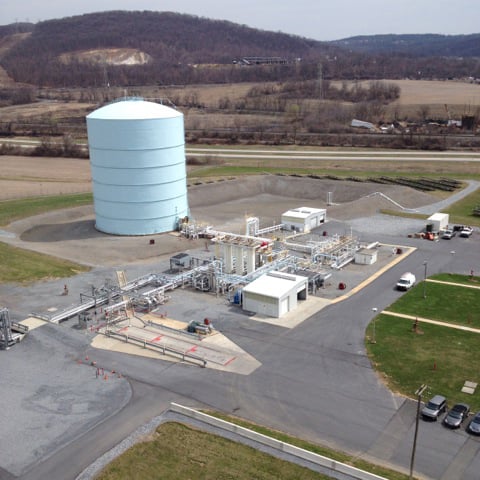
 Dominion Cove Point LNG is open for business–so says Dominion in a press release issued yesterday. As MDN reported late last week, the Gemmata LNG carrier had returned to Cove Point to load a second commissioning cargo of LNG (see
  In March MDN brought you the news that NG Advantage, which had big plans to build a virtual pipeline (gas compression & trucking facility) on the outskirts of Binghamton, NY, appears to have given up on the Town of Fenton location for the planned project (see

 “Hey Jim, what’s happening with Cove Point LNG? Didn’t you say a ship was on the way to pick up the very first cargo of Marcellus molecules?” Great question. Cove Point did see its first cargo set sail in early March (see
  Southern LNG, a unit of Kinder Morgan, filed a request with the Dept. of Energy yesterday asking the DOE for “blanket authorization” to export LNG from the Elba Island LNG plant in Georgia beginning in the third quarter of this year…