
Energy Services | Industrywide Issues | Lease & Royalty Payments | Litigation | Pennsylvania | Storage | Tioga County (PA) | UGI Energy Services
Tioga County Landowners Appeal UGI Takings Case to PA Supremes
 Just coming to light for us now is a long-running lawsuit in Tioga County, PA by landowners who claim that UGI has taken their mineral rights as part of operating the Meeker Storage Field, an underground natural gas storage facility. The landowners lost the lawsuit in the Court of Common Pleas of Tioga County (trial court) in March 2019 (although the case began in 2016). The landowners appealed to Commonwealth Court and lost there too, in November 2020. The landowners appealed again, to the Pennsylvania Supreme Court. The Supremes have just accepted the case.
Read More “Tioga County Landowners Appeal UGI Takings Case to PA Supremes”
 Last fall Mountaineer NGL Storage, a $500 million project in Monroe County, OH to build underground storage for ethane and other NGLs, asked Ohio regulators to cancel a key permit for the project (see
  On Monday of this week we reported about natural gas withdrawals from underground storage for the week ending Feb. 12, which were the twelfth largest on record since 2010 and the biggest one-week withdrawal in the past two years (see
  In 2016 Crestwood Equity Partners formed a joint venture with New York City’s largest utility company, Consolidated Edison Inc., to operate a critical link of pipelines and storage facilities in the heart of the Utica/Marcellus, called Stagecoach Gas Services (see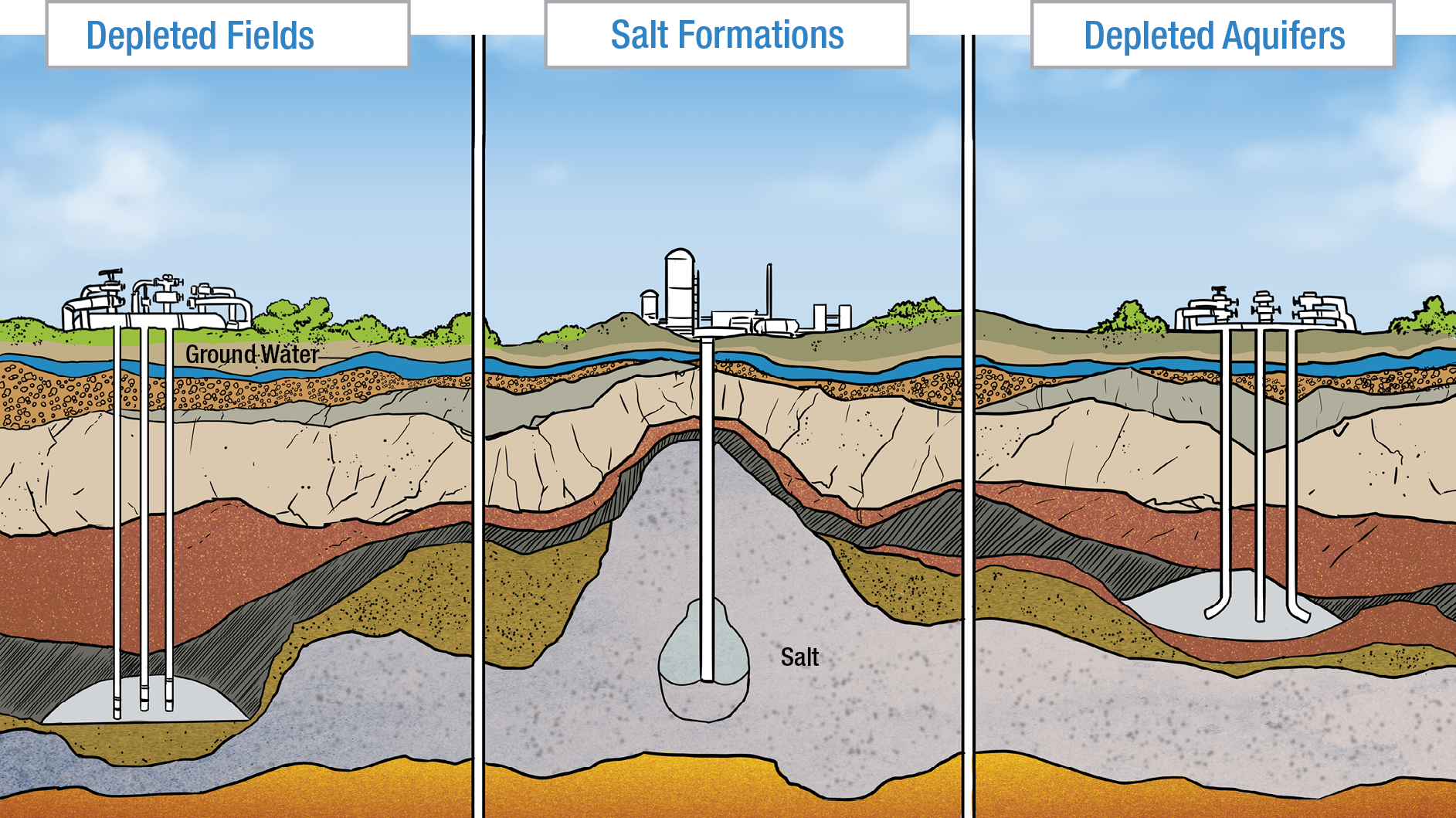
 While the recent spike over the past week in natural gas prices was a fluke, an anomaly due to a rare snow and freezing cold event in the nation’s southwest and Midcontinent regions, the long-term price of natural gas has not moved all that much. The NYMEX futures prices for natgas month by month for the foreseeable future has stayed under or just above the $3/MMBtu mark. Yet we continue to see predictions of alarm that we’re heading for a natgas shortage and with it, a rise in gas prices.
 Dan Billman, a consulting geologist and president of Billman Geologic Consultants, has 32 years of experience in the Appalachian Basin. Billman says there is a “war for porosity” happening in the Marcellus/Utica region, by which he means a critical shortage of underground storage for methane and natural gas liquids.
 Here’s an interesting aspect of the natural gas business you may not have heard about before (we hadn’t). As you may know, not all gas produced gets used immediately. Some gas gets stored, typically in underground caverns, and later extracted for use when needed. Buyers (like utility companies) contract with storage fields to park the gas they’ve purchased until they need it. What you may not know is that not 100% of the molecules that go in come back out again.
 Mountaineer NGL Storage is planning to build an NGL (primarily ethane) storage operation in Monroe County, OH, located just across the river (and border) from West Virginia. Last summer David Hooker, president of Mountaineer and president of the parent company Energy Storage Ventures (located in Denver, Colo.) announced the project had received all necessary permits to begin construction, and that construction “could” begin by the end of March this year (see
  Last week MDN told you that our favorite government agency, the U.S. Energy Information Administration, predicts natural gas production from the country’s seven largest shale plays will decrease in March (see
  Two weeks ago MDN told you about two bills important to the oil and gas industry in West Virginia that are quickly advancing through the state’s current 60-day legislative session (see
  Natural gas is one of those commodities that economists consider as close to a “pure” commodity as one can get. Meaning the classic supply and demand curve rules. When you get more supply than you have in demand, the price goes down–along a predictable curve. In the natural gas world, supply signals come from a couple of different numbers. One is overall production. Another is storage–how much natural gas is sitting, unused, in underground storage, put there during summer “injection season” so it can be used during the winter “withdrawal season.” The bad news (for prices) is that with relatively mild temperatures this winter, we are at near-record high storage levels, according to the U.S. Energy Information Administration (EIA).
 Appalachia Development Group is leading an effort to build a ~$10 billion (or $2.5B, or $3.4B, depending on your source) NGL storage hub in Appalachia–most likely in West Virginia (see
  In October MDN reported that Equitrans (formerly EQT Midstream) had settled an outstanding issue with the Pennsylvania Dept. of Environmental Protection (DEP) over the company’s failure to produce a “verified statement” that proves they have turned over every rock and branch looking for old conventional wells that are not mapped in a natural gas storage field in Greene County, PA (see
  The Appalachia Development Group (ADG) is leading an effort to build a ~$3.3 billion NGL storage hub in Appalachia. From the start, the thinking has been the storage hub would be located somewhere in West Virginia (see