
NYMEX NatGas Price Down 10% After High Storage Number Released
 Strap in–the roller coaster ride continues. Yesterday the NYMEX Henry Hub front-month (July) futures contract for natural gas plunged 10%, by $0.62, following news that more gas was stored (“injected”) than previously anticipated by analysts and traders. Storage inventories rose to 2.169 Tcf (trillion cubic feet) for the week ended June 17 following a 74 Bcf (billion cubic feet) injection. Most people thought the injection would be no more than 60 Bcf. No doubt the ongoing outage at Freeport LNG pushing an extra 2 Bcf/d on the domestic market had something to do with the extra storage build. Models predict cooler weather is coming in the next few weeks. Throw it all into the pot–higher storage, Freeport offline, and cooler weather–and traders got spooked.
Read More “NYMEX NatGas Price Down 10% After High Storage Number Released”
 The Washington County, PA Chamber of Commerce held its State of The Economy event yesterday. One of the speakers, Denise Brinley (former executive director of Pennsylvania’s Office of Energy) said that southwestern Pennsylvania and the Pittsburgh region is a prime prospect to take advantage of establishing a $2 billion hydrogen hub. Western PA is in the “bullseye” of why funding was included in the recent federal infrastructure bill to establish four such hubs nationally, according to Brinley.
 Natural gas production has taken a “precipitous drop” in the U.S. in January according to S&P Global Platts. After approaching a record high at over 96.3 billion cubic feet per day (Bcf/d) in late December, U.S. natural gas production has “tumbled since the start of the new year,” falling by over 4 Bcf/d to average just 92.2 Bcf/d in January. Why?
 U.S. Senator from West Virginia Shelley Moore Capito “Zoomed” in to address the Gas and Oil Association of West Virginia’s (GO-WV) annual winter meeting last week. She talked about the Biden infrastructure bill, which she supported, and Biden’s so-called Build Back Better bill, which she does not support. As part of her comments, Capito mentioned the $1.2 trillion infrastructure bill includes money for “an Appalachian ethane/hydrogen storage hub.” Wow! We thought that project was long dead.
 The experts at S&P Global Platts have hauled out the old crystal ball–the one that looks at natural gas prices in the near-term (next couple of weeks to a month), and they foresee a rise in prices coming very soon. According to Platts, a drop in U.S. natgas production combined with colder weather that forces the use of natgas for heating which leads to tighter supplies means the price of natural gas will rise. How much and when?
 Back in June, MDN told you about a long-running lawsuit in Tioga County, PA by landowners who claim that UGI has taken their mineral rights as part of operating the Meeker Storage Field, an underground natural gas storage facility (see
  In July 2018, a group of 100+ southwestern Pennsylvania landowners sued EQT for failure to pay them rental fees for storing natural gas under their properties (see
  MDN editor Jim Willis has had several conversations this past week about the price of natural gas and how prices in the Marcellus/Utica are influenced by national and international events. “Is it possible,” one questioner asked, “to say that if the NYMEX price is X, then my local trading hub in the M-U will likely be X plus or minus Y?” Unfortunately, the answer is no. There is no one “price” of natural gas. The Henry Hub futures price (the NYMEX) is often quoted as “the” price, but in reality, there are hundreds/thousands of prices. Natgas is a commodity and traded at hundreds of points along major pipelines throughout the country. This post attempts to explain more about the complex landscape of what influences the price of natural gas where you are.
 In June MDN brought you the news that Enbridge’s Texas Eastern Transmission (TETCO) pipeline was being flow-restricted by the Pipeline and Hazardous Material Safety Administration (PHMSA). Some 40% of the Marcellus/Utica molecules that flow through TETCO’s pipeline to destinations in the southeastern U.S. disappeared and were predicted to stay that way until the end of September (see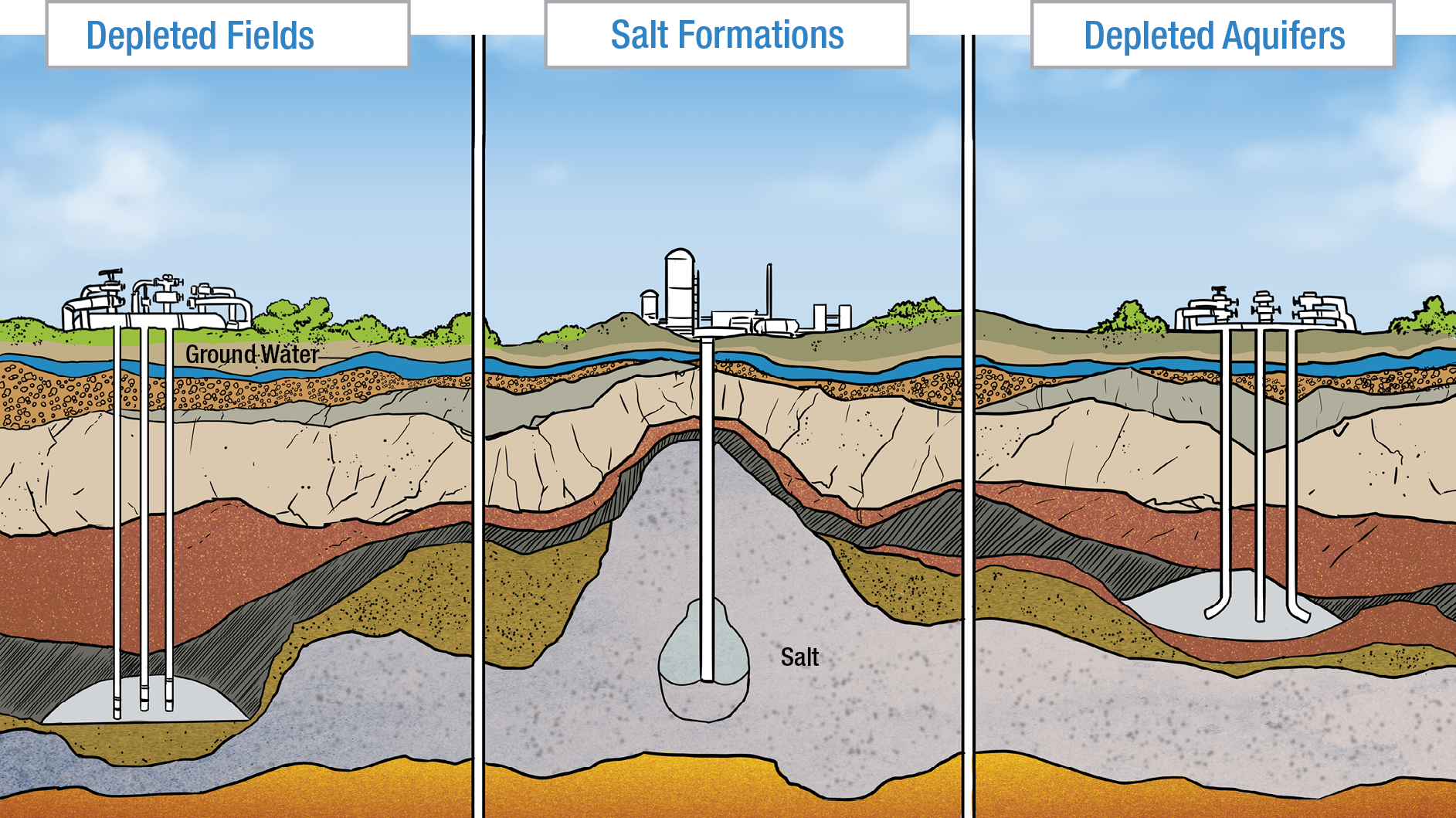
 Yesterday the July NYMEX gas futures contract (the current contract) went up by 8.5 cents to settle at $3.42. The August NYMEX futures contract closed at $3.44, also up 8.5 cents on the day. The big question is why? The short answer is that less gas was put into storage than expected for this time of year. The slightly longer answer is that less gas went into storage because of the hot weather and all those air conditioners whirling using all that electricity and all that electricity gets generated in big part by burning natural gas. So the bottom line is this: Natural gas futures prices popped yesterday because of the weather.
 As temperatures rise across the U.S. and Americans flip on air conditioning which makes a big draw on the electric grid, stocks of natural gas in storage are decreasing. Natgas is used to generate electricity. When there’s less supply to meet existing or growing demand, economics 101 tells us the price of the good or service (in this case natural gas) goes up. And indeed that’s exactly what’s happening. As the price of natgas increases, so too does the share price for M-U drillers.