
Enviros Seek to Ban Ohio Data Centers via Constitutional Amendment
 A supposed “group of rural Ohioans” in Adams and Brown counties is seeking a constitutional amendment to ban data centers exceeding 25 megawatts, citing concerns over resource consumption and a lack of local control. The “rural Ohioans” argue these massive facilities drain electricity and water supplies while providing few permanent jobs, often facilitated by secretive non-disclosure agreements between tech companies and officials. After submitting initial signatures to the Ohio Attorney General, supporters must gather approximately 413,000 more by July to reach the November ballot. Because modern AI-driven facilities typically require over 200 megawatts of power, this amendment would effectively ban large-scale data center expansion across the state. In its reporting, the media left out an important part of the story. Read More “Enviros Seek to Ban Ohio Data Centers via Constitutional Amendment”

 Here’s a lawsuit that had (until now) escaped our radar screen. It’s a lawsuit dealing with the issue of post-production deductions. The case is Kirkbride v. Antero Resources Corp. and is being litigated in the U.S. District Court for the Southern District of Ohio. On March 6, 2026, Magistrate Judge Elizabeth Preston Deavers denied a motion to certify the case as a class action. This is a significant development in the ongoing legal friction between Ohio landowners and energy companies over how royalties are calculated.
  Ohio’s Utica/Point Pleasant shale production reached a record 48 million barrels of oil in 2025, a 39% increase from the previous year. While natural gas output remained stable at 2 trillion cubic feet, oil volumes have tripled since 2021. This surge was fueled by high-performing wells in the Northern Tier, specifically Columbiana and Mahoning counties, largely driven by EOG Resources and Encino Energy (which EOG bought in mid-2025 for $5.6 billion). Although southern hubs like Harrison and Carroll counties remain major producers, the expansion into northern regions highlights a significant shift in Ohio’s energy landscape and drilling success. Go North, young molecule!
  Ohio’s Revised Code Section 5303.34 (part of House Bill 96, recently passed and signed into law) significantly shifts mineral trespass law, favoring oil and gas operators over landowners. Replacing common-law precedent, the new statute limits default damages to net revenue minus production costs, ensuring industry expense credits. Crucially, it creates a high bar for “bad faith,” requiring plaintiffs (landowners and rights owners) to prove an operator’s specific intent to steal minerals or actual knowledge of illegality. Since a “reasonable belief” in a lease or permit now negates bad faith, landowners face a difficult path to full revenue recovery.
  We recently became aware of an Ohio Supreme Court decision that affects producers (i.e., drillers) and, by extension, potentially affects royalties for landowners and rights owners. In E. Ohio Gas Co. v. Croce, the Supreme Court affirmed that the Public Utilities Commission of Ohio (PUCO) has exclusive jurisdiction over claims brought by natural gas producers against Dominion Energy. The producers alleged conversion and unjust enrichment, claiming Dominion sold their excess gas without compensation. The producers tried to litigate the matter in the courts. But the Supreme Court ruled that, in these types of cases, PUCO has primary jurisdiction—not the courts.
  JobsOhio, a private, nonprofit corporation that works on behalf of the state to drive job creation and new capital investment in Ohio by attracting business, contracts its economic research to Cleveland State University (CSU) to keep tabs on the Utica Shale industry. JobsOhio released the latest CSU updated report earlier this week (full copy below), showing that more than $114.6 billion has been invested in Ohio across natural gas, natural gas liquids, and petrochemical supply chain industries since 2011. Ohio’s shale energy sector drew approximately $3.5 billion in fresh capital between July and December 2024.
  Ohio State Representatives Gary Click and Kellie Deeter have introduced legislation to establish a 13-member bipartisan Ohio Data Center Study Commission. This initiative responds to the rapid expansion of approximately 200 data centers across the state, which has sparked community concerns regarding agricultural land use, noise pollution, water consumption, and energy demands. The commission aims to provide a platform for public dialogue and develop a comprehensive report to guide future development. By evaluating these impacts, lawmakers hope to encourage smart, balanced growth that potentially prioritizes brownfield redevelopment over rural green spaces while ensuring long-term resource stability.
  The bidding war for Ascent Resources continues and gets more complex. Law firm Kirkland & Ellis has been drawn into a dispute between Ascent Resources investors and the private equity firm Energy & Minerals Group (EMG). Mason Capital Management is questioning Kirkland & Ellis’s role representing the Ascent board while also advising EMG in its legal fight with the Abu Dhabi Investment Council. The dispute concerns EMG’s plan to put Ascent into a “continuation vehicle,” which Mason Capital and other investors have opposed. Other companies have since jumped in to make bids to take over Ascent.
 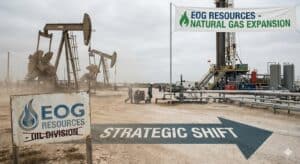 Last year, Houston-based EOG Resources acquired Encino Acquisition Partners for $5.6 billion, establishing the Utica Shale as a “third foundational play” alongside its Permian and Eagle Ford assets (see
  Ascent Resources announced yesterday that its CEO, Jeffrey A. Fisher, who is both Chairman of the Board and Chief Executive Officer, will retire from his executive roles effective January 31, 2026. Following his retirement, he will serve as Special Advisor to executive management and the Board through December 31, 2026. The board has appointed Brooks M. Shughart, currently President & CFO, to succeed Fisher as CEO on January 31. While the official announcement does not refer to it, the company is currently in the middle of a bidding war to take it over.
  The Ohio Tax Commissioner is facing a lawsuit from Rover Pipeline over an aggressive property tax assessment that inflates the project’s market value. The dispute centers on the state treating $2.2 billion in weather-related construction overruns and an unrealistic “infinite lifespan” assumption as value-adding assets. Critics argue that this approach violates constitutional principles of fair market valuation, under which taxes should reflect what a willing buyer would pay rather than total development costs.
  Ohio already has 217 data centers with more on the way. Data centers are warehouses filled with computer equipment that generates a lot of heat. To cool down the computers, data centers use massive amounts of water. If data centers want to get rid of that water after it’s been used, they have to apply for a permit called the National Pollutant Discharge Elimination System (NPDES) through the Ohio EPA. Currently, data centers must apply for an individual NPDES permit, which is detailed and unique to their operations. The OEPA is looking to streamline the process to make it faster and easier. That’s a good thing.
  Here we go again. The environmental left is attacking the shale industry by accusing it of shipping drill cuttings (the leftover rock and dirt that comes out of a borehole) to local landfills in the Buckeye State (Ohio), where it will irradiate everyone and everything close to it. According to the left, drill cuttings “could be contaminated with radioactivity and other chemicals.” And, according to the same people, lack of regulations in Ohio “allows it [radioactive drill cuttings] to slip by regulators, especially in Ohio,” and end up in the same landfills as “household trash.” Is there anything to the claim that drill cuttings are radioactive and a threat to those who live near landfills?
  We first told you about a frac sand company called Smart Sand some 13 years ago (see
  In honor of the new Wizard of Oz movie coming this week: “Lions and tigers and bears, oh my!” The environmental left version of that is, “Fossil fuels, fracking, and data centers, oh never!” Just yesterday, we outlined a trend we see in Pennsylvania (and on the national level): anti-fracking groups morphing into anti-data center groups (see