
PA Court: Drillers Don’t Have Automatic Surface Rights for Wells
 An important (precedential) court ruling to alert Pennsylvania surface (and mineral rights) owners to. The Pennsylvania Superior Court ruled earlier this month that an oil-and-gas mineral rights owner does not have an automatic, unrestricted right to place a well on a separately owned surface estate. When the deed or lease contains no express surface-access right, the mineral owner must establish that using that surface is “strictly necessary”—not merely reasonable—to reach and develop the underlying oil and gas. The case in question concerns land in Westmoreland County but will almost certainly apply to other locations as well. Read More “PA Court: Drillers Don’t Have Automatic Surface Rights for Wells”
 Energy Transfer has asked the Pennsylvania Public Utility Commission (PUC) to restructure and dissolve the Sunoco Pipeline Company, separating its pipeline assets between two new entities. Energy Transfer NE NGL Pipelines LLC would own and operate the Mariner East system and other natural gas liquids pipelines, while Energy Transfer RP Pipelines LLC would control refined petroleum product pipelines. The proposal also would transfer Sunoco’s public utility operating certificates. Formal protests and intervention petitions are due July 27, 2026.
  On July 12, the Pennsylvania Senate and House passed, and Governor Josh Shapiro signed into law, a $50.84 billion General Fund budget. It was only 12 days late this year. This is a net-positive budget for the Marcellus/Utica industry. It contains no new taxes or fees on production, delivers a long-sought modernization that unlocks the deep Utica play, and builds legal scaffolding favorable to gas-fired power for data centers. The only new obligations — full-cement plugging and (for midstream-adjacent projects) data-center reporting — are modest.
 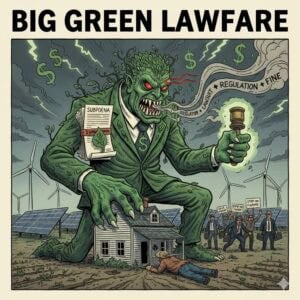 A long-running and favorite tactic of the environmental left is to use our own judicial system against us. On the federal level, foreign-backed groups like the Sierra Club, Earthworks, Food & Water Watch, and others have (in the past) challenged new pipeline or drilling projects, filing appeal after appeal up the line, blocking construction until said lawsuits were resolved. Last June (2025), the Federal Energy Regulatory Commission (FERC) took away the left’s ability to block construction while lawsuits are filed and played out (see
  Pennsylvania radical green groups, including PennFuture, the Center for Coalfield Justice, and the Sierra Club Pennsylvania Chapter, continued a full-court press against AI data centers in the Keystone State yesterday. Just yesterday, we reported that Food & Water Watch had assembled dozens (perhaps one hundred at most) protesters in Harrisburg on Tuesday to support a bill (Senate Bill 1359) that would (if signed by Governor Shapiro) ban new data center development in PA for three years (see
  The thing about the political left is that they NEVER give up. EVER. And so, neither must we. The left wants to destroy new shale drilling in Pennsylvania. They couldn’t do it via regulation. They couldn’t convince a majority of residents that shale drilling is bad. So they search out other ways to make it happen. Among those ways are efforts to increase setbacks (distance from wells to homes and other structures) from the current 500 feet to over 3,200 feet, which would ban drilling in 95%+ of the state (see
  Just yesterday, MDN brought you the great news of the economic and jobs boom happening in Indiana County (Homer City), for a gas-fired AI data center project happening at what was Pennsylvania’s largest coal-fired power plant complex (see
 Last week, MDN brought you the great news that the Pennsylvania impact “fee” (tax on drilling) generated $243.8 million in fees collected from producers for the 2025 reporting year, a whopping 48% increase over 2024 (see
 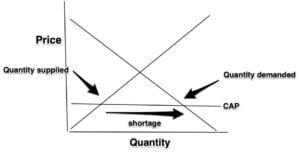 Pennsylvania’s Senate Republicans are speaking truth to power, calling out PA Democrat Governor Josh Shapiro’s policies as one of the primary reasons why PA residents pay more for electricity. And Joshie doesn’t like being called out. State Senate President Pro Tempore Kim Ward argues the state is losing out under a roughly $325-per-megawatt-day price cap on PJM Interconnection’s capacity auctions, approved by the federal government after a lawsuit by Gov. Josh Shapiro (see
  Pennsylvania has become a hotspot for data center proposals, prompting community backlash, writes Penn State law professor Michael Helbing, whose hometown is Archbald, PA, a suburb of Scranton. You may recall that last week we wrote about another Scranton suburb (virtually next door to Archbald, see the map) by the name of Olyphant, and how the leaders of that borough had developed zoning regulations to protect residents yet allow data center projects to proceed (see
  Yesterday, the Pennsylvania Public Utility Commission (PUC) announced the distribution of $243,877,400 in natural gas impact fees collected from producers for the 2025 reporting year, a whopping 48% increase over 2024. The reason for the big increase was the higher price that natural gas fetched last year and a significant uptick in the number of new wells drilled. This year’s distribution brings the cumulative total of impact fees collected and distributed since 2012 to more than $3.12 billion!
  Yesterday, Pennsylvania Department of Environmental Protection (DEP) Secretary Jessica Shirley visited the site of an orphaned well being plugged in Allegheny County, PA, to celebrate the plugging of the 400th orphaned well since Josh Shapiro assumed the governorship in January 2023. There’s nothing wrong with Shapiro’s bragging and chest-puffing, except that Ohio plugged 480 orphaned wells last year. Since January 2023, Ohio has plugged 1,214 orphaned wells, compared to PA’s 400 wells (3X more). Which makes us ask: Why does it take so much longer and cost so much more to plug wells in PA than in OH?
  Pennsylvania imposes an annual “impact fee” (the state’s version of a severance tax) on unconventional (i.e., shale) natural gas wells that were drilled or operating in the previous calendar year. The state Independent Fiscal Office (IFO) provides updates to predict how much will be collected from the fee. The IFO released its mid-year report yesterday, which typically focuses on a forecast for the current fiscal year (FY 2026). But this update is different. It spends most of its verbiage on firming up and confirming the final numbers for 2025, which will be distributed in July of 2026. Near the end, the IFOers do break out the crystal ball and venture a guess on revenues for 2026 that will be paid out next July.
 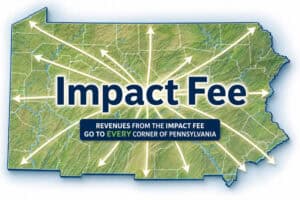 Stephanie Catarino Wissman, executive director of the American Petroleum Institute Pennsylvania, argues in a recent op-ed that Pennsylvania’s Act 13 natural gas impact fee has successfully paired shale development with local investment since 2012. Unlike a severance tax, the fee directs revenue to counties, municipalities, and environmental programs, generating nearly $3 billion overall and more than $1 billion from 2020 to 2024. Funds have supported roads, bridges, stormwater systems, emergency services, parks, watershed restoration, abandoned mine reclamation, orphan well plugging, and tax relief.
  Although there are legitimate concerns over data centers locating in populated communities (noise, water use, etc.), make no mistake: The anti-data center movement is nothing more than the anti-fracking movement in new clothes (see