
PA’s Act 13 Shale Law has Led to Huge Investments in the State
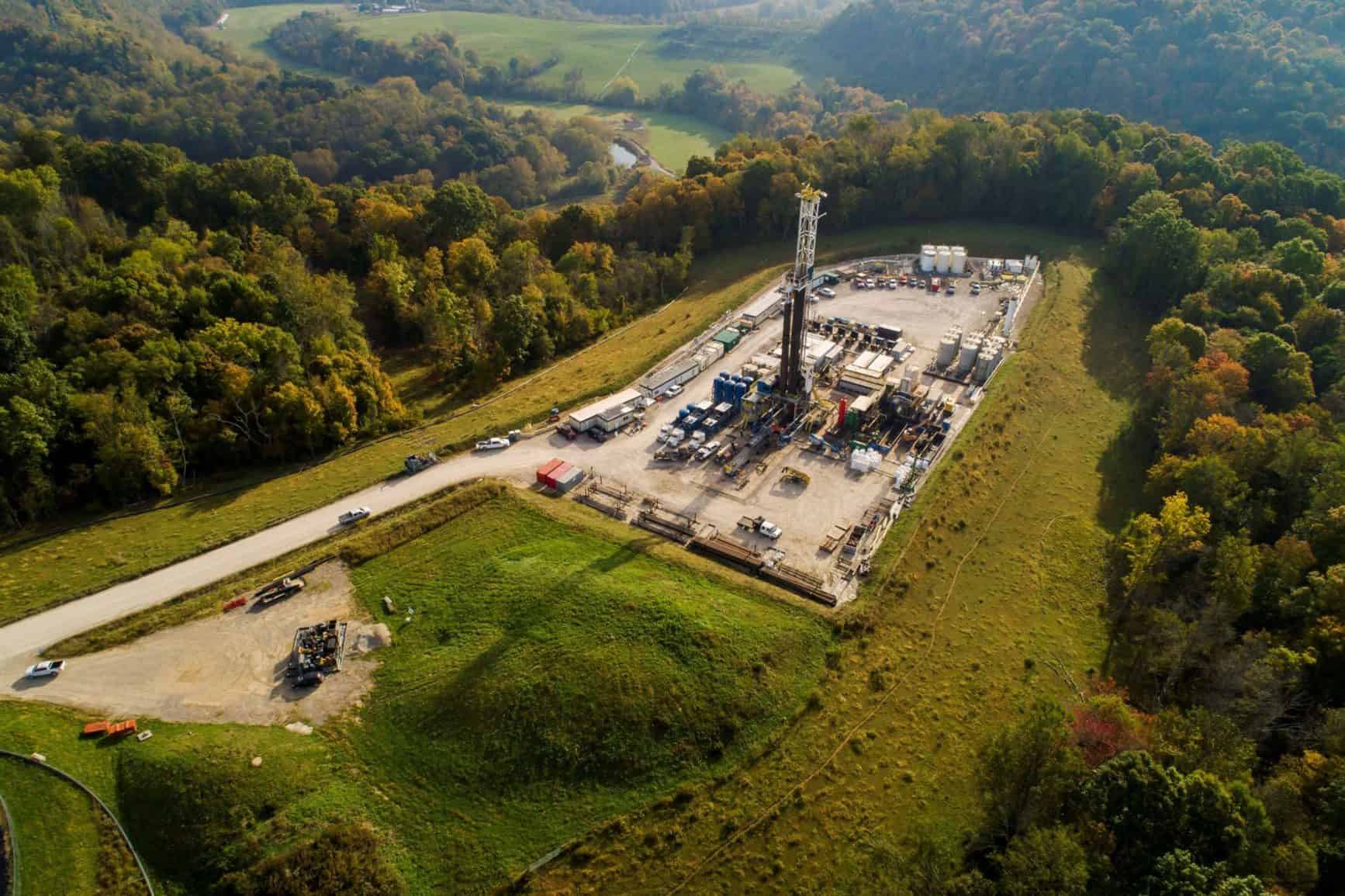 The Marcellus Shale Coalition, in a recent blog post, highlights Pennsylvania’s Act 13 of 2012 as a landmark energy law demonstrating how a comprehensive regulatory framework can guide natural gas development and investment while delivering tangible community benefits. We were there to chronicle the debate and passage of this critically important law 14 years ago (see Gov. Corbett Signs New Marcellus Drilling Law). Central to the success of Act 13 is the Impact Fee, a unique production tax (rather than a severance tax) that has generated over $3 billion statewide, providing hundreds of millions annually to local governments. These funds support diverse projects, including road improvements, water infrastructure upgrades, emergency services, and economic development, particularly crucial for rural areas. Read More “PA’s Act 13 Shale Law has Led to Huge Investments in the State”
 The U.S. Department of Energy (DOE) Hydrocarbons and Geothermal Energy Office (HGEO) announced a $14 million project to test enhanced geothermal systems (EGS) in Pennsylvania. Led by the Pennsylvania Department of Environmental Protection (DEP), the initiative will leverage existing oil and gas infrastructure, specifically the Appalachian Utica Shale, to explore the efficacy and scalability of EGS in the eastern U.S. This project aims to convert a horizontal shale gas well for geothermal use, assessing optimal well placements and fracturing techniques. If successful, it could provide a replicable model for expanding reliable, cost-effective geothermal electricity nationwide, utilizing abundant underground heat resources.
  Natural Allies for a Clean Energy Future
 Despite being the nation’s leading electricity exporter and a top producer of natural gas, nuclear power, and coal, Pennsylvania residents pay significantly more for electricity — 45% more per kilowatt-hour than in 2018. Why? Sleazy politicians blame “greedy” utility companies and AI data centers, even though the rise in electric prices predates the current data center boom. If you dig just a little, you will find the real answer: it’s due to the policies put in place by the same sleazy (Democrat) politicians who blame others.
  Here’s something you don’t hear about often: A Democrat who supports fossil energy and pipelines. It’s especially noteworthy when the Democrat is the former head of the Democratic Party in Pennsylvania. In an eloquent guest editorial published in the Harrisburg Patriot-News, T.J. Rooney, former Chairman of the PA Democratic Party and a former member of the PA House, discusses (bemoans the fact) that it’s next to impossible to build a new natural gas pipeline in the Keystone State. He makes a full-throated plea for permitting reform to change that.
  Much as the Marcellus Shale boom revolutionized Pennsylvania’s economy, a wave of data center development is poised to drive Pennsylvania’s digital future. At a Williamsport-Lycoming Chamber of Commerce panel, experts from PPL Electric Utilities, Amazon Web Services, and the government discussed the immense power demands of this transition. With AWS investing $20 billion in two Pennsylvania-based data centers, the state is racing to catch up to neighboring states in the lucrative data center market. Unfortunately, it has already fallen behind.
  A study by the Pittsburgh Technology Council and Philadelphia Alliance for Capital and Technologies projects that Pennsylvania’s data center expansion will generate $12 billion in annual economic output and nearly 20,000 jobs by 2036. With a forecasted 4,000% increase in data center construction, the commonwealth is leveraging its status as a leading energy exporter and its $29 billion manufacturing sector to support global cloud infrastructure. By integrating robust natural gas and nuclear resources with data development, Pennsylvania is positioning itself as a leader in the AI economy. That is, IF antis don’t blow the opportunity by blocking new data centers (see
  Anti-progress and anti-fossil energy Democrats in Pennsylvania are doing their darndest to try to block new AI data centers from getting built in the state. Just last week, the Democrat-controlled House passed a bill to block new data centers (see
  Pennsylvania State Senator Gene Yaw is introducing legislation to modernize Pennsylvania’s 1961 Oil and Gas Conservation Law, which currently relies on standards predating modern horizontal drilling. By aligning the statute with contemporary practices, the bill aims to accelerate permit reviews for Utica wells and treat them consistently with Marcellus shale operations. Yaw argues that updating these outdated rules will reduce resource waste, minimize surface impacts, and prevent natural gas from being left underground.
  The Marcellus Shale Coalition writes that Pennsylvania sits at the center of U.S. Liquefied Natural Gas (LNG) development, as highlighted by the EU–U.S. LNG Cooperation 2.0 Summit held in February in Pittsburgh. Utilizing the Appalachian Basin’s vast resources, the state has driven the shale revolution, making the U.S. a leading global energy exporter. This production has been vital for European energy security, providing a critical alternative to Russian gas.
  No one should be surprised that far-left Democrat Josh Shapiro, currently the Governor of Pennsylvania (but with a major passion to become President), joined his fellow radicals from other blue states in launching a lawsuit against the Trump administration for moving to eliminate the extremist “endangerment finding” concocted by Lord Obama and the Obamadroids of the EPA. Trump’s move to overturn the finding will save Americans roughly $3,800 each. Yet Shapiro and his fellow cabal members want to keep Americans poor and subservient (to them).
  Here’s a question: Do you want the government to be able to control your thermostat (turning it down in the winter, or up in the summer), controlling your water heater (making it cooler), or controlling your “smart” refrigerator (raising the ambient temp inside), or controlling other so-called smart appliances, bypassing *your* preferred settings? Would you like the government to be able to grab stored electricity from solar panels on your roof or from the battery in your charged-up EV during times of electric grid “stress”? That’s what Democrat members of the Pennsylvania state legislature want to do. It’s called a “virtual power plant,” and it’s being sold as a quick solution to power shortages without having to build new gas-fired power plants (or new windmills, solar farms, etc.). Creating a virtual power plant just takes a little software and a lot of apathy from citizens to make it work.
  Can we PLEASE now put to bed the pervasive lie spread by anti-shale people that drill cuttings (the leftover rock and dirt that comes out of the ground when drilling a shale well) are somehow glow-in-the-dark radioactive and if disposed of in a landfill will cause people who live near such a landfill to die from radiation poisoning? A two-year study by the Pennsylvania Department of Environmental Protection (DEP) concluded that radium levels in landfill wastewater (leachate) do NOT pose a risk to human health.
  It’s time to make a LOT of noise with the Pennsylvania Department of Environmental Protection (DEP) if you care about Marcellus drilling continuing in the Keystone State. In December, the Pennsylvania Environmental Quality Board (EQB) accepted a petition by radical green groups, including the Clean Air Council and Environmental Integrity Project, to “study” the issue of increasing setbacks for shale drilling so far that it would ban ALL new Marcellus/Utica drilling in the Keystone State, which is no exaggeration (see
  Even a leftist liberal putz like Pennsylvania Governor Josh Shapiro can have a good idea every now and again. (Credit where credit is due.) Shapiro is introducing what he calls GRID (Governor’s Responsible Infrastructure Development) standards to incentivize Pennsylvania data center developers to voluntarily adopt higher environmental and transparency benchmarks. In exchange for committing to water conservation, local hiring, and independent power generation, projects can access “Fast Track” permitting to accelerate construction.