
Study: Old Conventional Wells Impact PA Streams More Than Fracking
 A Syracuse University study (full copy below) reveals that conventional oil and gas extraction in Pennsylvania poses a greater long-term threat to stream biodiversity than modern shale fracking. By analyzing over 6,800 aquatic samples, researchers found that legacy infrastructure (old conventional oil and gas wells) is more strongly linked to declining ecosystem health and the loss of sensitive species. While public concern often centers on newer fracking methods, these findings highlight the persistent impact of older, conventional wells. The study, titled “The Legacy of Conventional Oil and Gas Development Outweighs Shale Gas Impacts on Stream Biodiversity,” emphasizes prioritizing the regulation and remediation of abandoned well sites to protect freshwater ecosystems, ensuring that environmental stewardship is based on long-term ecological data rather than assumptions. Read More “Study: Old Conventional Wells Impact PA Streams More Than Fracking”
 We won’t bore you with links to numerous stories we’ve written pointing out how the environmental left has pivoted from anti-fracking to anti-data center. We believe we were one of the first to make that observation (about a year ago). At any rate, one of the worst of the worst “environmental” organizations, Food & Water Watch (FWW), has all but abandoned its anti-fracking work to focus on opposing and blocking AI data centers. It’s absolutely, positively, anti-progress (not to mention anti-American). FWW’s latest campaign is aimed at convincing Congress and state legislatures (like Pennsylvania) to pass a three-year moratorium on building new data centers.
  The Pennsylvania Independent Oil & Gas Association (PIOGA) is the comprehensive trade association representing nearly 400 members across Pennsylvania’s oil and natural gas industry. Tracing its roots to 1918, it serves as a unified voice for shale and conventional producers, service companies, and distributors. PIOGA will host its
 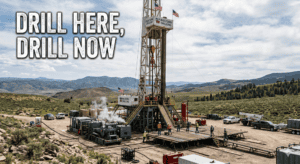 During the Pennsylvania House Appropriations Committee hearing held on March 2, House Republicans advocated for expanded shale gas drilling on state forest lands and beneath state parks to bolster revenue. Department of Conservation and Natural Resources (DCNR) Secretary Cindy Adams Dunn, a radical leftist, noted that current drilling provides an average of $95 million annually but has already caused the “loss” of 30,000 acres of core forest land. Republican members suggested that revising the long-term leasing moratorium could generate an additional $250 million, which fell on deaf Democrat ears.
  Although there are legitimate concerns over data centers locating in populated communities (noise, water use, etc.), make no mistake: The anti-data center movement is nothing more than the anti-fracking movement in new clothes (see
  Yesterday, the Pennsylvania Independent Fiscal Office (IFO) released its latest quarterly Natural Gas Production Report for October through December 2025 (full copy below). There were 129 new horizontal wells spud (drilled) in 4Q25, a big increase of 46 wells (+55%) compared to 4Q24. Natural gas production volume was 1,934 billion cubic feet (Bcf) in 4Q25 (same as 3Q25), up 63 Bcf (+3.4%) from 1,871 Bcf produced in 4Q24. The average Pennsylvania spot hub price was $3.08, an increase of $1.07 (+53%) from the prior year’s $2.01. All in all, it was a great fourth quarter for the PA Marcellus. The numbers are going in the right direction. However, the big news is annual production.
 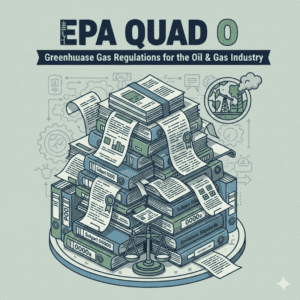 Today, we revisit a topic that (at first glance) is a bit complex: a federal EPA regulation called Subpart OOOOc (“Quad O”), which addresses methane emissions from existing sources. Under the Biden administration, Quad O was twisted and used in an attempt to force oil and gas drillers, especially small conventional drillers, out of business. The policy was set, and the individual states were instructed to bring their own regulations and policies into compliance. But then the Democrats lost the White House. No worries…the Dems running the Pennsylvania Department of Environmental Protection (DEP) eagerly developed onerous regs to comply with the Biden EPA’s Quad O standards. The DEP’s regs are ready to go and could be adopted at any time. However, the Trump EPA delayed implementation of Quad O until 2027 while it works to revise or scrap it.
 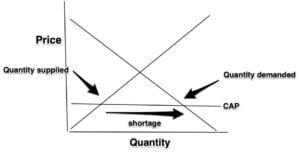 PJM Interconnection, the electrical grid operator that covers Pennsylvania (along with all or parts of 12 other states and the District of Columbia), has once again caved to the political demands of PA Gov. Josh Shapiro to artificially cap prices in its upcoming capacity auctions for the next two years. PJM caved for the July 2025 auction (see
  On Wednesday, the Pennsylvania Senate approved Senate Bill (SB) 704, known as the Grid Stabilization and Security Act, sponsored by Republican State Senator Gene Yaw. This legislation directs the Department of Community and Economic Development (DCED) and the Department of Environmental Protection (DEP) to collaborate to identify suitable sites for natural gas-powered electricity generation. By streamlining site preparation, the bill aims to address critical shortfalls in electricity generation on the PJM grid and attract new investment in baseload power, which has stagnated since 2019.
  Pennsylvania Governor Josh Shapiro (far-left Democrat) has a plan to address rising electricity costs by “increasing oversight” of investor-owned utilities, which he claims generate “excessive profits” at the expense of Pennsylvania ratepayers. That’s code for take them over and have the government (liberal Dems) run them. Last time we checked, we still live in the USA, land of the free and home of the brave. We don’t live in the USSR.
 In 2025, the Pennsylvania Department of Environmental Protection (DEP) achieved “historic success” by eliminating a longstanding permit backlog of over 2,400 applications. The DEP acted on more than 40,000 permits and conducted 116,364 inspections to ensure environmental safety. Key initiatives included the launch of the Streamlining Permits for Economic Expansion and Development (SPEED) program. The DEP is celebrating its success by creating a brand new bureaucracy: the Bureau of Permitting Coordination. Kind of a bureau of coordinating bureaus. (You know, the word bureaucracy comes from bureau, meaning a government department, and cracy, meaning rule. Literally, to be ruled by government bureaucrats who are not elected.)
 There’s just no other way to say this: Pennsylvania is on the cusp of flushing $92 billion down the toilet because resistance is preventing new data centers from being built. We’ve been warning about this danger for months (see
  Last Friday, the Trump administration officials joined several governors from the 13 states that are part of the PJM Interconnect grid to outline a broad plan they say will ensure customers of the grid will not face skyrocketing electric prices due to new AI data centers getting built in the region (see