
Allegheny County | Bradford County | Chesapeake Energy | Coterra Energy (Cabot O&G) | Encino Energy | Energy Companies | Harrison County | Monongalia County | Northeast Natural Energy | Ohio | Pennsylvania | Range Resources Corp | Susquehanna County | Weekly Permits | West Virginia
Weekly Shale Drilling Permits for PA, OH, WV: Mar 1-5
 All three M-U states received permits to drill new shale wells last week. Pennsylvania received 9 new permits, with 5 of those permits going to Cabot Oil & Gas and their drilling program in Susquehanna County. Ohio received 4 new permits, all for the same company (Encino Energy) in the same county (Harrison) on the same well pad. And West Virginia received 3 new permits, all for the same company (Northeast Natural Energy) in the same county (Monongalia) on the same well pad.
Read More “Weekly Shale Drilling Permits for PA, OH, WV: Mar 1-5”
 Yesterday Cabot Oil & Gas issued its fourth-quarter and full-year 2020 update. Cabot continues to be one of the few drillers that consistently makes a profit quarter after quarter, year after year–even during a downturns like what happened in 2020. Although down from 2019, in 2020 Cabot made just over $200 million in net income. They drilled 74 wells, completed 86 wells, and produced an average of 2.3 billion cubic feet equivalent per day (Bcfe/d) last year.
 Cabot Oil & Gas, the powerhouse dry gas producer operating in one northeastern Pennsylvania county (and producing roughly 2.5% of the natgas for the entire nation from that one county) is not due to release full 4Q and full-year 2020 numbers until Feb. 19. However, the company did provide some high-level numbers for last year and a preview of what it plans to do in 2021.
 It was exactly one year ago that the Pennsylvania Supreme Court ruled in THE most consequential lawsuit for Marcellus Shale drilling we’ve seen, a case called Briggs v Southwestern Energy (see
 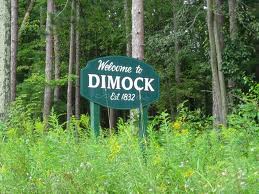 Here’s a first! Pennsylvania has (so far) issued 36 permits for frack wastewater injection wells. Every single one of those wells is located in the western part of the state. A frack wastewater company headquartered in Susquehanna County, PA (in the northeastern part of the state) is “exploring the possibility” of building an injection well in (no lie) Dimock! We love it!
 Epsilon Energy concentrates most of its effort on the Marcellus in Susquehanna County, PA. Epsilon doesn’t actually do any of its own drilling. The company partners with (gives money to) other companies, like Chesapeake Energy, and the other company does the drilling. Epsilon, according to its website, owns ~4,000 net acres in the PA Marcellus. They also own assets in Oklahoma’s Anadarko Basin. On Tuesday Epsilon issued its third-quarter 2020 update, showing a bump up in revenue to $5.8 million in 3Q20 (vs. $5.2 million in 3Q19).