Energy Services | Equitrans/EQT Midstream | Industrywide Issues | Pipelines | Regulation | Statewide VA | Virginia
Virginia DEQ Changes Pipe Regs in Effort to Block MVP Finish
 Don’t you love playing a game with a child and part of the way through the game, the child simply changes the rules for how the game is played (particularly when they are losing)? That’s what comes to mind with the Virginia Dept. of Environmental Quality’s (DEQ) recent action in disallowing any pipeline bigger than 36 inches to use a U.S. Army Corps of Engineers Nationwide Permit 12 (NWP12) to cross creeks, rivers, and wetlands. The move is meant to block Mountain Valley Pipeline (MVP), a 42-inch pipeline, from finishing its installation work (the pipeline is 92% complete).
Read More “Virginia DEQ Changes Pipe Regs in Effort to Block MVP Finish”
 Dominion Energy’s Atlantic Coast Pipeline (ACP) had laid 30 miles of pipeline and had cut trees for 222 miles along the 600-mile route before Dominion decided last summer it no longer wanted to be in the interstate pipeline business, canceling ACP (see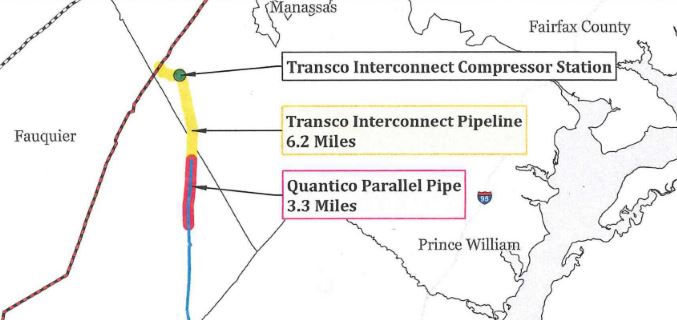
 Anti-fossil fuelers have a new favorite lie to tell: Any kind of power plant or pipeline that uses natural gas is racist. It’s a sick and twisted lie, but that’s the line they now use. For example, the Virginia Air Pollution Control Board recently approved a permit for the construction of a new 17-megawatt natural gas power plant to power the Norfolk Naval Shipyard in Portsmouth, Virginia. Environuts are hollering it’s racist.
 The U.S. Forest Service (USFS) issued an environmental impact statement (EIS) on Friday that supports plans for Mountain Valley Pipeline (MVP) to run through 3.5 miles of woodlands, and under the Appalachian Trail, in the Jefferson National Forest in Monroe County in West Virginia, in and Giles and Montgomery counties in Virginia. This is one of the few items remaining on the MVP checklist before completing the project which is already 92% built and in the ground.
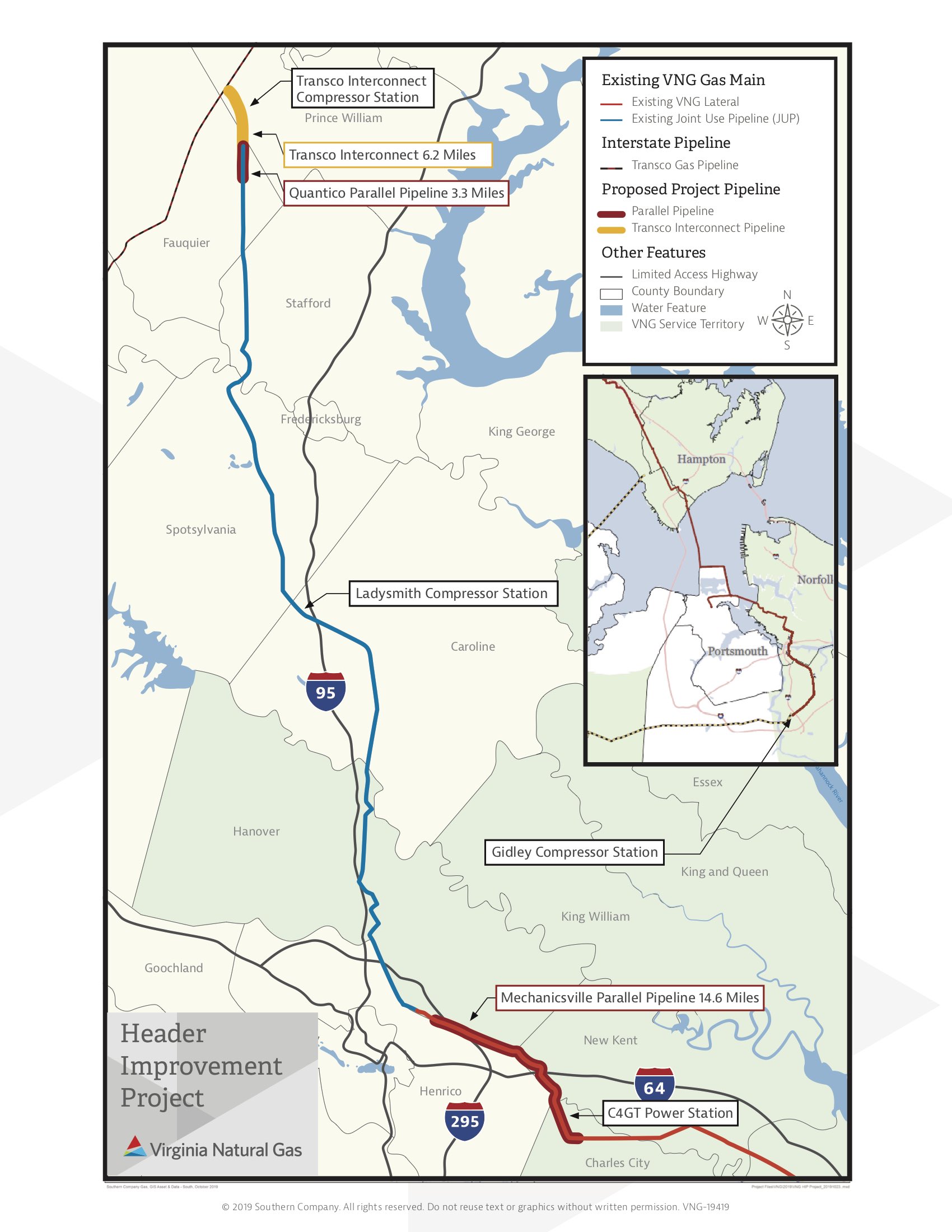
 Down but not out. That’s the best way to describe a $346 million pipeline project in northeastern Virginia called the Header Improvement Project. On Dec. 1 the Virginia State Corporation Commission dismissed a request to approve the project. Virginia Natural Gas (VNG) said it will resubmit the project under a new docket/request.
 It seems pretty certain at this point that Joe Biden will seize control of the White House come Jan. 20 (although we still hold out hope for a Supreme Court intervention against the
  Believe it or not, there are still two environmentalist wackos living up a tree in Montgomery County, Virginia, preventing work crews for Mountain Valley Pipeline (MVP) from cutting trees to clear a path for the pipeline. This has been going on for years and frankly, everyone is tired of it. A county judge has found the two cowards not willing to reveal their names (known as Tree-sitter 1 and Tree-sitter 2) in contempt of court. Starting today if they don’t come down, they are both on the hook for a $500 per day fine.
 Last December MDN told you about a second natural gas-fired power plant planned for Charles City County, Va. (near Richmond) being developed by C4GT (see
  Enough! How many times do we have to put up with Obama/Clinton liberal Democrat judges from the U.S. Court of Appeals for the Fourth Circuit blocking the legal and legitimate construction of Mountain Valley Pipeline (MVP)–a project which is 92% in the ground and done! Last Friday the clowns did it again for the umpteenth time–slapping a “temporary” order blocking construction because the anti-America, Russia-backed Sierra Club filed yet another frivolous lawsuit against the project.
 Some fantastic news to share. Last Friday the U.S. Army Corps of Engineers reissued the second of three necessary permits required to finally finish the 92% complete Mountain Valley Pipeline (MVP) project in Virginia and West Virginia. The Army Corps reissued a permit they previously issued (but got overturned by Big Green groups in court), a Nationwide Permit (NWP) 12, allowing the project to cross over or under some 1,000 or so creeks, rivers, and wetlands.
 Emboldened by Dominion Energy’s decision to abandon its 600-mile Atlantic Coast Pipeline (ACP) from West Virginia to North Carolina, anti-fossil fuel zealots are trying to force Equitrans Midstream to abandon its 303-mile Mountain Valley Pipeline (MVP) from West Virginia to Virginia. But there’s a big difference between the two: While ACP had less than 50 miles built, MVP is now 92% done and in the ground, with just a little bit left to go. Even so, it’s not stopping a small group of antis, including the well-funded Sierra Club, from attempting to kill MVP.
 Democrats are nothing if not creative. A leftist Democrat in the Virginia legislature, Del. Chris Hurst (Montgomery County) has introduced a bill to try and kill the remaining construction of the 92% complete Mountain Valley Pipeline (MVP). Dems couldn’t stop the project in the courts. They couldn’t stop it with nutjobs living in the tops of trees for months on end. They couldn’t get lefty Democrat Gov. Ralph Northam to stop it. So now they’re trying this: A bill that would require *any* company hiring a crew of 50 or more “temporary” workers during the COVID-19 pandemic to receive prior approval from the Democrat Commissioner of Dept. of Labor and Industry first.
 Earlier this month Dominion Energy announced it is throwing in the towel and canceling the 600-mile Atlantic Coast Pipeline (ACP) project that would have stretched from West Virginia to North Carolina. The company also announced it is selling its pipeline business to Warren Buffett (see
  Once again agitators who pretend to care about the environment and about people (they care about neither) from Big Green groups like Chesapeake Climate Action Network and the Sierra Club, say a tiny pipeline project in northeastern Virginia is racist and should not get built. On Monday we told you the Virginia State Corporation Commission will not (yet) approve Virginia Natural Gas’ (VNG) Header Improvement Project, a project to build 24 miles of new pipeline and two new compressor stations (expanding a third compressor) to connect to the mighty Transco pipeline system to flow Marcellus/Utica gas to the northeast Va. region (see