
Shale Energy Stories of Interest: Mon, Aug 3, 2020
 MARCELLUS/UTICA REGION: New York State Teachers Retirement System buys 146,700 shares of Antero Midstream; Pa. lawmakers keep up battle against Regional Greenhouse Gas Initiative; PennFuture urges oil, natural gas industry to explore green initiatives, but PIOGA calls proposal ‘laughable’; First Amendment rights of Amish take center stage in battle over huge New York wind project; OTHER U.S. REGIONS: ExxonMobil slashing Permian rig count, forecasting global oil glut extending ‘well into 2021’; Maine’s most expensive ballot fight ever unites natural gas companies and environmentalists; NATIONAL: Chapter 11 bankruptcy statistics on U.S. shale patch are not the best barometer to gauge industry’s future; U.S. homes and businesses receive natural gas mostly from local distribution companies; Chevron warns pandemic threatening through September, but common ground in election; Drillers go remote as pandemic reshapes oil business; INTERNATIONAL: China boosts shale gas development.
Read More “Shale Energy Stories of Interest: Mon, Aug 3, 2020”
 Antero Resources issued its 2Q20 update yesterday. Even though the company averaged a sales price of $2.81/Mcf (thousand cubic feet) for natural gas it sold last quarter by using hedging (at a time when the price has been bumping around $1.70/Mcf), low gas prices clobbered the company. Antero saw a net loss of $463 million for the quarter. However, the company did set a new onshore drilling record for the longest well drilled in a 24-hour period–11,253 lateral feet drilled in 24 hours.
 CNX Resources issued its 2Q20 update yesterday. The company reports a $146 million net loss. Production in 2Q20 was 114.5 Bcfe (billion cubic feet equivalent), down from 134.5 Bcfe in 2Q19 due to curtailments. Average daily production in 2Q was 1.26 Bcf/d (billion cubic feet per day), down from 1.35 Bcf/d a year earlier. The company shut-in some of its production due to COVID and low prices. They will restore all shut-in production by November.
 Over a year ago, in March 2019, MDN told you about a new Williams plan to beef up the Transco pipeline in Pennsylvania and New Jersey to deliver an extra 760 MMcf/d (originally 1 billion cubic feet per day) of Marcellus gas to PA, NJ, and Maryland (see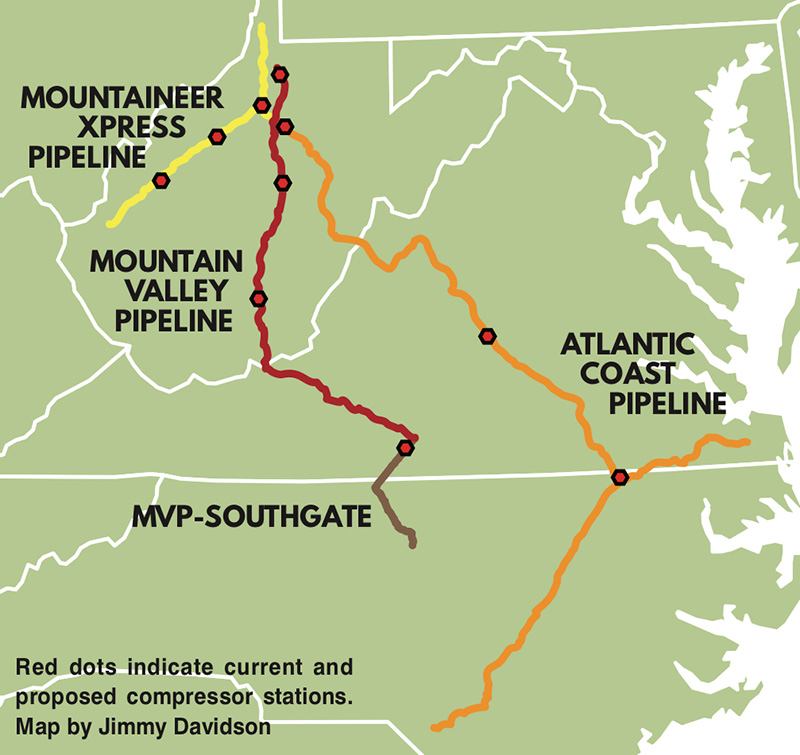

 Two weeks ago the Enverus onshore rig count finally hit bottom and turned around, nudging up by five rigs (see
  We include this story on MDN because (a) it’s Friday and sometimes we get a little giddy and have fun on Fridays, and (b) to illustrate the lengths crazies will go to reduce the amount of “fugitive methane” that “escapes” into the atmosphere. Agriculture (farm animals) produce huge amounts of fugitive methane–a fact that the climate loons grudgingly have to deal with if they want to keep up the false pretense that the planet is catastrophically warming. So every now and again the crazies come out with truly insane plans to capture, or in this case restrict, the amount of methane cows fart and burp. Penn State is all proud of itself that it has determined the optimum “dosing” of a really big antacid tablet for Bessie…
 Two weeks ago there were 27 new permits issued in Pennsylvania for shale drilling. Last week, July 20-24, there were only 3 new PA permits. Ouch. Finally, after several weeks of no shale permits in Ohio, the Buckeye State issued 8 new shale permits–all for the same well pad. In West Virginia, there were 3 new shale drilling permits (all for the same well pad) issued last week. The permits in PA were issued in Bradford, Susquehanna, and Washington counties. The OH permits were issued in Harrison County. The WV permits were issued in Wetzel County. There is no doubt drilling has greatly slowed throughout the M-U. Below are the details for each new permit issued.
 Earlier this month Dominion Energy announced it is throwing in the towel and canceling the 600-mile Atlantic Coast Pipeline (ACP) project that would have stretched from West Virginia to North Carolina. The company also announced it is selling its pipeline business to Warren Buffett (see
  Yesterday MDN brought you the news that CNX Resources is buying out the balance of what they don’t own in their pipeline subsidiary CNX Midstream (see
  Less than one year after buying Baker Hughes, GE decided it didn’t want its bright shiny new toy anymore and would divest itself of Baker Hughes (see
  The National Whistleblower Center (NWC), a partisan (Democrat) nonprofit group, last December launched what it calls a “Climate Corruption Campaign” to “enlist whistleblowers in the fight against fraud and other crimes in the three industry sectors responsible for the vast majority of the world’s carbon pollution: oil and gas, coal, and industrial logging” (see
  President Trump visited the Permian Basin yesterday to announce export authorizations for LNG will now go through 2050, to sign four permits for pipeline and rail transport of fossil fuels, and to get the truth out about his administration’s efforts to make America secure by making our country “energy dominant.” The liberal media spin machine was in overdrive trying to cover up the great news about U.S. fossil fuels–but they could not. Trump was on his “A” game yesterday and it showed.
 We love a story about an individual or company that defies conventional wisdom and succeeds by charting its own course separate from the herd. Diversified Gas & Oil (DGO) is one such company. DGO buys up older conventional (and shale) wells in Appalachia, making money off the “long tail” of low production (see