
Toby Rice: NatGas Will Surpass Petroleum as U.S.’s #1 Fuel by 2030
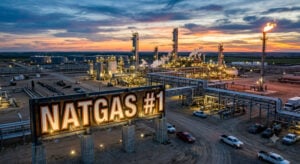 In a recent interview with Bloomberg, EQT CEO Toby Rice declared that natural gas is poised to surpass petroleum as America’s top energy source by 2030, ending oil’s 75-year dominance that began in 1950 when it overtook coal. In 2025, gas accounted for 36% of U.S. energy consumption, compared with petroleum’s 37%, with Rice predicting a crossover within a couple of years. The shale revolution’s cheap gas has displaced coal in power generation, fueled economic electrification, and complemented intermittent renewables, while flat gasoline demand — partly due to EVs — has stalled oil consumption. The EIA projects gas demand growing 3.4% through 2027 versus 0.6% for petroleum, and booming LNG exports add further momentum. Read More “Toby Rice: NatGas Will Surpass Petroleum as U.S.’s #1 Fuel by 2030”
 Following its May merger with Coterra Energy, Devon Energy is positioning AI as central to integration efforts while targeting $1 billion in annual pre-tax synergies by the end of 2027. The combined company—valued at over $60 billion with 1.6 million boe/d production—is concentrated in the Delaware Basin (70% of oil output), recently bolstered by a $2.6 billion New Mexico acreage acquisition, and includes Coterra’s 190,000-acre Marcellus position, which reportedly drew an $8 billion offer.
  The Trump administration and its officials continue to aggressively push the Williams 125-mile Constitution Pipeline project, which would stretch from the prolific shale gas fields of Susquehanna County, PA, into and through New York State, to Schoharie County, NY, to move Marcellus gas into New York State and New England. In June, Trump EPA Administrator Lee Zeldin visited Binghamton to advocate for reviving the long-stalled project (see
  A rare bipartisan backlash against AI data centers has emerged, with more than 70 state and local governments passing restrictions or moratoriums due to concerns about water use, electricity consumption, noise, and utility rate hikes. Critics span the political spectrum, from Bernie Sanders and Alexandria Ocasio-Cortez to conservatives like Pennsylvania State Treasurer (and Republican candidate for Governor) Stacy Garrity. Public relations experts blame the industry’s failure to build trust, communicate transparently, and engage communities early, comparing tech companies’ top-down approach to the tobacco industry’s playbook. The consequences are mounting: 25 data center projects were canceled in 2025 — quadruple 2024’s total — while roughly 99 of 770 planned projects face local opposition. Pennsylvania is at risk of forfeiting some $92 billion in private investments (see
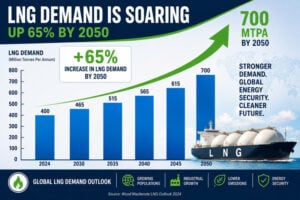 Shell, which dropped “Royal Dutch” from its name after leaving the Netherlands in 2022 due to high taxes and overregulation, is one of the world’s supermajors (oil and gas driller). Shell is also one of (perhaps THE) largest producers and vendors of LNG, or liquefied natural gas, worldwide. The company has just released its tenth annual LNG Outlook 2026 (full copy below), which highlights key trends in 2025 and hauls out the crystal ball to predict where things are heading over the next 25 years. Shell’s annual LNG outlook says shipping disruptions in the Strait of Hormuz from the Iran war—which shut in roughly one-fifth of global monthly LNG supply—could keep 2026 global LNG trade flat if flows normalize within three months, with growth resuming in 2027.
  MARCELLUS/UTICA REGION: Data center supporters and critics argue over future in Pittsburgh area; OTHER U.S. REGIONS: Gas production climbs faster than oil in Permian; Virginia’s return to RGGI is another ratepayer rip-off in the making; NATIONAL: U.S. natural gas futures rise on summer demand; Study projects $1 trillion needed for U.S. energy infrastructure by 2052; INTERNATIONAL: Oil slides to fresh five-month low as oversupply signals mount; Russia oil price falls to pre-Iran war level in blow to Kremlin; Qatari LNG carrier struck in Hormuz, testing US talks; Washington’s plan to neutralize Iran’s Hormuz leverage; Securing the oil and gas resources of the future.