
EIA Mar ’19 Drilling Report: Numbers Tweaked, Record Gas
 Yesterday our favorite government agency, the U.S. Energy Information Administration, issued our favorite monthly report, the Drilling Productivity Report. The DPR is a forecast of oil and gas production in the country’s seven major shale plays for the coming month, made by the expert number crunchers at EIA.
Read More “EIA Mar ’19 Drilling Report: Numbers Tweaked, Record Gas”
 In the same way America’s “unnecessary” and audacious effort to put a man on the moon in the 1960s produced the unintended consequence of discovering new materials and inventions that have fundamentally changed our society (practical applications, like computers), so too has the “unnecessary” practice of hydraulic fracturing led to new discoveries and information about how the human body works–enlightening scientists, ultimately improving human health.
 A recent Bloomberg article got it wrong, as they typically do, with this headline: “Biggest Threat to Once-Prized Gas Is Getting Kicked Out of Homes.” Residential natural gas use has been relatively flat, for years. Yet natural gas demand has rocked upward, which begs the question–so who are the new customers using all that gas? MDN friend Jude Clemente has the answer…
 BTU Analytics, according to their website, “provides independent fundamentals-based consulting and analytical subscription reports to the North American oil, NGL, and natural gas markets. Our focus is giving clients answers to complex questions supported by data and backed by analysis of the market from wellhead to burner tip.” BTU recently made a bold prediction. The company predicts Marcellus/Utica natural gas production will (already has) plateau at around 31 billion cubic feet per day (Bcf/d).
 In contrast to a prediction by BTU Analytics that the Marcellus/Utica region has plateaued and likely won’t produce more than 31 billion cubic feet per day (Bcf/d) of natural gas (see Industry Consultant Predicts M-U Output Ceiling is 31 Bcf/d), the number crunchers at the U.S. Energy Information Administration (our favorite government agency) have a different view.
 Would you feel better if a driller building a shale well pad near your home was “green certified”? Meaning the company has been reviewed and certified by an independent agency for evidence that company adheres to strict environmental standards as it drills. Researchers at Indiana University’s School of Public and Environmental Affairs set out to answer that question–and they found public opinion of shale drilling would greatly improve if such a “green certification” were in place.
 The Ohio Dept. of Natural Resources (ODNR) issued fourth quarter 2018 numbers for Utica shale oil and gas production yesterday, and wow! Both natural gas and oil production rocketed upward. Natgas production was up 32% over the same period last year, to a new all-time high of 663.5 billion cubic feet (Bcf), and oil production hit 5.8 million barrels, up 39% over last year’s 4Q.
 Every year or two another fraudulent piece of “research” is released supposedly showing a connection between fracking and health issues. Last March Yale released a nonsense study that says fracking causes STDs (see
  Yesterday our favorite government agency, the U.S. Energy Information Administration, issued our favorite monthly report, the Drilling Productivity Report. The DPR is a forecast of oil and gas production in the country’s seven major shale plays for the coming month, made by the expert number crunchers at EIA.
 We spotted an article based on the research done for a graduate thesis by a Massachusetts Institute of Technology (MIT) graduate student. The thesis and article look at the reality of our country’s energy supply and concludes that unless we can find a way to reduce our reliance on natural gas (not likely), we need more new pipelines, and we need to repair and upgrade old/existing pipelines. In short, we have a pipeline problem in this country.
 UK oil and gas giant BP recently released its 2019 edition of their BP Energy Outlook. As they do each year, BP predicts renewable energy sources will continue to grow. However, the inescapable conclusion you get from this latest report is that LNG (liquefied natural gas) will play a staring role in the energy picture over the next 20 years. Not only that, but LNG coming from the U.S. is will receive the best actor award.
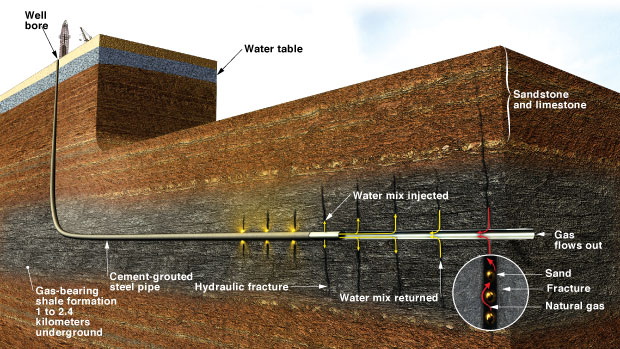 A drilling team with experience drilling more than 1,000 Marcellus shale wells in Pennsylvania with laterals from 1,500 feet to 11,000 feet recently published a research paper looking at best practices and what it will take to routinely drill wells with laterals longer than 18,000 feet.
 A partisan left-wing group calling itself the West Virginia Center on Budget & Policy along with another partisan left-wing group called the Institute for Energy Economics and Financial Analysis (IEEFA) released a report last week that claims WV’s shale industry has “fallen short” in delivering on economic promises, and the way to fix it is to boost the severance tax from 5% to 10%! Yeah, they’re out of their collectivist minds.