Treating PA’s Acid Mine Drainage & Frack Wastewater Together
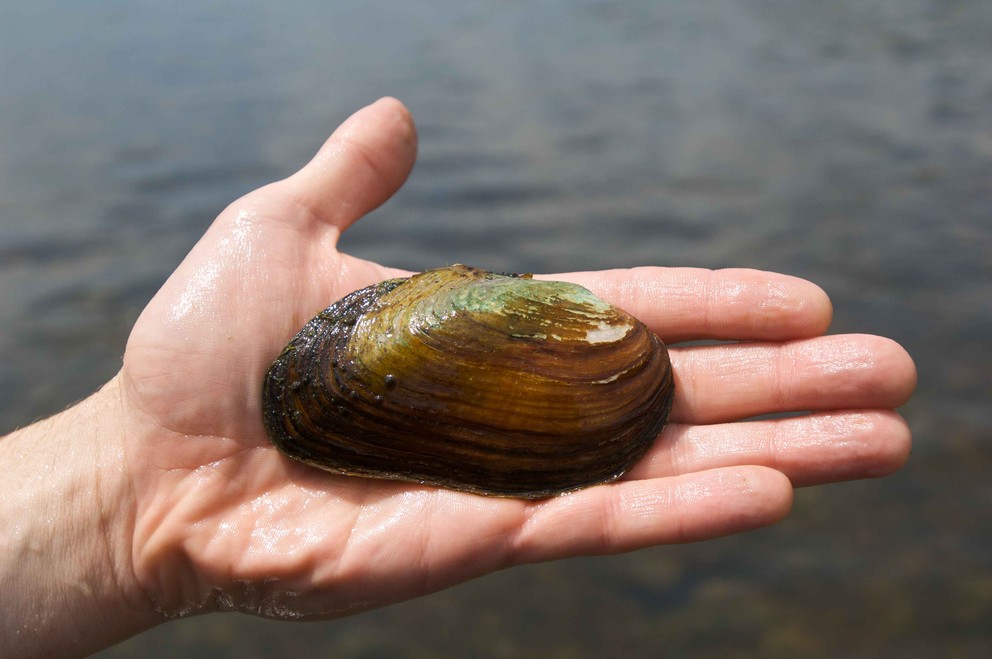
 Pennsylvania has had a seriously bad problem with acid mine drainage for years–water that washes through old/abandoned coal mines that comes back out heavily laden with minerals that make it acidic and a danger to the environment. More recently, with the shale revolution, PA has also found itself with an abundance of shale wastewater–most of it “produced” water that comes from deep in the earth (not surface drinking water), also laden with all sorts of minerals. Both acid mine water and shale wastewater are not easy to treat. Some sharp kids and their professors at the University of Pittsburgh got the bright idea to combine the two together, and treat them together, at the same time. Why? Because they have opposite amounts of barium and sulfates. Combine the two and you can more easily remove the nasty stuff via “precipitation.” How cool is that?
Read More “Treating PA’s Acid Mine Drainage & Frack Wastewater Together”
 Earlier this month MDN brought you the exciting news that New Fortress Energy (NFE) is planning to build an LNG (liquefied natural gas) liquefaction plant in Wyalusing (Bradford County), PA in order to export Marcellus gas (see
  This is big news that will impact nearly every landowner and shale driller in Pennsylvania. In April, MDN brought you the news that Pennsylvania Superior Court had handed down a decision (known as the “Briggs” case) that has the power to greatly restrict, perhaps even stop, Marcellus drilling in PA (see
  Seven antis from Greater Philadelphia, with money and lawyers from Big Green groups backing them, on Monday asked the Pennsylvania Public Utility Commission to shut down Mariner East 1 pipeline (which has operating for more than a year), and to block the startup of Mariner East 2 pipeline. The chutzpah of these people is breathtaking. To put it in perspective, Chester and Delaware Counties, which is where the seven antis hail from, has a combined population of 1,083,989 people (as of 2017). Seven people represents .0006% of the population. Meaning 99.999% of the population either don’t care, or are not against these pipeline projects. Both ME1 and ME2 carry natural gas liquids (NGLs)–meaning ethane and propane–from the western side of PA across the state to Delaware County and the Marcus Hook refinery. From the very beginning there have been a committed few (with the help of Big Green) fighting the ME2 project every inch of the way. They’ve thrown everything they have at it–multiple lawsuits, pleas to regulatory agencies, legislative hearings, illegal protests–you name it, they’ve done it. This latest action appears to be a last gasp, “Hail Mary” attempt at convincing a regulatory agency to stop both pipelines. Which isn’t going to happen.
 Is Shell (or SWEPI, formerly known as Shell Western E&P Inc.) leaving its Pennsylvania Marcellus drilling program behind? You may recall we posted a story in June quoting Tonya Williams, general manager for Appalachia with Shell, as stating (during her talk at the DUG East event in Pittsburgh) that Shell plans to spend $150 million to drill wells on four pads in 2018, all of it in Tioga County (see
  Since our lead story today is about the spike up in the price of natural gas (see Price of NatGas Spikes to Highest Level in 4 Years – $4.84/Mcf), we thought it fitting to bring you a related story that caught our eye–on the price of natgas in Pennsylvania. For years PA, especially the dry gas northeast, has been plagued with some of the lowest natural gas prices in the U.S. Why? Prolific production and not enough pipelines to get all that production to higher-paying markets. The situation is changing, rapidly. Prices in the northeast Marcellus are catching up with the Henry Hub price in southern Louisiana, thanks to multiple pipelines coming online. What does it all mean for Pennsylvanians?
 Trout Unlimited (TU), previously outed as an anti-fracking organization (see
  Yesterday the muckety-mucks from Energy Transfer (ET) held a conference call with Wall Street analysts to discuss the company’s third quarter 2018 update. Inevitably on such calls there’s talk about what’s coming up in addition to what happened in the previous quarter. ET is a big midstream (pipeline) company. Among their projects are the mighty Rover Pipeline, which reaches from Pennsylvania, West Virgina, and eastern Ohio all the way into Michigan, and the Mariner East 2 Pipeline, which runs from eastern Ohio all the way through Pennsylvania to the Philadelphia area. Rover flows natural gas, ME2 (and ME2X) will flow NGLs, mainly ethane and propane. According to Tom Long, ET’s Chief Financial Officer, ME2 will be up and running sometime this quarter. Since the end of this quarter is around Christmastime, we prefer to think of ME2 as a Christmas present for Marcellus/Utica drillers.
 It must really grate on Big Green supporters that their hero, lib Dem Tom Wolf (who just won reelection as governor of PA), continues to support fossil fuel projects. It must doubly grate on them that Wolf’s Dept. of Environmental Protection, when funding such projects, calls them “clean energy.” We love it! The PA DEP announced yesterday, two days after the big election, that they’ve just awarded $2.6 million in grants to 16 different “clean energy vehicle” projects. When you look at the list, all but $32,077 of that amount is going to fund either CNG or propane-powered vehicles. That is, fossil fuel-powered vehicles (mostly buses and trucks). And the DEP has the *audacity* (in the opinion of Big Green nuts) to call all of these projects “clean energy”! We’re laughing our considerable rear-end off.
 The left-most contingent in the Pennsylvania Democrat Party wants to ban all fracking in the state. It’s fringe, but all such oddball movements start out as fringe. Of particular note in this election season is that a group of these ban-fracking nutters have gotten themselves on the ballot in 15 PA House and Senate races around the state. As you might expect, most of the ban-frackers are running in counties in the Philadelphia orbit (Delaware, Chester, Montgomery, Philly itself). There are some from outside (but still close to) Philly, in Northampton and Carbon counties. There are a few in Allegheny County (Pittsburgh area). There’s even one running in Centre County. We have the full list of 15 people that our friends in PA should be sure to NOT vote for in tomorrow’s very important election.
 On Sept. 10, Energy Transfer’s 24-inch gathering pipeline in Beaver County, PA, called the Revolution Pipeline, caught fire and exploded during testing (see
  A panel discussion at last week’s Shale Insight event focused on a pair of Pennsylvania lawsuits that has the potential (indeed already is) changing the drilling landscape in PA. The first lawsuit discussed was the decision from June 2017–“Pennsylvania Environmental Defense Foundation (PEDF) v. Commonwealth of Pennsylvania.” PEDF is an anti-fossil fuel group. They convinced the PA Supreme Court to issue a decision that tosses out a decades-old “balancing test” in decisions about drilling and instead said land-use and permitting decisions must now meet standards established by the state’s so-called Environmental Rights Amendment (ERA). The PEDF decision is creating big question marks for drillers and has spawned a flurry of lawsuits to define which standards to use. The second case discussed at Shale Insight was the “Briggs” case that tossed out the rule of capture in PA for shale drilling. Both cases have the potential to greatly limit Marcellus drilling in PA.
 Although President Trump is having good success in draining much of the D.C. swamp, there are still stagnant pools here and there. One of them is the Pipeline and Hazardous Materials Safety Administration (PHMSA). Two years ago PHMSA was caught directly funding anti-pipeline activists with