MDN’s Energy Stories of Interest: Fri, Jun 5, 2026
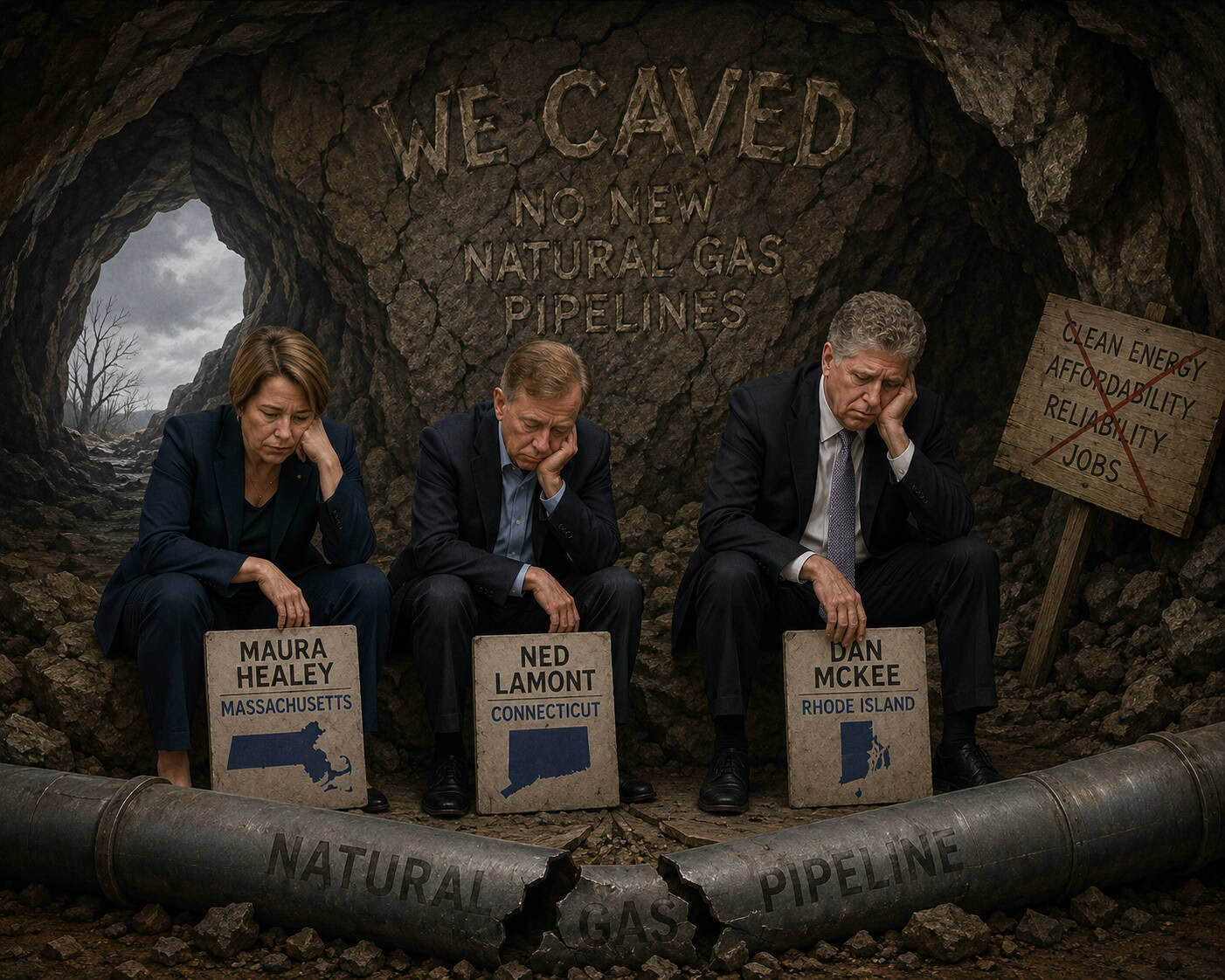
 OTHER U.S. REGIONS: Lombardo backs natural gas pipeline expansion for data centers; NATIONAL: U.S. natural gas futures rise on weather, storage data; AI power boom revives natural gas as infrastructure bet; Leftist climate zealotry means never having to say you’re sorry; Enemies of energy – saving the earth; INTERNATIONAL: Oil retreats on truce optimism; Putin urges Germany to make decision on buying Russian gas again via Nord Stream; Supermajor warns oil prices could hit $160 within weeks; How long can demand destruction keep a lid on oil prices?; Europe is stockpiling enough gas to avoid another energy crisis. Read More “MDN’s Energy Stories of Interest: Fri, Jun 5, 2026”
 Here’s a West Virginia court case we were not previously aware of, one that affects the entire state regarding local zoning for shale gas drilling. The West Virginia Supreme Court of Appeals ruled Wednesday that municipal zoning laws are not entirely preempted by state environmental regulations, reversing an intermediate court decision and siding with the City of Weirton against SWN Production Company (Southwestern Energy, now part of Expand Energy). The 4-1 decision found no conflict between the state Department of Environmental Protection’s authority over drilling processes and municipalities’ power to regulate land use under the Land Use Planning Act.
  Although there are legitimate concerns over data centers locating in populated communities (noise, water use, etc.), make no mistake: The anti-data center movement is nothing more than the anti-fracking movement in new clothes (see
  In mid-April, MDN brought you the great news that a major lawsuit had been filed against New York State alleging a “taking” of private property by the state via the state ban on fracking (see
  The Democrats who rule New York State with an iron fist recently signed a new budget bill into law (57 days late). In New York, the sleazy politicians who run the state slip all sorts of legislation into bills unrelated to the budget. They operate on the “throw as much crap against the wall as you can to see what sticks” theory of legislating. This year, the legislature and governor finally had to face the reality that the state’s 2019 Climate Leadership and Community Protection Act (CLCPA) was not feasible. So they changed it, much to the distress of the radical environmental left. As part of the budget bill, the Dems lightened up on requirements in the CLCPA. The end result is that natural gas infrastructure, including new gas pipelines, is once again on the agenda.
  ISO New England’s Internal Market Monitor reported that total wholesale electricity costs in New England reached $15 billion in 2025, up 48% from 2024. The increase was driven by higher natural gas prices, tighter supply, changes in the resource mix, and shifts in market design. Day-ahead energy prices averaged $71.81/MWh, up 73%, while real-time prices rose 67% to $65.89/MWh. Natural gas prices more than doubled to $6.27/MMBtu. Carbon taxes added $1.1 billion to energy costs. Boiling it all down, aside from carbon taxes, high natgas prices are the main culprit. The report (full copy below) has some thoughts about why natgas prices are so high in New England.
  The U.S. House Judiciary Committee has issued its first subpoena in a probe of what it calls a coordinated climate litigation campaign against energy companies. The subpoena targets Roger Worthington, attorney for Multnomah County, Oregon. Multnomah seeks more than $51 billion from energy companies (and if they prevailed, Worthington’s law firm would get one-third of that, making every person working the case an instant millionaire). Chairman Jim Jordan and Rep. Darrell Issa are investigating possible coordination (collusion) between Worthington, the Environmental Law Institute, and its Climate Judiciary Project, despite CJP’s supposed neutrality.
  Yesterday, the Pennsylvania Independent Fiscal Office (IFO) released its latest quarterly Natural Gas Production Report for January through March 2026 (full copy below). There were 101 new horizontal wells spudded (drilled) in 1Q26, an increase of 7 wells (+7%) compared to 1Q25. Natural gas production volume was 1,928 billion cubic feet (Bcf) in 1Q26, down less than 1/10th of a percent from 1,943 Bcf produced in 1Q25 (down 15 Bcf, -0.8%). The average Pennsylvania spot hub price was $5.22, a huge increase of $1.53 (+41%) from the prior year’s $3.69.
  Homer City Generation announced the early completion of demolition and excavation work at its Indiana County, Pennsylvania, site, marking a major milestone in transforming the former coal-fired power plant into a gas-fired power plant and AI data center complex. Over nine months, partner Independence Excavating led 130 union workers and 65+ pieces of equipment to recycle over 112,000 tons of scrap material and excavate approximately 3 million cubic yards (comparable to the Great Pyramid’s volume), all while maintaining zero safety incidents.
  KLX Energy Services has acquired all assets of Wolfpack Rentals for $17 million, including $14 million at closing and two deferred payments of $1.5 million each. Wolfpack, founded in 2005 and based in Texas, provides surface rental equipment and services to oil and gas E&P, midstream, construction, and industrial customers across Texas and the Marcellus/Utica region, including regional offices and operations in West Virginia and Ohio. A better way to understand Wolfpack is to think of them as renting trailers for “man camps” — temporary settlements of oil and gas workers in remote locations.
  Kathairos Solutions says its liquid nitrogen systems have crossed a major climate milestone by eliminating 1 million metric tonnes (MMT) of CO2 equivalent by replacing methane with nitrogen to power pneumatic devices at oil and gas facilities. The Calgary-based company reports that about 3,000 systems have been deployed across North America, with more than 70 producer partners, eliminating roughly 1,250 tCO2e per day. Kathairos’ customers include many of the biggest drillers in the Marcellus/Utica.
  The U.S. Court of Appeals for the Ninth Circuit on Tuesday upheld the dismissal of a lawsuit brought by 22 “youths,” aged 7 to 25 (kids used as a prop by Big Green groups), challenging three Trump executive orders promoting fossil fuel production and domestic energy investments. The appeals panel affirmed that the plaintiffs lacked standing, finding they failed to demonstrate the executive orders directly caused their injuries and could only speculate about future agency actions to implement those orders.
  Data center developers are turning to behind-the-meter natural gas generation as grid interconnection delays now exceed five years, making traditional utility connections commercially unworkable for AI-scale (hyperscale) facilities. Natural gas turbines and engines provide continuous, dispatchable baseload power that unreliable renewables cannot deliver at the required scale and reliability. However, this shift transforms data centers from energy consumers to energy producers, requiring sophisticated gas supply strategies including managing basis risk, securing firm pipeline transport capacity, evaluating supply reliability during site selection, and structuring contracts that accommodate volume growth.