
Florida Ports an Important New Customer for M-U Natural Gas

For some time, we’ve had our eye on Jacksonville, Florida, concerning LNG. In July 2018 Eagle LNG opened its Maxville facility which liquefies natural gas into LNG for loading onto ships that use it as fuel (see Marc/Utica Gas Trucked to Jacksonville, FL for Use in LNG Ship). Eagle LNG is also working on a full-blown (smallish) LNG export plant near Jacksonville too (see Eagle Hires Matrix to Build Jacksonville, FL LNG Export Plant). In May 2019 we told you about another small-scale LNG facility in Jacksonville, the JAX LNG facility (see First US “Small-Scale” LNG Facility Launches in Jacksonville, FL). But Jacksonville isn’t the only port that wants LNG. Far from it!
Read More “Florida Ports an Important New Customer for M-U Natural Gas”
 We’ve often said if we could have anyone else’s brain who writes about the Marcellus/Utica, it would be Tom Shepstone’s brain. Tom, who has become a good friend over the years, writes the
  MARCELLUS/UTICA REGION: Tenaska offering scholarships to students from Belle Vernon, Yough; Steel Nation names director of business development; OTHER U.S. REGIONS: Wisconsin regulators approve Superior natural gas plant; Exxon says Mass. AG timed climate suit with NY trial; Harvard students [enviro fascists] threaten to boycott Paul Weiss over Exxon; NATIONAL: U.S. natural gas exports to grow with new LNG capacity start-ups; EIA forecasts slower growth in natural gas-fired generation while renewable energy rises; Trade deal for now unlikely to give U.S. LNG exports a boost; US oil, gas rig count rises by five to 840; Growing gap in U.S. natural gas hub prices blamed on Louisiana pipeline congestion; Energy companies seize the day with bond refinancings; INTERNATIONAL: New Panama Canal fees not seen dampening U.S. LNG exports; Swedes vote climate policy biggest waste of taxpayer money in 2019.
 The annual 60-day legislative session in WV is now under way, beginning Jan. 8. The first bill of consequence introduced that would impact/help the oil and gas industry was House Bill (HB) 4001, designed to kick start a regional NGL hub and reassure China it’s OK to invest some of those promised $84 billion in the Mountain State (see
  Yes, 2019 was a tough year here in the Marcellus/Utica shale due to low natural gas prices drillers received for their gas. The U.S. Energy Information Administration says the average spot price for natural gas at the benchmark Henry Hub was $2.57 per million BTUs (MMBtu) in 2019. But the news gets worse. EIA says that in 2020, because of increasing natgas production without a corresponding increase in demand, they predict this year’s average HH price will sink to $2.33/MMBtu. That’s 9% lower this year than last.

 Last August MDN told you about a project in Keene, NH to convert an existing (antiquated) propane delivery system for the 1,200 customers in Keene over to cheaper, more abundant natural gas (see
  Yesterday MDN told you that 16 highly partisan, far-left Democrat attorneys general had filed comments opposing President Trump’s plan to allow LNG (liquefied natural gas) to be transported by special rail cars (see
  On Monday EQT, the nation’s largest natural gas producer (based in Pittsburgh) filed an update with the SEC to say it would write down the value (called an impairment) for some of it’s Marcellus/Utica assets–to the tune of $1.8 billion (see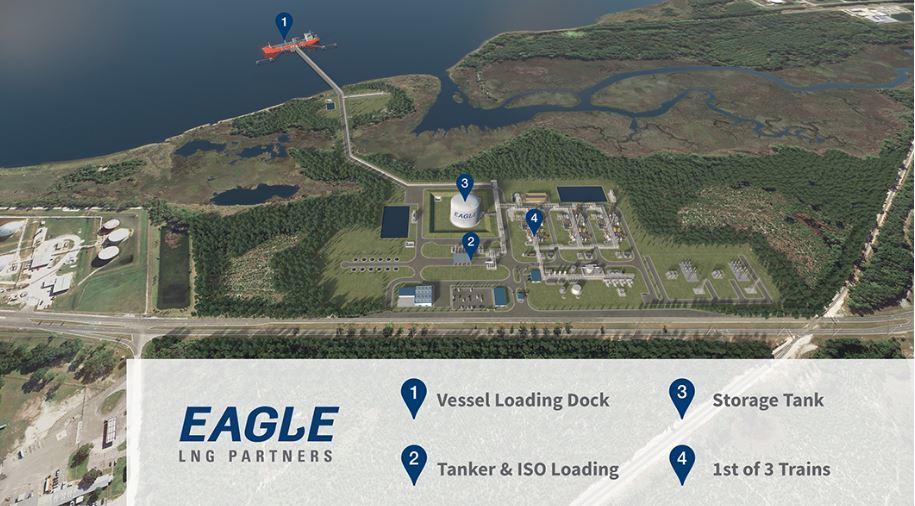
 A slight tweak and correction to a story we ran last week in which we speculated that the first four mini-trains at Kinder Morgan’s Elba Island LNG export facility are now up and running (see
  In December, Blackstone Infrastructure Partners, a major energy investment firm, announced it had cut a deal to buy the remaining shares of stock it doesn’t already own in Tallgrass Energy for $3 billion, with a plan to take the company private (see
  Last April President Trump issued an Executive Order directing the Secretary of Transportation to write a new rule allowing specially constructed tanker cars for railroads (DOT-113 tank cars) to ship LNG, i.e., liquefied natural gas (see
  In December 2017 MDN told you about the bastardization of our justice system by Michael Bloomberg. Bloomberg funneled money to New York University (NYU) School of Law which in turn pays to hire radical (Democrat) attorneys to work inside the offices of the attorneys general in 10 different states, including Pennsylvania (see