
Gulfport Energy Continues Focus on Utica in 2018, No Borrowing
 On Monday Gulfport Energy (drills mainly in the Utica but also in Oklahoma and Louisiana) issued it’s fourth quarter and full year 2017 results, along with a preview of what they expect to do in 2018. Gulfport has drilled the second highest number of Utica wells in Ohio, second only to Chesapeake Energy. Gulfport’s production in 4Q17 averaged 1.26 billion cubic feet per day equivalent, up 5% from 3Q17 and up a whopping 61% from 4Q16. Gulfport brought 15 Utica wells online in 4Q17. What’s ahead in 2018? The company will spend $770-$835 million in 2018. Astonishingly, Gulfport will not borrow to spend that kind of cash! Their spending will be 100% funded by the cash flow they generate from selling gas and oil and NGLs. Gulfport figures production will average somewhere around 15-19% more in 2018 than in 2017. Using an “average of 2.5 rigs” (how does that work?), Gulfport will drill 36-40 new Utica wells this year with an average lateral length of 11,200 feet. Gulfport plans to bring online 33-37 Utica wells with an average lateral length of 8,000 feet. Here’s the update of what happened in 2017, and what to expect in 2018, for one of the most important players in the Ohio Utica…
Read More “Gulfport Energy Continues Focus on Utica in 2018, No Borrowing”
 Our lead story today is about Gulfport Energy which highlights some exciting news: This year (in 2018) Gulfport will fund their entire drilling budget out of the cash flow the company generates from selling gas/oil/NGLs (see Gulfport Energy Continues Focus on Utica for 2018, No Borrowing). Thing is, Gulfport isn’t the only Marcellus/Utica driller to advertise the fact that this year they are “living within their means” and not borrowing. Others include Range Resources, EQT and Antero Resources. Wow! We’re finally profitable!! Or are we? MDN spotted some analysis by a hedge fund manager. Writing on the Seeking Alpha investor’s website, Josh Young says (in our words) “hold on a minute” with respect to M-U drillers appearing to be able to grow production without borrowing. Why is Josh not convinced with this good news? Because when you dig deeper into the numbers, you find that “organic growth within cash flow is further from reach” because drillers are using DUCs to spend less on drilling, and grow production, than they otherwise would be. A DUC is a Drilled but UnCompleted well. Many times drillers will drill the initial hole in the ground, but then not “complete” (or frack) the well. Why do that? For a variety of reasons. The biggest reason is usually because the commodity price of gas (or oil, depending on the well) is not favorable. Rather than lose the lease (an expensive proposition), drillers will begin the process by drilling, and then leaving, the well, returning later to complete it when prices go up again. Josh’s thesis is that by using DUC inventory drillers aren’t really funding the entire budget from current year cash flow, because some of the money was spent in a previous year to drill the well. They are, in essence, still borrowing–from a different year. Josh estimates an average of 20% of the “new” wells coming online are DUCs and not truly new wells funded by current year dollars–meaning these companies aren’t as “profitable” as they may seem. Does he have a point? Is it all just financial mumbo jumbo? You decide…
 In a strongly worded letter dated Sunday, Rover Pipeline tells the Federal Energy Regulatory Commission (FERC) they are “frustrated by the inaccurate central premise underlying the letter received from” FERC shutting down drilling at the Tuscarawas River location. On Jan. 24 FERC sent a letter to Rover stopping drilling at Tuscarawas, which had only restarted in December (see
  In December 2016 MDN brought you news about Kinder Morgan’s “Broad Run Expansion Project” that will expand transportation capacity of natural gas on the existing Tennessee Gas Pipeline (TGP) system. Antis tried to stop the project, but the Federal Energy Regulatory Commission rejected their pleas (see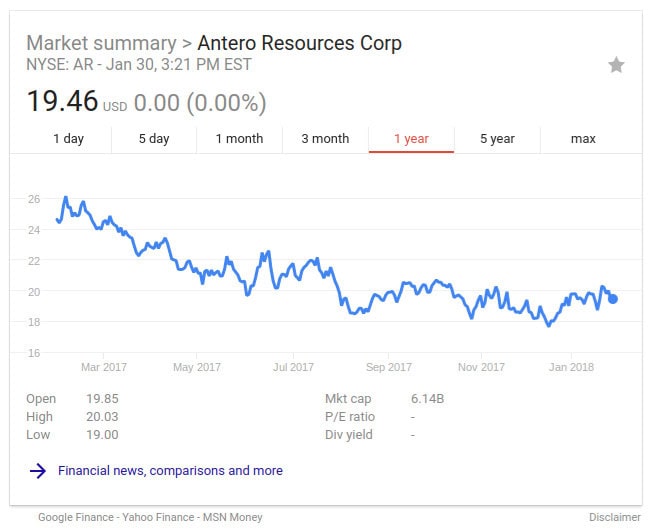
 Dominion Energy, a huge company with fingers in many pies (gas and electric utility, electric generator, nuke plant owner, pipeline company, LNG exporter) issued its fourth quarter and full year 2017 update on Monday. Dominion’s top brass also held an earnings call with analysts. We reported yesterday that on the earnings call, Dominion CEO Tom Farrell said the Cove Point LNG export plant on the shore of Maryland will begin shipping LNG “in early March” (see
  You have to understand something about politicians–a lesson we learned long ago when working in Washington, D.C. If a politician floats a plan to “study” something, that really means “we’re not going to do a single thing about it.” Over the past couple of years the Pennsylvania Dept. of Environmental Protection (DEP) has gotten slower and slower in issuing permits for shale drilling–for simple things, like erosion permits a driller needs to push dirt around to create a well pad. The DEP has a policy of issuing erosion and sedimentation permits 14 days from the date of application. These types of permits are common and necessary when building roads, well pads, etc. As of last summer it was taking the DEP 250 days to issue those permits (see
  Last week the Delaware River Basin Commission (DRBC) held two public hearings in Philadelphia about its proposed plan to ban fracking in the Delaware River Basin (see
  The more we read about and dig into the story of Russian gas coming to Boston, the angrier we get. Just yesterday we told you that a rumored second shipment of Russian gas may be heading to Boston (see
  The “best of the rest”–stories that caught MDN’s eye over the break that you may be interested in reading. In today’s lineup: Westmoreland transit growing fleet of natgas buses; Warren County discusses distribution of Act 13 funds; Washington State looks to ban fracking for 10 years; FERC faces complications with new Trump tax cut; why is shale still not profitable; Sierra Club finally drops opposition to Sabine Pass LNG exports; fracked horizontal wells vast majority of new wells drilled; battling weather models; Canadian battle for U.S. gas markets; and more!