
20% of World LNG Supplies Threatened by Strait of Hormuz Closing

Oil prices are surging following a functional closure of the Strait of Hormuz triggered by U.S. and Israeli military strikes on Iran over the weekend. While not a formal blockade, the halt in traffic—driven by insurance withdrawals and safety risks—threatens 15% of global oil and 20% of LNG supply. Analysts from Wood Mackenzie, J.P. Morgan, and Rystad Energy warn that Brent crude could jump by $20 per barrel immediately, potentially exceeding $100 (or even $200) per barrel if disruptions persist. Major shipping firms like Maersk and MSC have suspended transits and rerouted vessels as the industry reassesses geopolitical risks. Read More “20% of World LNG Supplies Threatened by Strait of Hormuz Closing”
 On Friday, Baker Hughes reported that the U.S. rig count lost 1 rig and now stands at 550 active rigs. Three weeks ago, the Pennsylvania Marcellus added a rig, bringing PA’s total to 20 active rigs, the most it has operated in well over a year. PA kept its new/higher total last week. Both Ohio and West Virginia remained at 13 and 7, respectively. The combined M-U count was 40 rigs last week, the most operated rigs in well over a year, now for a third week in a row. The M-U’s primary competitor (for attention and money), the Haynesville, continues to operate 52 rigs (12 more than the M-U).
  Quantum Pleasants has successfully completed a year-long validation of its Omnis Quantum Reformer (OQR) technology at the Pleasants Power Station in West Virginia. This breakthrough ultra-high-temperature pyrolysis technology produces hydrogen on-site at half the cost of existing methods by utilizing the state’s coal and natural gas resources. Independent evaluations confirmed the system’s safety and economic viability, paving the way for the 1,300 MW facility to become the world’s first large power plant to operate on 100% hydrogen fuel. Right here in the heart of the Marcellus/Utica!
 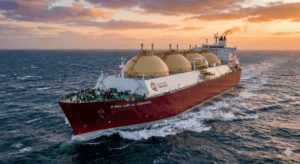 Marking the tenth anniversary of U.S. liquefied natural gas (LNG) exports, European Union (EU) and American officials convened in Pittsburgh on Friday for an all-day conference, “EU-U.S. LNG Cooperation 2.0,” which was held at the Heinz History Center. The purpose of the meeting was to reinforce a critical strategic energy partnership. Since the first shipment in 2016, and accelerated by Russia’s invasion of Ukraine, U.S. LNG has transformed European energy security by enabling a dramatic shift away from dependence on Russian gas. As Europe seeks to eliminate Russian gas entirely, the U.S. has become the world’s leading exporter.
  The proposed $58 billion merger between Devon Energy and Coterra Energy is under scrutiny by the U.S. Department of Justice (DOJ) over “shale market dominance.” The key problem is: how does the DOJ define a “market” that may be dominated? What, exactly, is a market? Critics argue that the DOJ’s narrow market definitions—mirrored in its antitrust case against Visa—ignore broader competitive realities and existing regulations, such as the Durbin Amendment. While the Devon/Coterra merger increases shale concentration, natural gas remains a singular, competitive (much broader) market regardless of extraction methods. By applying outdated antitrust frameworks, the government risks stifling innovation and weakening companies’ ability to compete globally. Ultimately, rational policy must reflect modern market dynamics to avoid economic stagnation and the fragmentation of viable industries. So says author (and lawyer) Daniel Markind.
 OTHER U.S. REGIONS: Virtual power plant misinformation in NY; NATIONAL: U.S. natural gas futures post modest gains; AI and the data center backlash; Trump’s war on Iran threatens to drive up oil prices and inflation; Why accounting methods matter in O&G; INTERNATIONAL: Crude jumps as Iran risks mount; The oil glut that never showed up; Iran conflict sends European natgas prices soaring; OPEC+ decides to boost production; War in the Gulf – are there winners and losers?