
Expand Energy ‘Not Waiting Around’ for New CEO, Search Continues
 Expand Energy turned in its first quarter 2026 update yesterday. Across all of its operations in the Marcellus/Utica and the Haynesville, Expand operated an average of 13 rigs during the first quarter, drilling 60 wells and turning 49 wells in line, resulting in net production of approximately 7.44 Bcfe/d (93% natural gas). In 2026, Expand Energy expects to run 11 to 12 rigs and invest approximately $2.85 billion, yielding an estimated daily production of approximately 7.5 Bcfe/d. We have a detailed breakdown below of how much of that activity is in the M-U. The Expand board fired its successful CEO, Nick Dell’Osso, in February (see Earthquake at Expand Energy: CEO Nick Dell’Osso Fired by the Board). Interim CEO Michael Wichterich said the company continues to look for a new chief executive, but in the meantime, it is “not waiting around” for a permanent leader to be chosen. Read More “Expand Energy ‘Not Waiting Around’ for New CEO, Search Continues”
 Just yesterday, MDN told you that three left-wing judges from the 4th Circuit (“Circus”) who hate the Mountain Valley Pipeline (MVP) were back at it, badmouthing an extension of MVP into North Carolina, called Southgate (see
  We’ve been tracking a story that we consider an ongoing tragedy for more than a decade. American Water Management Services (AWMS) owns a wastewater injection well in Trumbull County, Ohio, that supposedly caused a low-level earthquake (that nobody could feel) in 2014. Actually, there are two injection wells located at the site, both operated by AWMS. They were both “temporarily” shut down by the Ohio Department of Natural Resources (ODNR) following the quake nobody could feel (see
  Although Pennsylvania Governor Josh Shapiro (J.S.) has just hired a lapdog to attack the PJM Interconnection grid as part of his campaign for president (see
  New York’s electric grid faces its lowest reliability margins in recent history this summer, with only 417 MW available under baseline conditions, according to the New York Independent System Operator (NYISO). This critical situation stems from extreme weather, an aging generation fleet, and a lack of new dispatchable resources. NYISO’s annual Summer Reliability Assessment (copy below) says an extended heat wave of three days or more, with temperatures around 95 degrees, could result in a capacity deficit of -1,679 MW, increasing to -3,370 MW at 98 degrees, potentially leading to blackouts. NYISO can implement emergency measures like purchasing energy or voluntary curtailment to mitigate shortfalls, but the overall margin for error is extremely narrow.
 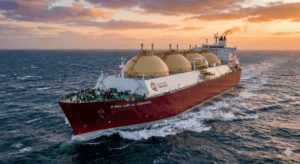 Following the February 28 closure of the Strait of Hormuz, global and U.S. natural gas prices have sharply diverged. The shutdown halted roughly 20% of global LNG supplies, primarily from Qatar, forcing Asian and European buyers to scramble for replacement cargoes. Consequently, European TTF and Asian JKM benchmark prices surged 35% ($14.80/MMBtu) and 51% ($16.02/MMBtu), respectively. In stark contrast, U.S. Henry Hub prices fell 9%. Because U.S. LNG export terminals are already operating at near-maximum capacity, producers cannot significantly increase exports to capture these high global prices. This leaves ample gas domestically, insulating the U.S. market from international price volatility.
  NATIONAL: U.S. natural gas futures await support from weather; Blame anti-fossil fuel crusade, not war for gas prices; Trump met with oil and gas executives as Iran war drags on, prices surge; The folly of funding direct air capture; INTERNATIONAL: Oil surges as Hormuz blockade bites; Russia says it has no plans to leave OPEC+; Trump readies for prolonged US blockade of Hormuz; UAE’s OPEC bombshell signals a new Middle East order; IPCC troubles – the latest from Bangkok; The US is back in charge of the oil industry; Why the UK and EU keep doubling down on net zero dogma.