
Data Center Backlash Goes National; What It Means for M-U Gas
 Yesterday we told you how small-town Ohio voters clobbered data centers at the ballot box (see Data Center Bans Sweep Ohio Ballots; 800 MW Gas Plant Derailed). It turns out Ohio was just one front in a nationwide revolt. The Wall Street Journal reports that voters from Ohio and Michigan to Texas and Georgia backed candidates and ballot measures to ban or slow data center construction. Three of those states (Texas, Georgia, and Ohio) account for more than 40% of all planned U.S. data center capacity, according to investment bank Evercore ISI. All three just elected Democrat governors who campaigned on slowing or pausing the build-out. Silicon Valley is rattled. Since data centers are the biggest new source of demand for Marcellus/Utica gas, we should pay close attention too. Below are the new governors, Wall Street’s reaction, the federal angle, and what it all means for our region. Read More “Data Center Backlash Goes National; What It Means for M-U Gas”
 Ascent Resources, the largest natural gas producer in Ohio’s Utica Shale and one of the largest privately held drillers in the U.S., issued its third-quarter 2026 update yesterday. For the first time since early 2025, Ascent posted a loss: $22.8 million. Don’t panic. The red ink comes from one item: a $185.2 million charge to exit pipeline space it didn’t need. Under the hood, production held steady at 2,190 MMcfe/d (2.19 Bcfe/d), free cash flow more than doubled from 2Q, and Ascent raised its production guidance. The bigger stories for MDN readers: Ascent cut its rig count in half, slowed down its leasing, and its accountants dropped the odds of an IPO or sale to just 15%.
 Two weeks ago, MDN told you Kinder Morgan had made a final investment decision (FID) to build the Southeast Connector, a 2.6 Bcf/d (billion cubic feet per day) pipeline designed to carry Marcellus/Utica gas into the Southeast (see
 How much of Pennsylvania is a so-called “environmental justice” (EJ) area? We get that question from readers, and frankly, we’ve never had a solid answer. In 2023, then-DEP Secretary Rich Negrin said he thought “75% of Pennsylvania” would end up as EJ communities, and MDN repeated that number. So we went to DEP’s own mapping tool,

 An MDN subscriber who receives Marcellus royalties wrote to us (quite a while ago) to warn other landowners. Pennsylvania’s Department of Revenue (DOR) keeps sending him state income tax bills for amounts his driller already withheld from his royalty checks and sent to Harrisburg. Not once. Not twice. FOUR times, by his count. Each time, his accountants had to step in and get the bill thrown out. His advice to fellow royalty owners: don’t pay a DOR tax bill until you’ve confirmed the tax wasn’t already withheld and paid. We dug into how this can happen and why landowners living outside Pennsylvania are most likely to get these letters. Here’s what we found, and what to do if one lands in your mailbox.
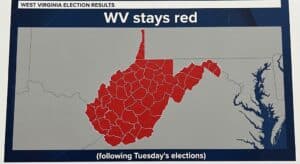 On Tuesday, while Democrats were flipping Congress and the Pennsylvania Senate, West Virginia did… mostly what West Virginia does. Sen. Shelley Moore Capito won a third term, both GOP congressmen won again, and Republicans kept big supermajorities in the Legislature. But dig one layer down, and there’s a warning sign for anyone who profits from Mountain State shale. Democrats more than doubled their seats in Charleston, and the issue that got them there was data centers. Specifically, House Bill 2014, the 2025 law that wiped out local control over data centers and the gas-fired “microgrids” built to power them. Here’s what happened and why it matters for WV gas.
 If you were waiting for NextEra Energy and Dominion Energy to back up a bigger truck of cash to Virginia’s door (we were), you’ll have to keep waiting. On Tuesday, Nov. 3, the two companies filed rebuttal testimony with Virginia’s State Corporation Commission (SCC), the agency reviewing their $67 billion merger. They said “yes” to 101 of the 117 conditions that SCC staff and the Attorney General’s consumer counsel asked for, and “yes, with changes” to 13 more. But there’s no new money this time. The bill credit is the same $10 a month for four years they offered in September. What’s new is fine print: a conditional financial firewall around Dominion’s Virginia utility and two independent board members. And the companies flatly said “no” to Gov. Abigail Spanberger’s six-year rate freeze, plus a three-year freeze on rate increases pushed by the Attorney General’s consumer counsel. The pot didn’t get sweeter. It got more lawyerly.
 The votes from Tuesday’s midterm election are barely counted, and Big Green is already spiking the football. Democrats won control of both the U.S. House and Senate, plus a pile of governorships and state legislatures, including a full trifecta in Pennsylvania. Now the Sierra Club, the League of Conservation Voters (LCV), Climate Power, EDF Action and a long list of smaller groups are lining up to take credit and to tell the winners what they expect in return. MDN went looking for what they’ve said publicly. The common thread? Hardly a peep about “climate change.” It’s all electricity bills, Big Oil, and, here’s the part that should worry our readers, data centers.
 MARCELLUS/UTICA REGION: Why the new “king of shale gas” says AI will make all Americans more prosperous; OTHER U.S. REGIONS: Democrat wins Texas oil regulator seat; U.S. propane’s surplus is gone, and the Midwest is running short; Mitsubishi Power bets $490M on gas turbine boom as orders surge; Bay Area officials move ahead with natural gas water heater ban; NATIONAL: U.S. natural gas futures rise for second session; Take heart and fight, fight, fight – the real battle is in our classrooms and our homes; Democrats run both chambers now – the price of a barrel still runs itself; US LNG feedgas demand holds October pace despite Freeport train 2 outage; Gas vs. wind & solar – the power density gap advocates ignore; America can’t achieve energy dominance without freight rail; INTERNATIONAL: Oil plunges as election shifts Iran outlook; UAE mulls 3rd crude oil pipeline to avoid Hormuz; Butane’s perfect storm sends prices to decade highs.