
Thoroughbred Cabot O&G Ready to Bolt When Pipeline Gate Opens
 Cabot Oil & Gas had the highest production in the county with the highest amount of production (Susquehanna County) in 2016 in Pennsylvania. Cabot had the second highest amount of production (coming from that single county) in PA for all of 2016, not far behind Chesapeake Energy. Last year using their “Gen 4” completions in the Marcellus, Cabot increased estimated ultimate recovery (EUR) rates from 3.8 billion cubic feet (Bcf) per 1,000 feet of lateral well to 4.4 Bcf (see Cabot O&G 2016 – Production Grows from 3.8 to 4.4 Bcf per 1K Feet). Cabot gets double the gas per lateral foot of well than some of its competitors. By all accounts, Cabot is the equivalent of a thoroughbred horse. But the Cabot horse is still penned up at the starting gate, waiting for the gate to open. The gate, in this metaphor, is pipeline projects that will carry some of Cabot’s prolific northeastern PA production to other regions where it can fetch a higher price. According to research analyst Michael Fitzsimmons, writing on the Seeking Alpha investor website, Williams’ Atlantic Sunrise Pipeline “will unlock the cage that has kept Cabot Oil & Gas’ reserves bottled up” by flowing an eye-popping 1 Bcf per day of Cabot natgas south…
Read More “Thoroughbred Cabot O&G Ready to Bolt When Pipeline Gate Opens”
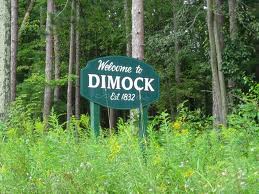 “You never let a serious crisis go to waste.” That sentiment was famously mouthed by Rahm Emaneul, first chief of staff during Barack Hussein Obama’s reign of terror, later (and still) the highly unpopular mayor of Chicago. That philosophy also applies to other leftists, like anti-driller Ray Kemble, who lives in Dimock Township, PA. Kemble has been trying to shake down Cabot Oil & Gas for big bucks for years. Kemble, whose property has multiple junk cars on it, claims after Cabot began drilling (in 2008) his water well began producing black water. He blamed Cabot–even though junkyards are notorious for leaking nasty chemicals. Years ago Kemble, who has been seen at just about every anti-fracking rally from here to Timbuktu carrying a little brown jug of supposedly tainted well water, settled with Cabot. But a couple of Kemble’s neighbors did not settle. They sued and, in a sham trial, won a jury award of $4.2 million (see
  Big news broke Friday afternoon. Short history lesson for those who are new to MDN: There were 14 families along the Carter Road area of Dimock Township, PA (Susquehanna County) that reportedly experienced turbidity in their water from methane migrating, supposedly from Cabot’s drilling operations nearby. The state Dept. of Environmental Protection (DEP) investigated in 2010 and declared Cabot guilty and imposed stiff fines and requirements, including a requirement to install permanent water treatment systems at each home and even an offer to each of the families to pay twice what their property was worth at the time (see
  Cabot Oil & Gas is one of the premier drillers in the Marcellus Shale. They drill in a single Pennsylvania county–Susquehanna County. They consistently have 15 of the top 20 producing shale wells in PA. By our back-of-the-envelope estimation, Cabot, all by itself, drilling in one county, delivers something like 3% of all the natural gas produced in the entire country! It is an amazing story. What’s even more amazing is the big heart the company has. Woven into the Cabot DNA is giving back to the communities where they drill. It would take several posts to recount all of Cabot’s largess. We’ll mention just two cases. In 2012 Cabot donated $2 million and helped raise another $2.2 million (for a total of $4.2 million) to help build a new physicians clinic/hospital in Montrose, PA (see
  Cabot Oil & Gas, one of our favorite Marcellus drillers, turned in their fourth quarter and full year 2016 update on Friday. In something of a surprise (for us), the company reports losing $417 million in 2016, up from losing $114 million in 2015. However, when you dig into the numbers, you find that it’s a paper loss. Cabot reports “impairments” (i.e. loss of value) in their assets of $435 million for the year. Some $275 million of that was a write-down in the value of oil and gas properties, including pipelines, in West Virginia and Virginia. Cabot drilled 40 gross (38.0 net) wells and completed 76 gross (76.0 net) wells in 2016, exiting the year with 51 gross (45.2 net) drilled and uncompleted wells, of which 29 gross (26.2 net) were in the Marcellus Shale and 22 gross (19.0 net) were in the Eagle Ford Shale. What’s ahead in 2017? Cabot plans to spend more money this year than they did last year–to drill in both the Marcellus and Eagle Ford. Cabot plans to spend $610 million on drilling, completion, and facility capital in 2017. Of that, two-thirds (67%) will go to the Marcellus and one-third (33%) will go to the Eagle Ford. With that money they plan to drill and complete 90 net wells. On the earnings call with Cabot’s top brass, we learn about their “Gen 4” completions in the Marcellus, which have increased estimated ultimate recovery (EUR) rates from 3.8 billion cubic feet (Bcf) per 1,000 feet of lateral well to 4.4 Bcf. Translation: Cabot gets double the gas per lateral foot of well than some of its competitors, which is why they consistently have something like 15 of the top 20 producing wells in the state. Here’s the Cabot update…
 In September, MDN brought you research on 10 of the largest Marcellus/Utica drillers that have “hedged” their 2017 production (see
  We can’t say enough good things about Rusty Braziel and
  We spotted a press release issued yesterday by Cabot Oil & Gas, providing an update for the Williams Atlantic Sunrise Pipeline project. Which kind of surprised us. Why would Cabot issue an update on someone else’s pipeline? Is Cabot an investor in the project? We asked–the answer is “no.” However, Cabot is the major shipper that will use the Central Penn Line portion of the Atlantic Sunrise project. And that’s what the announcement was about. Cabot said the Federal Energy Regulatory Commission (FERC) has announced it is actively reviewing two alternative routes for the Central Penn Line, accepting public comment until Nov. 14. OK, so that sometimes happens. Is it worth a press release? Then we read that this development means yet another delay for the Atlantic Sunrise project–and investors immediately punished the stock for both Williams and Cabot. Ah, now we understand! The press release is to reassure investors that Cabot believes FERC, while slowing things down a little, won’t delay things too long. THAT’S what the press release is really all about…
 Last week Cabot Oil & Gas CEO Dan Dinges issued a company-wide memo to observe a very important milestone in the life of the company–the 10th anniversary of the start of drilling at the company’s very first Marcellus Shale well in Susquehanna County, PA. With a quick stroll down memory lane to recount other major milestones reached over the past 18 months, Dinges then makes this powerhouse prediction: In the “next couple of years” when new pipelines (like the Constitution) finally go online, Cabot plans to hit 4 billion cubic feet (Bcf) of Marcellus Shale production–per day! Going from memory, that would vault Cabot to the position of #1 Marcellus gas producer, ahead of the current #1, Chesapeake Energy. Put into context, the U.S. produces around 71-72 Bcf/d right now. If Cabot begins producing 4 Bcf/d, that represents 5.5% of the entire production of natural gas in our country–from a single driller in a single county in northeastern PA. Behold the miracle of the Marcellus! MDN adds our own hearty congratulations to our friends at Cabot (Buddy, George, Bill and Brittany)…
 One of the interesting tidbits to come out of yesterday’s first day of the Shale Insight conference in Pittsburgh was an off-the-cuff remark from Pennsylvania Gov. Tom Wolf’s special assistant for infrastructure, Yesenia Bane, who said that Gov. Wolf is “willing to talk” with New York Gov. Andrew Cuomo to ask him to approve the Williams Constitution Pipeline project in the Empire State. Bane said Wolf has met with Williams and other stakeholders in the Constitution project, and apparently Wolf was impressed enough that he’s willing to add his own voice to those calling for an approval of the Constitution. Democrat on Democrat. Mano a mano. Should be interesting, if Wolf ever gets up the nerve to do it…
 It’s no secret that Marcellus and Utica drillers need new pipelines–and they need those pipelines urgently. Especially in Pennsylvania where lack of pipelines is keeping inventories high and prices for natural gas the lowest in the country. However, drillers must deal with reality as it is–today. Pipelines take time to build, and recent efforts to block pipelines are delaying important projects like the Constitution and PennEast pipeline projects. The good news is that some pipeline projects *are* being built in the northeast, some of which are almost done. Drillers like Range Resources are ramping up new drilling now, about six months in advance of when new pipelines are due to go online. That’s about how long it takes to put the pieces in motion. The other good news is that some drillers, like Cabot, are finding new markets that DON’T require new pipelines–like selling a tremendous volume of natgas to new gas-fired electric generating plants situated in close proximity to Cabot’s wells. Here’s an update on which drillers are picking up the pace with the prospect of new pipelines (or new nearby markets), and which drillers are waiting a little longer before they pick up the pace…
 There’s certainly more than one way to make money on fracking in the Marcellus/Utica. Billionaire hedge fund manager David Tepper (Appaloosa Management) has found such a way. Tepper knows a good company, or four, when he sees them. In the fourth quarter of 2015, when Marcellus/Utica company stocks were at one of their lowest points, Tepper loaded up, buying stock in four leading northeast drillers. Half a year later he turned around and sold that stock, for a 100%+ return on his investment. He doubled his money. Smart man. Which drillers’ stocks did Tepper buy and then sell?…