
WV Rights/Pooling Case May have Big Impact on Shale Industry
 A court case from Marshall County, WV decided in April 2016 is heading to the WV Supreme Court of Appeals (the state’s highest court). The stakes in Contraguerro v Gastar Exploration could not be higher for the Marcellus industry in the Mountain State. In brief, 70 years ago a 106-acre track of property was sold. The sellers retained a one-quarter “non-participating interest” in the oil and gas rights. That means the buyer got to decide when/if to lease the property for drilling, and if so, has the right to negotiate the price, etc. The remaining one-quarter non-participating interest holders would get royalties, but nothing else. Fast forward several generations and the heirs of the original sellers didn’t even know they owned an interest in the land until contacted by Gastar, which needed a signature in order to send them checks for royalties. The heirs decided to sue to stop the deal, either in a bid to negotiate a better deal or perhaps because they don’t like fossil fuels. Who knows? The case went to the Circuit Court of Marshall County and a judge there found in favor of the heirs–giving them, and by extension any minority rights owner, the power to stop lease deals. An unmitigated mess that threatens many lease deals because divided rights ownership is common in WV. Perhaps this case was part of the motivation to pass a new law this year addressing “co-tenancy” (see Analysis of New WV Bill SB 576 re Co-Tenancy & Joint Development). The co-tenancy law, if passed, means if there are multiple owners for the mineral rights under a property, you would only need a simple majority of those owners to approve a drilling lease. Currently, if one person with a teeny tiny share objects, it stops the process. In the Contraguerro case, although the heirs are owners, they are “non-participating”–so they should not have had a say anyway. However, a lower court judge found otherwise. So the case was appealed and is now before to the WV Supreme Court… Read More “WV Rights/Pooling Case May have Big Impact on Shale Industry”
 Last December the West Virginia Supreme Court ruled in a case to disallow Marcellus driller EQT from deducting post-production expenses from royalty checks, even with signed contracts in place (see
  In a decision that will thrill drillers, but anger landowners, the West Virginia Supreme Court decided last week to overturn its own previous decision (from just last December) and allow driller EQT to deduct post-production expenses from royalty payments. Last December MDN reported on the huge West Virginia Supreme Court decision against driller EQT that disallows EQT from deducting post-production expenses from royalty checks, even with signed contracts in place (see
  Peters Township, the most populous township in Washington County, PA, is one of the seven selfish towns that sued the state in 2012 over the zoning provisions in the then-new Act 13 law, eventually winning at the PA Supreme Court level (see
  Sometimes we wish we had gone to law school–to better understand some of the cases involved with oil and gas. This is one of those times. When you read words like “arbitrability,” the eyes start to glaze over. We’ll do our best to summarize some important news for landowners who want to sue Chesapeake over shorted royalty checks. Starting in 2008, Chesapeake Energy, under then-CEO Aubrey McClendon, began leasing acreage in northeastern Pennsylvania for shale drilling. Said drilling happened and in 2013, Scout Petroleum purchased royalty rights from some NEPA landowners. That is, Scout took over receiving the royalty payments in return for giving those landowners an up front, lump sum. In 2014, when it became obvious Chesapeake was using aggressive deductions from royalty payments (i.e. landowners were getting hosed), Scout filed a lawsuit against Chesapeake, requesting (under the lease language) that their grievances against Chessy be arbitrated AND (not specifically under the lease language) that Scout and thousands of other landowners be lumped together into class action arbitration (see
 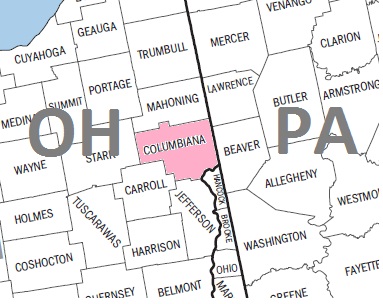 Hilcorp has woken up and come alive in the Ohio Utica Shale–for the first time this year. The company recently filed for permits to drill three new Utica wells in Columbiana County. Which is interesting. Hilcorp zigs when everyone zags. Most drilling in the Ohio Utica currently happens in southeastern Ohio–in counties like Belmont, Monroe and Guernsey. When the play first became active for shale drilling, much of the early action happened in Carroll County, and Columbiana. But lately (over the past 2-3 years) most drilling moved south. But Hilcorp, with acreage in the northern Utica in both Ohio and Pennsylvania, continues to make money staying north. In fact, Hilcorp has been called the “dominant active prospector” in the northern tier area of the Utica Shale–an area including Columbiana, Mahoning and Trumbull counties in OH and Lawrence and Mercer counties in PA. Hilcorp is strong and steady. They make money when they drill. So we take this as a good sign that drilling is heating up in the northern Utica…
  From time to time we check in on Canadian driller and midstream company Epsilon Energy. Epsilon, you may recall, had a shareholder rebellion in 2013 and threw out the sitting board of directors (see
  Yesterday the 11th “Think About Energy” Briefing was held at Misericordia University, near Wilkes-Barre, PA. The session aimed to provide an update on the economic and environmental benefits of PA natural gas, and was organized/sponsored by Borton-Lawson, Cabot Oil & Gas, UGI Energy Services, UGI Utilities, and Williams, in conjunction with ACT for America and the Back Mountain Chamber of Commerce. About 100 people attended. Carl Marrara, vice president of government affairs for the Pennsylvania Manufacturers’ Association, had this to say: “The demand for natural gas is expected to increase by 40 percent over the next decade, and even more in Pennsylvania.” He said that more natural gas is needed by PA manufacturers, but slow pipeline infrastructure approvals by “government officials” are “holding up growth.” MDN friend Bill desRosiers of Cabot Oil & Gas was the moderator and master of ceremonies. Other speakers included: Abe Amorós of the Laborers’ International Union of North America (LiUNA), Mike Atchie of Williams, and Larry Godlasky of UGI Energy Services. Although it was a gas-friendly crowd, the session wasn’t, however, without a touch of controversy. One anti showed up–a math professor from Luzerne Community College–and left in a huff when the audience told him to shut up and sit down during the Q&A portion…
 Believe it or not, Shell previously hired a third-party consultant to perform a traffic study in the area where Shell plans to build a $6 billion ethane cracker in Beaver County, PA. Based on the findings and recommendations of that study, Shell has begun to secure parking spots for construction workers that will descend on that location to build the plant–beginning later this year. One of the recommendations is to limit the number of parking spots to no more than 1,500 at any one location. Shell currently has three locations lined up and (mostly) ready to go, enough for 3,100 parking spots. At its peak, the project will employ something like 6,000 workers. So either Shell will line up more spots, or maybe workers will carpool…
 You know how money-grubbing, cheap, careless and in general no-good those Big Oil companies are, right? They only care about themselves. They seek to rape and pillage Mom Earth, keeping piles of gold in their coffers, killing humankind in the process. That’s the picture painted by anti-fossil fuel nuts. Here’s the real picture: In 2016, between employees and the corporation, Exxon Mobil donated more than $50 million to colleges and universities across the United States. That is a staggering number. Many of those colleges and universities were located in the Appalachian basin (Marcellus/Utica), including $2.7 million in PA, $800K in OH, $1.4 million in VA, $3.2 million in NY and $1.2 million in NJ. Just the opposite of the negative picture painted by the enemies of fossil fuels…
  In December 2015 MDN told you about EQT’s application to drill a single shale well in Jefferson Hills (Allegheny County), PA (see
  Noble Energy dropped a bombshell that it has sold its 100% interest in 385,000 Marcellus/Utica acres and wells producing 415 million cubic feet equivalent of natural gas in West Virginia and Pennsylvania for $1.225 billion to “an undisclosed buyer” (see
 Platts senior energy analyst Luke Jackson yesterday posted a Platts Snapshot titled, “New Northeast US Gas Pipelines Will be Hard to Fill.” Provocative title. It’s a video. Below is a transcript of the video. In it, Jackson says according to their analysis that drillers in southwestern PA and eastern OH and the northern panhandle of WV will struggle, but eventually succeed, in producing enough natural gas to fill new pipelines coming online this year. But they won’t be able to fulfill their obligations until perhaps December 2017. That is, Antero, Range Resources and Ascent Resources will need to rapidly ramp up drilling–or risk paying for pipeline capacity they’re not using. However, it was Jackson’s comment about pipelines coming online in 2018 and 2019 that really caught our attention. He says in the video: “This new capacity will be nearly impossible to fill, barring a massive ramp in drilling activity, which, per our forecast, is not expected to occur.” So Platts says Marcellus/Utica drillers will not be able to produce enough natural gas to fill all of the new pipelines that will be online by 2019. If we assume the price of natgas goes higher over the next few years (not an unreasonable assumption), what this means is that new drilling is going to ramp up like crazy in the next few years. Buckle up! Here’s the transcript…
 Once upon a time (in 2013), the oil and gas industry was expanding so rapidly that in places like North Dakota workers at the local McDonalds were getting a singing bonus and making $20/hour. No lie. Workers on drilling rigs and frack crews were paid a premium to keep working. But we became victims of our own success. So much oil and natural gas was produced, the market became saturated and prices crashed. And along with the price crash, rigs were idled and workers were laid off–in the tens and eventually hundreds of thousands. By the time of the deepest, darkest part of the down cycle (early 2016), some 350,000 workers in the industry had received a pink slip (see
  It’s not often we read about lease offers these days. We’re sure they happen regularly, but the only ones you read about are offers made to lease publicly owned land. Such offers for public land are a useful gauge for private landowners. So when we noticed a story about an offer made by Arsenal Resources to the North Central West Virginia Airport (Bridgeport), our eyes and ears perked up. The opening offer is for 188.5 acres (out of 500 acres) with a $1,500 per acre signing bonus and 14% royalty on anything produced. The Benedum Airport Authority, charged with managing the airport and property, told the Authority’s attorney to counter offer–they want 15% royalties…