
NiSource, Columbia Gas Subsidiary Get 2 Prominent Safety Certs
 NiSource Inc. is one of the largest fully-regulated utility companies in the United States, serving approximately 3.3 million natural gas customers and 500,000 electric customers across six states through its local Columbia Gas and NIPSCO brands. Earlier this year, NiSource hosted representatives from LRQA, a global engineering, technical, and business services organization based in the U.K. (owned by the Lloyd’s Register Foundation). NiSource hosted the LRQA reps at its Columbia Gas of Pennsylvania service territory. The LRQA reps were there to review safety practices. NiSource and its Columbia Gas of PA subsidiary passed the review with flying colors, resulting in NiSource receiving the International Organization for Standardization (ISO) 55001 and American Petroleum Institute’s Recommended Practice (API RP) 1173 certifications.
Read More “NiSource, Columbia Gas Subsidiary Get 2 Prominent Safety Certs”
 Columbia Gas of Ohio will start work this spring to replace a 4.3-mile section of a 20-inch natural gas pipeline from Clintonville to North Linden (Columbus), a key piece of infrastructure that brings gas to thousands of homes throughout central Ohio. Columbia Gas purchased and will demolish several buildings along the pipeline’s route as part of the project. The work is scheduled to begin in April and finish by the end of the year. Columbia’s president and chief operating officer, Vince Parisi, says the pipeline is “our backbone of Columbus” and is “pretty critical” to natural gas distribution throughout the region.
 Not a day that goes by without a story in Big Media announcing another municipality has passed (or is considering passing) a law/regulation prohibiting new homes and businesses from using natural gas for heating, cooking, etc. The proffered solution by these foolish dunderheads is that new structures must use electric for heat. Eventually (like here in New York by 2050), not only new structures but existing homes and businesses will have to convert to all-electric too (see
  Last December Columbia Gas of Ohio (NiSource) announced a new $135 million pipeline project to bring new supplies of Utica-sourced natural gas to homes and businesses located north and west of Columbus, in central Ohio (see
  Columbia Gas of Massachusetts (NiSource) never quite recovered (reputationally) from a series of explosions in September 2018 that occurred with its local delivery pipelines north of Boston (see
  The final bits of Columbia Gas Transmission’s Mountaineer XPress pipeline project (most of it located in West Virginia) went online just over one year ago (see
  Columbia Gas of Massachusetts (NiSource) never quite recovered (reputationally) from a series of explosions in September 2018 that occurred with its local delivery pipelines north of Boston (see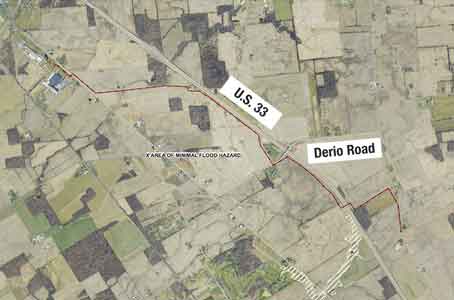
 Columbia Gas of Ohio (NiSource) recently announced a new $135 million pipeline project to bring new supplies of Utica-sourced natural gas to homes and businesses located north and west of Columbus, in central Ohio. The project, called the Northern Loop Project, will file for regulatory approval with the Ohio Power Siting Board and hopes the OPSB will approve the project in 2020, with construction set to happen in 2022.
 Columbia Gas of Ohio says it can’t build local natural gas delivery pipelines fast enough to meet the demand for new customers. “We’re adding new customers, commercial, industrial, residential, in every quadrant of the region” according to Columbia Gas President Dan Creekmur. And he doesn’t it see it stopping any time soon. So the company is spending big bucks (nine figures) to build new local gas pipelines–this year!
 Columbia Gas of Massachusetts (NiSource) continues to recover (physically and reputationally) from a series of explosions last September in its local delivery pipelines north of Boston (see
  There must be something in the water in New England. Today we told you about mass insanity in Bristol, Vermont, and now a story about a small community in nearby Massachusetts that wants to block 2.1 miles of new looping pipeline (buried next to an existing pipeline) in Longmeadow, Mass. All because local fruit loops want to ban new “fossil fuel” infrastructure. Lunacy is breaking out everywhere in New England!
 Ever see a someone’s name listed on a business card or in a directory, and there’s a “PE” after his or her name? Know what that means? It means Professional Engineer. To get a PE, an engineer must complete a four-year college degree, work under a Professional Engineer for at least four years, pass two intensive competency exams and earn a license from their state’s licensure board. The engineer who drafted plans for NiSource Columbia Gas to replace gas mains about 25 miles north of Boston, in Lawrence, MA, didn’t have a PE after his name. And the National Transportation Safety Board (NTSB) says it was his fault that when the gas main was replaced, the old main still had sensors that detected low pressure and kept pressurizing (overpressurizing) the gas system that led to multiple explosions and one person dying, 25 injured, and 8,000 residences and business still without natural gas service some two months later.
 Columbia Gas of Massachusetts (NiSource) continues to try and recover (physically and reputationally) from a series of explosions in its local delivery pipelines north of Boston in mid-September (see