
Will the AI Boom Create a “Knife Fight” with LNG for Natural Gas?
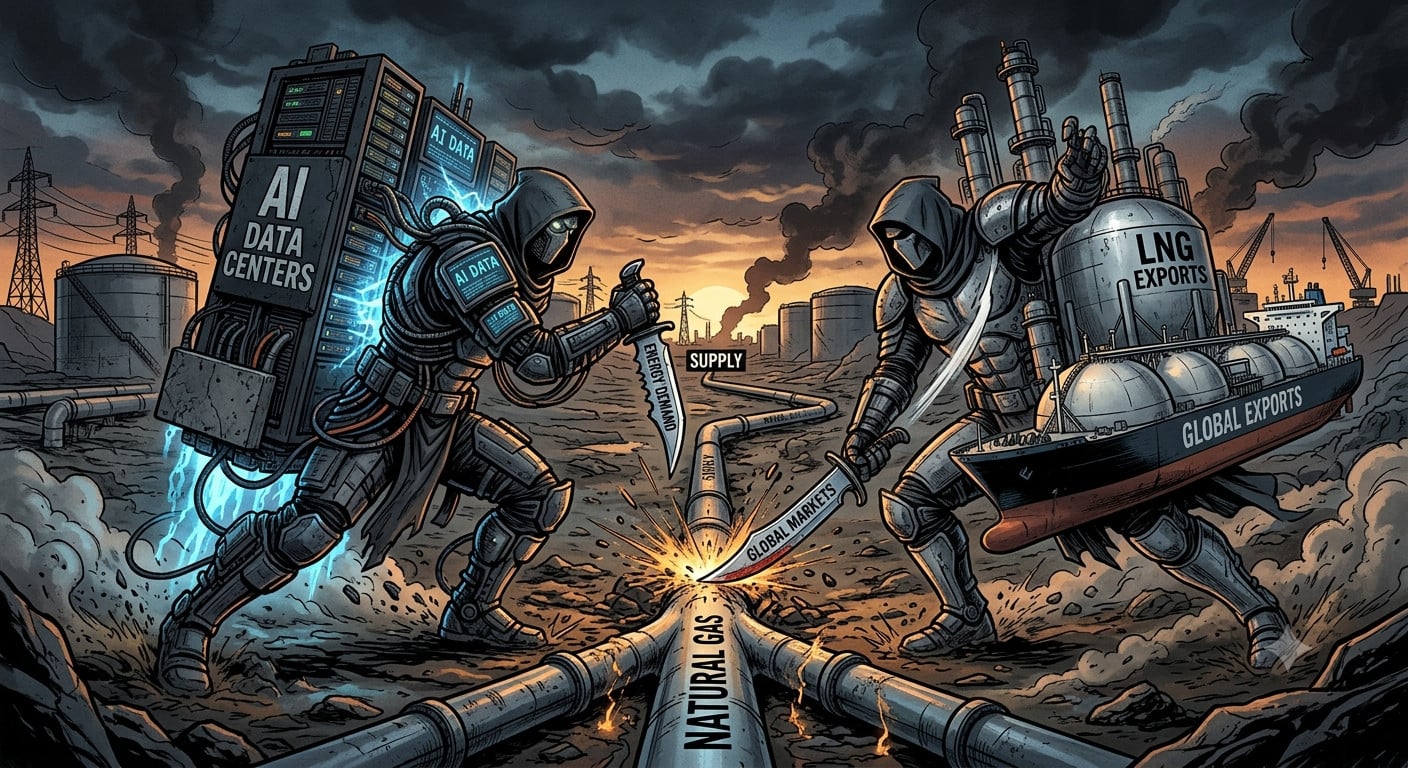
Chronometer Partners CIO Matthew Smith warns the U.S. faces a structural natural gas shortage by 2028, as AI data centers’ round-the-clock power needs collide with surging LNG export commitments. His firm’s 18-month study found production may grow roughly 20 Bcf/d by 2030, but LNG exports alone (rising from about 15 to 35 Bcf/day) could absorb most of that gain, sparking a “knife fight” for supply. Energy already accounts for roughly 10% of AI compute costs, potentially reaching 20-30% if gas prices double or triple. Winners could include gas producers, nuclear and solar generators; hyperscalers and equipment suppliers face rising cost pressure and possible slower buildout. Read More “Will the AI Boom Create a “Knife Fight” with LNG for Natural Gas?”
 Georgia Power announced yesterday that it will serve a new OpenAI data center project in Effingham County, Georgia — about 45 minutes from Savannah — expected to create thousands of jobs and billions of dollars in local investment. The $20 BILLION OpenAI facility will need roughly 3,200 megawatts (3.2 GW) of power, and OpenAI has agreed, under a 25-year deal, to provide up to 1,000 MW (1 GW) of flexible demand response, allowing Georgia Power to curtail deliveries during peak periods. The utility calls it among the largest single-facility demand response commitments in the U.S. OpenAI will cover full infrastructure and electric service costs with financial assurances, consistent with Georgia PSC rules. And yes! There is a direct connection to the Marcellus/Utica. Get ready; your future ChatGPT queries may be powered by M-U molecules!
  Last week, New York Governor Kathy Hochul had the ignominious distinction of signing an Executive Order establishing the nation’s first statewide moratorium on new hyperscale data centers, temporarily pausing state environmental permit issuance for up to 1 year (see
 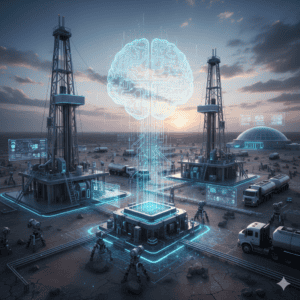 Diversified Energy and real estate firm Maverick Holdings have secured an option on 100 acres at Letcher County’s Gateway Industrial Park near Jenkins, aiming to use an existing natural gas compressor station to fuel an off-grid, 100-megawatt power plant that could attract data centers or manufacturers. The Appalachian Industrial Development Authority signed an 18-month joint development agreement in March, though some board members were asked to sign NDAs. Local officials remain cautiously optimistic, citing potential tax revenue and infrastructure funding, but stress the project is still in early, unproven stages.
 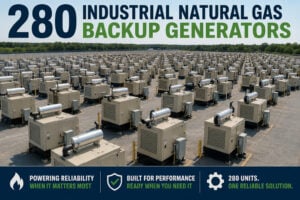 In June, Pennsylvania Gov. Josh Shapiro took credit for brokering a really huge deal for Amazon to invest $20 billion in three data center locations across the state (see
  Following its May merger with Coterra Energy, Devon Energy is positioning AI as central to integration efforts while targeting $1 billion in annual pre-tax synergies by the end of 2027. The combined company—valued at over $60 billion with 1.6 million boe/d production—is concentrated in the Delaware Basin (70% of oil output), recently bolstered by a $2.6 billion New Mexico acreage acquisition, and includes Coterra’s 190,000-acre Marcellus position, which reportedly drew an $8 billion offer.
  A rare bipartisan backlash against AI data centers has emerged, with more than 70 state and local governments passing restrictions or moratoriums due to concerns about water use, electricity consumption, noise, and utility rate hikes. Critics span the political spectrum, from Bernie Sanders and Alexandria Ocasio-Cortez to conservatives like Pennsylvania State Treasurer (and Republican candidate for Governor) Stacy Garrity. Public relations experts blame the industry’s failure to build trust, communicate transparently, and engage communities early, comparing tech companies’ top-down approach to the tobacco industry’s playbook. The consequences are mounting: 25 data center projects were canceled in 2025 — quadruple 2024’s total — while roughly 99 of 770 planned projects face local opposition. Pennsylvania is at risk of forfeiting some $92 billion in private investments (see
  Pennsylvania radical green groups, including PennFuture, the Center for Coalfield Justice, and the Sierra Club Pennsylvania Chapter, continued a full-court press against AI data centers in the Keystone State yesterday. Just yesterday, we reported that Food & Water Watch had assembled dozens (perhaps one hundred at most) protesters in Harrisburg on Tuesday to support a bill (Senate Bill 1359) that would (if signed by Governor Shapiro) ban new data center development in PA for three years (see
  Last week, MDN told you about a group of landowners in Salem Township (Luzerne County), PA, near Wilkes-Barre, who had banded together to offer their land for sale to a data center project and potentially become very wealthy (see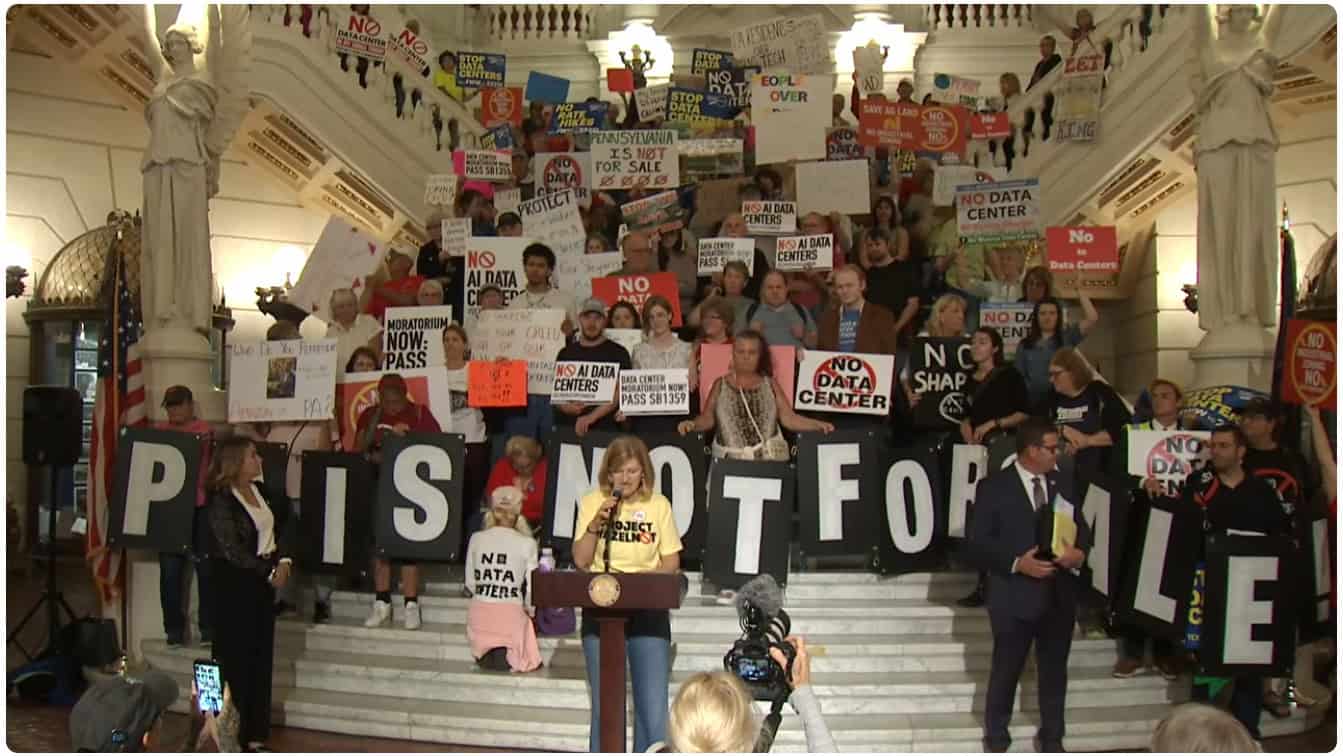
 Earlier this month, Homer City Generation announced the early completion of demolition and excavation work at its Indiana County, Pennsylvania, site, marking a major milestone in transforming the former coal-fired power plant into a gas-fired power plant and AI data center complex (see
  In March, we told you about a deal made by Maryland Eastern Shore developer TeraWulf to acquire the retired Morgantown Generating Station in Charles County (on the Potomac River), proposing to transform the site into a massive natural gas-powered data center campus (see