
FERC Orders Regional Grids to Protect Consumers & Speed Data Centers
 Last week, the Federal Energy Regulatory Commission (FERC) launched a sweeping investigation into how power grids and utilities divide the soaring costs of supplying electricity to data centers. FERC issued six “show-cause” orders directing regional grid operators—PJM, SPP, MISO, CAISO, ISO New England, and NYISO—to prove that data center connection rates are “just and reasonable” and shield ordinary ratepayers from cost-shifting, or face federal fixes. FERC wants regional grids to speed up data center connections while protecting residential ratepayers. And they WILL do it, or else. Read More “FERC Orders Regional Grids to Protect Consumers & Speed Data Centers”
 Pennsylvania has become a hotspot for data center proposals, prompting community backlash, writes Penn State law professor Michael Helbing, whose hometown is Archbald, PA, a suburb of Scranton. You may recall that last week we wrote about another Scranton suburb (virtually next door to Archbald, see the map) by the name of Olyphant, and how the leaders of that borough had developed zoning regulations to protect residents yet allow data center projects to proceed (see
  Three months ago (March 2026), MDN reported on a northeastern Pennsylvania landowner from Luzerne County who sold his farm to an AI data center project and overnight became a multimillionaire (see
  In early May, MDN brought you details about a proposed NSCALE data center project in Mason County, WV (see
  As we so often say, we love how creative and innovative the oil and gas industry is! We spotted an article that discusses how AI (artificial intelligence) is transforming oil and gas drilling operations across diverse environments—from Alaska’s harsh North Slope to deepwater operations off Guyana to U.S. shale fields like the Permian Basin and (yes) the Marcellus Shale. AI-driven systems now interpret real-time sensor data from drill strings, adjust drilling parameters automatically, optimize directional drilling, monitor drilling fluid chemistry, and evaluate cement integrity faster than human operators. Results include drilling speeds up to 50% faster and pressure-imbalance detection 10-12 minutes earlier than with conventional methods.
  In February, President Donald Trump unveiled a record-breaking $33 billion natural gas power plant in Piketon (Pike County), Ohio, to be operated by SB Energy, a subsidiary of Japan’s SoftBank (see
  We are encouraged by recent developments in two Pennsylvania townships, one in northeast PA, the other in southwest PA, with respect to moving forward with data center projects. We get it. People are up in arms, some feeling as though data centers are being “forced” on them by less-than-transparent builders. Noise. Lights. Water usage. All are concerns. However, as we’ve stated many times, reasonable people can work together, sort through the issues, and move these projects along. That’s what we’re seeing in Olyphant, PA, a suburb of Scranton in Lackawanna County, and in South Strabane Township in Washington County.
  Google has partnered with Voltus to fund a three-year, 100-megawatt (MW) so-called “virtual power plant” in the PJM Interconnection (roughly the Marcellus/Utica region). VPPs are designed to address soaring data center demand. Voltus will “aggregate” distributed energy resources from residential, commercial, and industrial customers. We call foul. So-called VPPs are fake—they don’t actually exist. They simply use existing grid electricity taken from other sources. Creating a VPP just takes a little software and a lot of apathy from citizens to make it work. Google will, in essence, pay other electricity consumers to shift or forgo energy use. Google says it’s faster and more cost-effective to buy electricity from other electricity users rather than build an actual, honest-to-God power plant.
  AI (artificial intelligence) data centers are vital to both the natural gas industry and the national security of the United States. Yet, many Americans (a majority?) have turned against data centers. Sure, sometimes the builders of these facilities have shot themselves in the foot by not being more transparent and attempting to build facilities too close to population centers. Our thesis is that reasonable people can compromise, address issues, and move forward with data centers. But that’s not happening. Why?
  Although there are legitimate concerns over data centers locating in populated communities (noise, water use, etc.), make no mistake: The anti-data center movement is nothing more than the anti-fracking movement in new clothes (see
 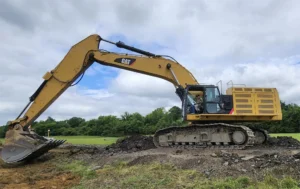 Homer City Generation announced the early completion of demolition and excavation work at its Indiana County, Pennsylvania, site, marking a major milestone in transforming the former coal-fired power plant into a gas-fired power plant and AI data center complex. Over nine months, partner Independence Excavating led 130 union workers and 65+ pieces of equipment to recycle over 112,000 tons of scrap material and excavate approximately 3 million cubic yards (comparable to the Great Pyramid’s volume), all while maintaining zero safety incidents.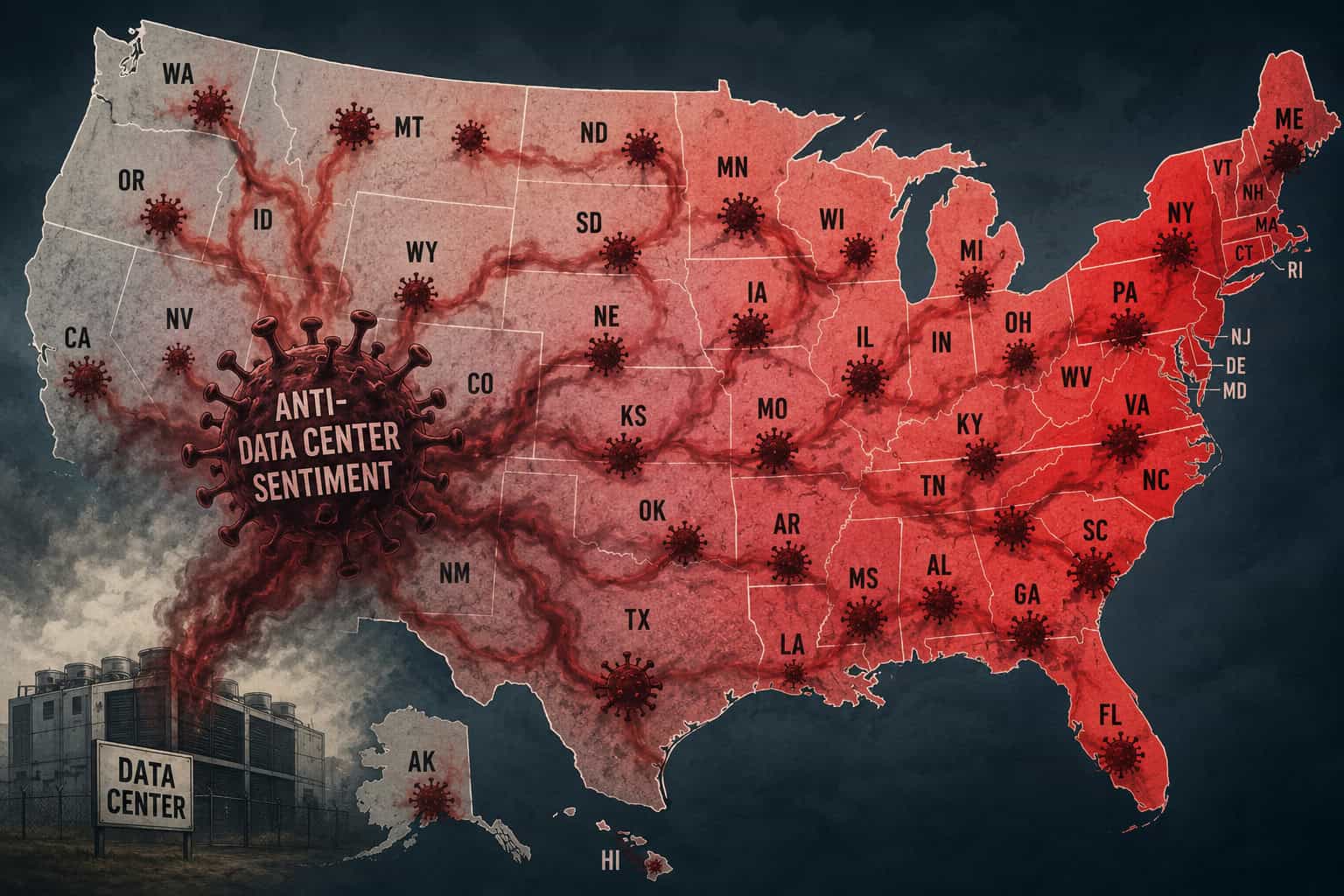

 Pennsylvania Republican gubernatorial candidate Stacy Garrity (currently the State Treasurer) yesterday called for a “total pause” on Pennsylvania A.I. data center development, arguing communities need time to update zoning, protect neighborhoods and farmland, strengthen noise rules, and secure transparency on water, energy, health, infrastructure, taxpayer, and ratepayer impacts. While we have expressed similar sentiment that common-sense guidelines are needed for data centers regarding water, noise, and energy use, we strongly disagree with a total statewide (and indefinite) “pause” on new projects. It sends the exact WRONG signal to the tech industry — that both Republicans and Democrats in the state are now blocking data centers in the Keystone State. Pausing or blocking data centers jeopardizes $92 billion worth of private investment in the state.