
New Resource for WV Landowners on Leasing for Pore Space
 In February, MDN brought readers the news that Tenaska, one of the largest privately operated companies in the U.S., is building a carbon capture and sequestration (CCS) hub spanning tens of thousands of acres in Pennsylvania, Ohio, and West Virginia (see Landmen Knocking Doors in PA, OH, WV to Sign for CCS, Pore Rights). Landmen are “knocking on doors again” in all three states, looking to sign up landowners to store carbon dioxide deep underground. The West Virginia Surface Owners’ Rights Association (WVSORA) has done some research and is offering its advice to landowners about leasing pore space.
Read More “New Resource for WV Landowners on Leasing for Pore Space”
 Last week, MDN told you about landmen knocking on doors in Pennsylvania, Ohio, and West Virginia, looking to sign up landowners for a big carbon capture and sequestration project (see
  Carbon capture and sequestration (CCS) is coming on strong everywhere, including the Marcellus/Utica. Two days ago, we told you that Tenaska is looking to lease 80,000 acres in the M-U for CCS (see
  The Pittsburgh Post-Gazette has an excellent article reporting on an effort by Tenaska, one of the largest privately operated companies in the U.S., to build a carbon capture and sequestration (CCS) hub spanning tens of thousands of acres in Pennsylvania, Ohio, and West Virginia. Landmen are “knocking on doors again” in all three states, looking to sign up landowners to store carbon dioxide deep underground. We have the details below, including how much money Tenaska is paying as a signing bonus and how much is on offer (per acre) each year.

 Yesterday, representatives from Tenaska gave a presentation to the Hancock County (WV) Commission detailing the company’s plans to drill carbon dioxide (CO2) injection wells in West Virginia, Ohio, and Pennsylvania. The company anticipates drilling seven CO2 injection wells/sites in WV, 12 wells/sites in OH, and three wells/sites in PA. Tenaska has established an office in Weirton, WV, as it works toward establishing its carbon capture and sequestration (CCS) process in the region. It hopes to have wells operations by 2027.
 A company called Southern Tier CO2 to Clean Energy Solutions, based in Binghamton, NY (where MDN is located), is sending fliers to landowners in Broome, Tioga, and Chemung counties (along the border with Pennsylvania, where there is no doubt large amounts of Marcellus and Utica gas beneath the ground) inviting landowners to sign up for what appears to be an exciting opportunity to sell gas rights. The flier (below) and company website say the company plans to use carbon dioxide (CO2) to (a) store it underground, but also (b) use it to extract natural gas from underground and then (c) either sell the gas via pipeline or burn it to produce electricity. The technology envisioned is an alternative to fracking. Will it work? And, will it be profitable for landowners?
 Did the Democrats running the Pennsylvania Dept. of Conservation and Natural Resources (DCNR) just receive a consolation prize from the Democrats who run the federal Dept. of Energy (DOE)? That’s the question swirling in our heads as we read about the PA DCNR receiving a $1 million grant from the DOE’s Office of Fossil Energy and Carbon Management (FECM) to do some CCUS (carbon capture, utilization, and sequestration) work. Is the DOE about to bypass PA and award a $1 BILLION grand prize to West Virginia for a hydrogen hub (that includes CCUS), and is this $1 million grant the Biden way of preempting sore feelings in PA by throwing them a bone?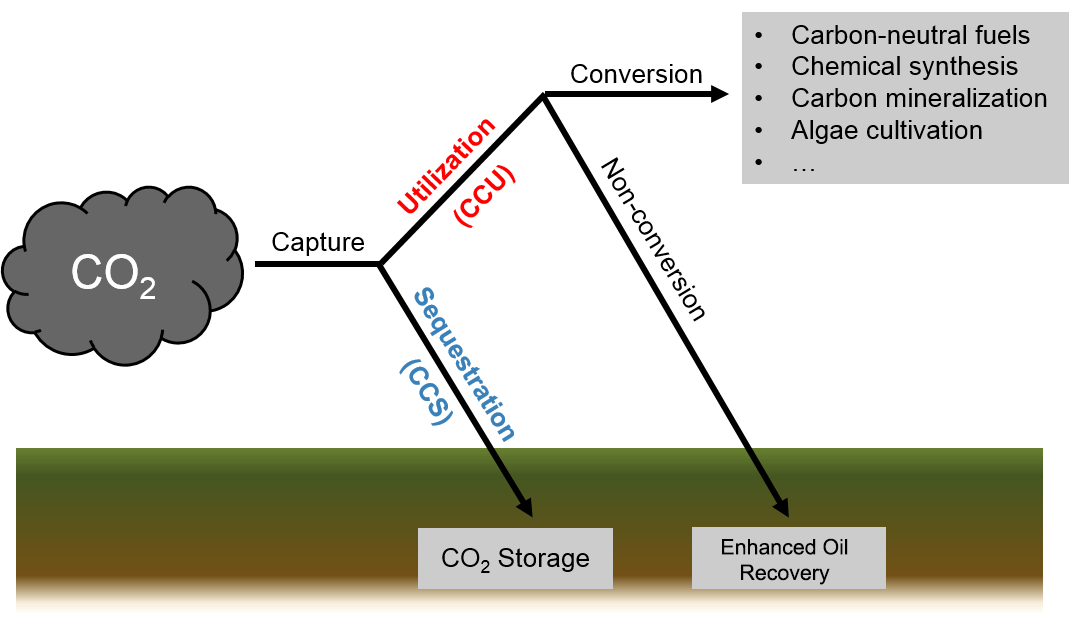

 In August, MDN told you about a new $2 billion hydrogen project coming to West Virginia (see
  Carbon offsets are the same thing as carbon taxes. A carbon offset refers to reducing so-called greenhouse gas emissions by buying a credit from someone who plants trees or agrees not to cut down trees. A company gets to keep on polluting as long as it pays a tax to do it–pretending they are helping the precious environment by paying to plant or not chop down trees. It is the darnedest feat of mental gymnastics we’ve ever seen. Who thinks up this stuff? (Hey, wanna buy a bridge in Brooklyn? We have one to sell!) A new study by the leftists at the University of Cambridge published yesterday in the journal Science exposes the sale of carbon credits as a scam.
 Banpu is Thailand’s largest coal mining company. However, it is looking to reduce the amount of revenue it derives from coal from around 66% today to 50% by 2025. One of the ways Banpu is accomplishing that objective is by investing in American shale gas, American gas-fired power plants, and now, American carbon capture and sequestration (CCS). Banpu partners with Kalnin Ventures and operates BKV Corporation (Banpu Kalnin Ventures), the American arm of Banpu (96% owned by Banpu). Over the past seven years, BKV has become one of the top 20 gas-weighted natural gas producers in the U.S.
 Exxon Mobil Corporation announced it is buying Denbury Inc., a developer of carbon capture, utilization, and storage solutions and enhanced oil recovery, for $4.9 billion in an all-stock transaction. Denbury currently focuses on the Gulf Coast and Rocky Mountain region. Presumably, Exxon plans to expand Denbury’s technology to other regions, including the Marcellus/Utica.