
Signs of Life in Canadian Goldboro LNG Export Project
 We’ve kept an eye on several LNG export projects along the Eastern shore of Canada (most of them in Nova Scotia) for some time. Why? Because they’re a huge potential market for Marcellus and Utica Shale gas. One of those projects, in Nova Scotia, is the Goldboro LNG project from Pieridae Energy. The most recent news we had was when the U.S. Dept. of Energy approved the plant for exporting to non-free trade agreement counties, back in February (see Goldboro LNG Project Gets Final DOE Approval – Good for Marcellus). That is, until today. Honeywell has announced it was selected to provide the Goldboro project with automation and safety systems and serve as the integrated main automation contractor. That is, we see signs of life in this project!…
Read More “Signs of Life in Canadian Goldboro LNG Export Project”
 In early 2015, MDN brought you the news that Shell was making a play to buy BG Group for $69.7 billion (see
  We’ve previously reported on a number of LNG (liquefied natural gas) export projects planned for the eastern shore of Canada. There are four to five such projects, depending on how you count them. However, one of those projects–Bear Head LNG in Nova Scotia–seems to have the most momentum. It seems the project has received most (if not all) of the necessary permits it needs to proceed, the most recent one issued just last week (see
 Anti-drilling zealots attempting to stop the Cove Point, Maryland LNG (liquefied natural gas) from going online have failed in court, again. And they failed big time. MDN reported in April that a group of Big Green groups, including the Sierra Club, the Chesapeake Climate Action Network, the Patuxent Riverkeeper, EarthReports Inc. and Earthjustice colluded together to sue in federal appeals court to try and stop the project (see
  It’s hard to believe something as simple and uncomplicated and safe has a storage tank for liquefied natural gas (LNG) could be controversial. But if you irrationally believe all fossil fuels are evil, you’re against such a storage tank. That’s the battle now shaping up in Somerset, Massachusetts. Spectra Energy is looking to build “two giant storage tanks full of liquefied natural gas” at a site in town , near Walker Street. The town administrator is in favor because Spectra will pay the town $10 million in lieu of taxes. But anti-fossil fuel nutters are rising up to oppose the project–even though they do so using the very fossil fuels the abhor every single day of their pathetic lives–being wholly dependent on fossil fuels for their very existence…
 One of the opponents of new pipelines to New England has been LNG importers in the region–specifically GDF Suez importing gas at the Everett, MA LNG import terminal, near Boston (see
  We’ve previously reported on a number of LNG (liquefied natural gas) export projects planned for the eastern shore of Canada. There are four to five such projects, depending on how you count them. However, one of those projects–Bear Head LNG in Nova Scotia–seems to have the most momentum. Such projects needs loads of permits and approvals before the first shovel ever hits the dirt. It seems like Bear Head has most of its ducks in row, ready to begin. Importantly, both the U.S. (because the gas will come from the U.S.) and Canadian regulators have signed off on the project. But there are, as we are learning, still more permits and approvals needed. Bear Head just scored another important approval. The government of Nova Scotia has just granted Bear Head its approval of their Greenhouse Gas (GHG) Management Plan. Silly, we know. Adults with brains have to pretend that leaking CO2 or methane into the atmosphere is somehow endangering Mother Earth. But these are the games that people play in order to get business done. The Bear Head LNG project is important for the Marcellus/Utica because our gas will feed it via the Maritimes & Northeast Pipeline, making it an important new market for northeast natgas…
 The Canadian Energy Research Institute (CERI) recently released the “Canadian Natural Gas Market Review” (full copy of the 159-page report embedded below). The study looks at the future of Canada’s natural gas upstream (i.e. drilling) industry, taking into consideration the history of the industry, changing market dynamics due to the advancements in horizontal drilling and hydraulic fracturing technology, the recent drop in oil and natural gas prices, and policy developments (i.e. government interference). In the Executive Summary, which we include immediately below, you’ll read that the Canadians have a lot to say about the Marcellus Shale. Canada is importing more natgas than ever–because of cheap, abundant, clean-burning Marcellus Shale gas in the northeast. The report also comments on Canada’s chances of becoming a big exporter of gas via LNG. Canada can, theoretically, increase its own natgas production by 65% over the next 20 years–but only if a number of planned LNG export facilities go online to provide a market for all of that gas…
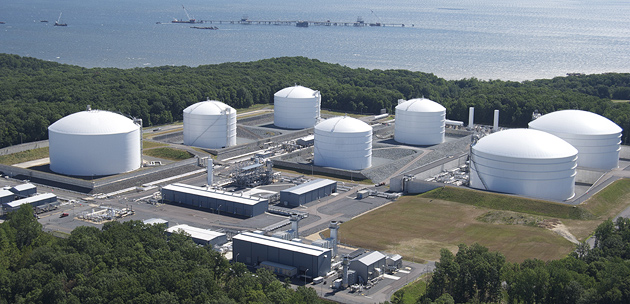
 The litigious Sierra Club, an environmental organization that may have been founded for good reasons long ago but has become radicalized in their opposition to all fossil fuels, was dealt a serious legal blow last week. None other than the very liberal District of Columbia Circuit Court of Appeals ruled against the Sierra Club–responding to a lawsuit brought by the Sierra Club that tries to force the Federal Energy Regulatory Commission (FERC) to consider factors not within their purview when deciding on whether or not to issue permits for LNG (liquefied natural gas) facilities. The court decision directly affects two Gulf Coast LNG facilities but also has implications for the Cove Point, Maryland LNG export facility currently under construction by Dominion, now about half completed. The Sierra Club tried to argue that the more LNG you export, the more drilling (i.e. “upstream”) activity is needed, and drilling activity and what it produces (natural gas) is causing man-made global warming. Ergo FERC should be required to consider those “impacts” when making its decision on permitting such facilities. The problem is, under FERC’s charter they are specifically NOT allowed to consider such peripheral considerations. FERC is to make its decisions based on real science: Would a potential project impact the local ecology and environment in a negative way? If so, it doesn’t get a permit. The normally chatty Sierra Club went silent following the court’s decision…
 The Sierra Club is one of the worst, most radical Big Green groups in existence. We sincerely hope you never give them a penny of your money. They don’t care a whit about the environment–they only care about feeding the beast, money for their own organization. One way to do that is to keep your name in the news constantly. And a way to do that is by filing frivolous lawsuits. The Sierra Club has been railing against the Cove Point LNG export facility being built by Dominion for years (see
  LNG, or liquefied natural gas, is an increasingly important part of the natural gas ecosystem in the U.S. We’ve imported natgas for years–and we’re not beginning to export it as well. Each month the U.S. Dept. of Energy issues a report tabulating both imports and exports of LNG–who shipped it in and out, from where, and how much. It’s a good picture. The April report was recently released (takes a few months before the number crunchers are done). What do we find in the latest report (full copy below)? We find that the U.S. imported 34.8 billion cubic feet (Bcf) of natural gas in the first four months of the year–all of it from Trinidad. We exported 28.9 Bcf during the same period. The vast majority of exports were from Cheniere’s Sabine Pass terminal in Louisiana, although a small amount of LNG was exported from American LNG’s export facility in Miami, Florida…
 For some time now we’ve had our eye on Bear Head LNG, a $2.2 billion LNG export project proposed by Australian company Liquefied Natural Gas Limited (LNGL), to be built in Nova Scotia, Canada. In August 2015 the Canadian National Energy Board (NEB) approved LNG exports for the project. In February of this year the U.S. Dept. of Energy also gave its blessing, because the gas it will export will largely come from the Marcellus/Utica region (see