
Carl Icahn’s Cheniere CEO Lines Pockets with Another $1.5M Stock

In May MDN reported that the odious corporate raider, Carl Ichan, had installed a new CEO at Cheniere Energy, after he had ousted co-founder and former CEO Charif Souki (see Carl Icahn Installs New Puppet as CEO of Cheniere Energy). It didn’t take long (July) for new CEO Jack Fusco to start lining his pockets with $1.5 million of Cheniere stock (see Carl Icahn’s Cheniere CEO Buys 37,604 Shares of Stock). He’s doing it again. Fusco has just purchased another $1.5 million worth of company stock…
Read More “Carl Icahn’s Cheniere CEO Lines Pockets with Another $1.5M Stock”

 As we pointed out last week, the Canadian Goldboro LNG export plant continues to see activity, with an expected commitment coming in the next couple of months (see
  We’ve kept an eye on several LNG export projects along the Eastern shore of Canada (most of them in Nova Scotia) for some time. Why? Because they’re a huge potential market for Marcellus and Utica Shale gas. One of those projects, in Nova Scotia, is the Goldboro LNG project from Pieridae Energy. In February, the U.S. Dept. of Energy approved the plant for exporting to non-free trade agreement counties, back in February (see
  You may recall that evil corporate raider Carl Ichan fired the CEO of Cheniere Energy, Charif Souki, in December 2015 (see
  Cheniere Energy operates the only liquefied natural gas (LNG) export facility in the United States–currently. There are others planned, like the Cove Point, Maryland facility currently under construction. We keep tabs on Cheniere, even though it’s located in Louisiana, because the pipelines that serve it either are or soon will have Marcellus/Utica natural gas flowing through them–to the Cheniere plant. It’s potentially a very important market for our natural gas. We’ve had plenty of Cheniere news lately. Earlier this week we told you about a major restructuring at the top of the company, and the news that Train 2 at the plant is about ready to rock and roll (see
  After firing Cheniere Energy’s CEO and co-founder last December, Charif Souki, corporate raider Carl Icahn then installed his own puppet to run the LNG exporting company (see
  For some time now we’ve been tracking progress with an LNG export plant planned for the eastern shore of Nova Scotia, the Bear Head LNG project. Of all the Canadian LNG export projects that will export Marcellus gas, Bear Head seems to have the most momentum. The project has received most (if not all) of the necessary permits it needs to proceed. The most recent regulatory hurdle was a greenhouse gas approval from Nova Scotia, issued in July (see
 Ten years is long enough for the Federal Energy Regulatory Commission (FERC) when it comes to an LNG (liquefied natural gas) project. Yesterday FERC pulled the plug on an application from Downeast LNG, telling them their application to build an import/export plant along the shoreline of Maine (in Washington County) has been rejected. In December 2006, Downeast filed applications “for the siting, construction, and operation of an LNG import terminal and associated pipeline take-away facilities in Washington County, Maine.” In July 2014, Downeast filed a letter requesting the Commission initiate the pre-filing process for the conversion of its proposed import project facilities into a bidirectional import/export LNG terminal and associated pipeline facilities. The facility would use Marcellus Shale gas to export–an important new market for our overabundant gas supplies. In August 2014, the FERC approved Downeast’s request to pre-file the bidirectional import/export project. As recently as June 2015, Downeast boasted of plans to begin building the facility in 2017 (see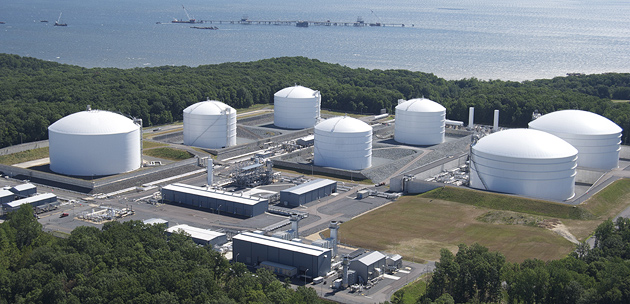
 LNG (liquefied natural gas) is a big deal and getting bigger–you know that if you’ve read MDN for any length of time. As the U.S. begins to shift into producing more natural gas than it can use here at home, exporting that gas, via LNG, is an important market–for the Marcellus, Utica and beyond.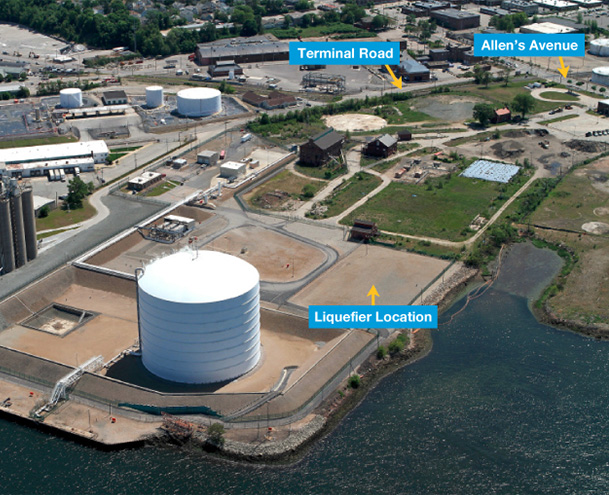
 For some time now we’ve been tracking progress with an LNG export plant planned for the eastern shore of Nova Scotia, the Bear Head LNG project. Of all the Canadian LNG export projects that will export Marcellus gas, Bear Head seems to have the most momentum. The project has received most (if not all) of the necessary permits it needs to proceed. The most recent regulatory hurdle was a greenhouse gas approval from Nova Scotia, issued in July (see
 In April 2013, Dominion signed Japan and India to a deal to accept 100% of the LNG output that will come from their Cove Point, Maryland LNG export facility (see