
Williams Hillabee Project Goes Online, NatGas Flowing to Florida
 We have a correction to a previous story. In June MDN brought you the news that the Sabal Trail Transmission pipeline, a $3.2 billion, 515-mile interstate natural gas pipeline in Florida, Georgia and Alabama, had been placed into service, flowing natural gas to Florida electric generating plants (see Marcellus Gas Hitches a Ride to Florida Power Plant). We indicated in that story that Marcellus and Utica Shale gas, via Williams’ related Hillabee Expansion Project, was flowing to Florida. Not quite yet. In an announcement issued yesterday, Williams said yes indeed, the Hillabee project is now up and running–but for now, it’s flowing gas from the Haynesville Shale and the Midcontinent region. The announcement said that Marcellus/Utica gas would “soon” flow through the Hillabee expansion–just as soon as the Atlantic Sunrise Pipeline gets built in Pennsylvania, which will flow Marcellus gas into a reversed portion of the Transco Pipeline…
Read More “Williams Hillabee Project Goes Online, NatGas Flowing to Florida”
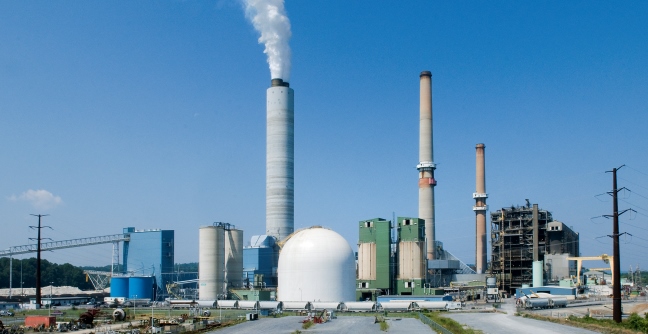

 Our favorite government agency, the U.S. Energy Information Administration, has done us all a huge favor. Yesterday we brought you a post by EIA’s Today in Energy that points out in 2016 some 81% of all the energy we used in the US of A came from fossil fuels (see
 An Appeals Court decision issued Friday has (in our opinion) HUGE ramifications for New York State and the Dept. of Environmental Conservation (DEC) that has been corrupted by political influence from Gov. Andrew Cuomo. It also has ramifications in other states with overactive environmental agencies too. It is hard for us to overstate how important we think this decision is. The NY DEC has been corrupted and politicized by one of the most corrupt governors New York has ever had: Andrew Cuomo. The Cuomo DEC has unilaterally decided not to issue 401 water crossing permits for several federally-authorized pipeline projects, including Williams’ Constitution Pipeline, NFG’s Northern Access Pipeline, and a teeny tiny 9-mile pipeline Millennium wants to build from their main pipeline to an under-construction natgas-fired electric plant in Orange County, NY, called the Valley Lateral Project. Millennium took the bull by the horns early on, when it was apparent the DEC was following the same pattern of delay and then deny, suing the DEC (see
  Marcellus Shale gas is now powering a Panda Power Funds electric generation plant supplying electricity for 778,000 homes in the Washington, DC metro area. Panda announced that its 778-megawatt “Stonewall” generating station in Loudoun County, Virginia is now online producing electricity for Northern Virginia/District of Columbia customers. MDN first had its eye on this project in November 2014 when we brought you the news that South Jersey Gas had won the contract to provide Marcellus Shale gas to the plant when built (see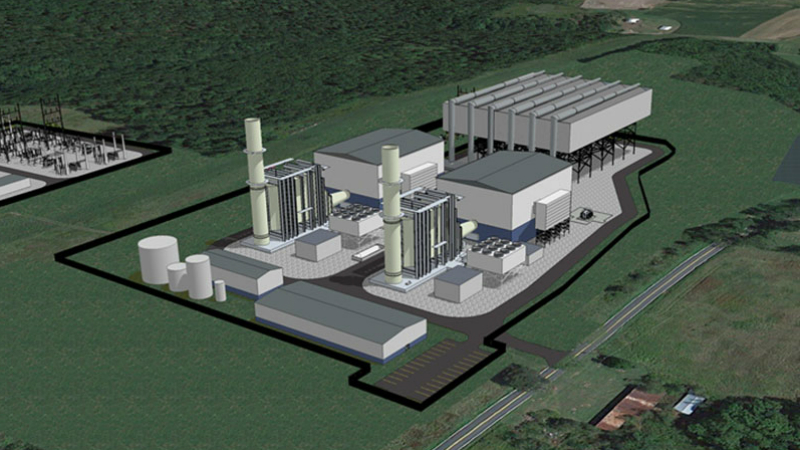
 Here’s a quote that nearly made our eyeballs drop out: “In the PJM queue, there’s roughly 130 planned gas-fired power plants scheduled to enter service through 2021 totaling 76 GW under various stages of development across a large part of the market that includes Pennsylvania, Ohio, West Virginia, Maryland, Virginia, Delaware and New Jersey.” Did you catch that? Some 130 natural gas-fired electric generating plants–most (if not all) of them fed by Marcellus/Utica gas, will go online in the next four years, generating 76 gigawatts of electricity. It is an enormous opportunity for our industry. Where did we read that stat? In a new report published by our friends at Natural Gas Intelligence (NGI). The report is called “Pipelines & Power: How New Infrastructure Could Uncork the Marcellus-Utica Natgas Bottleneck.” The opening article in the report contains the quote above (on page 2). This 20-page report is jam-packed with great information, like that quote. Actionable, useful, important information. Let us tell you a little more about NGI, about the report, and how you can get a copy…
 Siemens, the largest industrial manufacturing company in Europe with its headquarters in Germany, sought out and has cut a deal with Duke Energy to build a brand new, “first of its kind” advanced natural gas-combustion turbine for Duke Energy’s proposed 400-megawatt expansion at its Lincoln County Combustion Turbine Station near Charlotte. Siemens will build a single turbine able to generate 400 megawatts essentially on demand, as needed, for those times when extra electricity is needed (called “peaking” for peak demand). The project will be built in three phases beginning in 2018, with lots of testing, and won’t be ready until 2024. In return for allowing Siemens to build this new tech and test it out, Duke is getting a sweetheart deal on the price, although the price has not been publicly disclosed. So what does this have to do with the Marcellus/Utica? Long before 2024 there will be, at a minimum, Marcellus/Utica gas flowing to that region via the forthcoming Atlantic Coast Pipeline project. And by that time, seven long years from now, who knows? We expect there may be more pipelines built and in place not even conceived or announced–yet. This will be one more (added to the already 130 announced) power generation projects coming in the PJM region (see today’s companion story, Important New Report on Pipelines & Powergen in Marcellus/Utica). Here’s the exciting news about a brand new technology coming along to leverage abundant, clean-burning natural gas in the Marcellus/Utica and beyond…
 In April MDN provided an update on the Sabal Trail Transmission pipeline project (see
  Competition is good. Last week we told you about the coming competition between the Marcellus/Utica Shale play in Pennsylvania, West Virginia and Ohio, and the Haynesville Shale play in Louisiana (see
  In delicious irony, Robinson Township (Washington County), PA, one of the original seven selfish towns that sued Pennsylvania and eventually won at the PA Supreme Court, overturning a portion of the state’s 2012 Act 13 shale drilling law (granting towns the right to self-regulate some aspects of oil and gas drilling by using onerous zoning ordinances), is about to get a new Marcellus gas-fired electric plant. That is, a plant that burns the stuff they don’t like drilled. In April, MDN shared a list of five new Marcellus gas-fired plants coming in Southwestern PA (see
  Tuesday night in Clarksburg, WV, the state Public Service Commission heard public comments about a non-utility utility–the Energy Solutions Consortium Harrison County Power plant project. The project is a Marcellus-gas fired electric generating plant that will produce 580 megawatts of electricity to sell to the PJM power grid serving 13 states. Hence our label of a “non-utility utility” project. Technically, the project is not a utility because it’s not regulated with strict price controls, like “traditional” utilities. However, it will sell electricity to regulated utilities. ESC was founded by father and son team Andrew and Matthew Dorn, based in Buffalo, NY. The Dorns are behind a series of WV natgas-fired electric plants, the first of which will get built in Marshall County (see